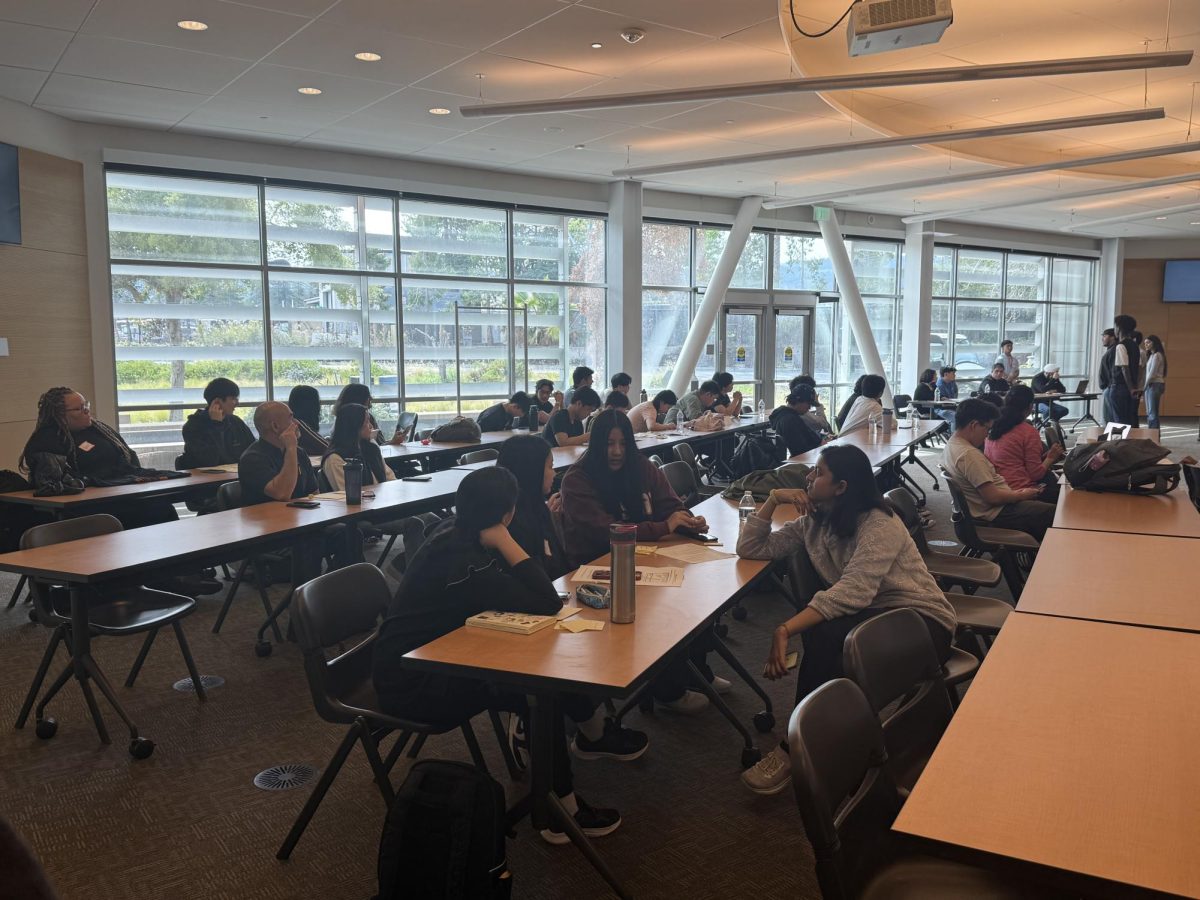
Racing against the clock and each other, 20 student teams tackled ideas for marketing toward Generation Z on Feb. 28 at the Business Model Canvas in the Media and Learning Center, with the top three teams winning cash prizes for their innovative ideas.
“The target focus is on Gen Z because they are a new market (and) they have different marketing behavior, and to increase financial literacy,” said Manisha Karia, dean of the De Anza College Innovation Center.
Nadine Mai, 18, computer science major, helped Karia organize the Business Model Canvas event.
“I really like to learn more about business school, and I learned so much from these competitions,” Mai said. “I learned how to actually incorporate computer science into these as well.”
The Innovation Center promoted the event through campus advertisements, social media and its website. Students from all majors were eligible for participation.
“The event would’ve had more students attending, but there are three to four events happening throughout campus at the same time,” Karia said. “This event is a great experience for students because of its sponsors giving free lunch, prizes and a shared cash prize of $1,000.”
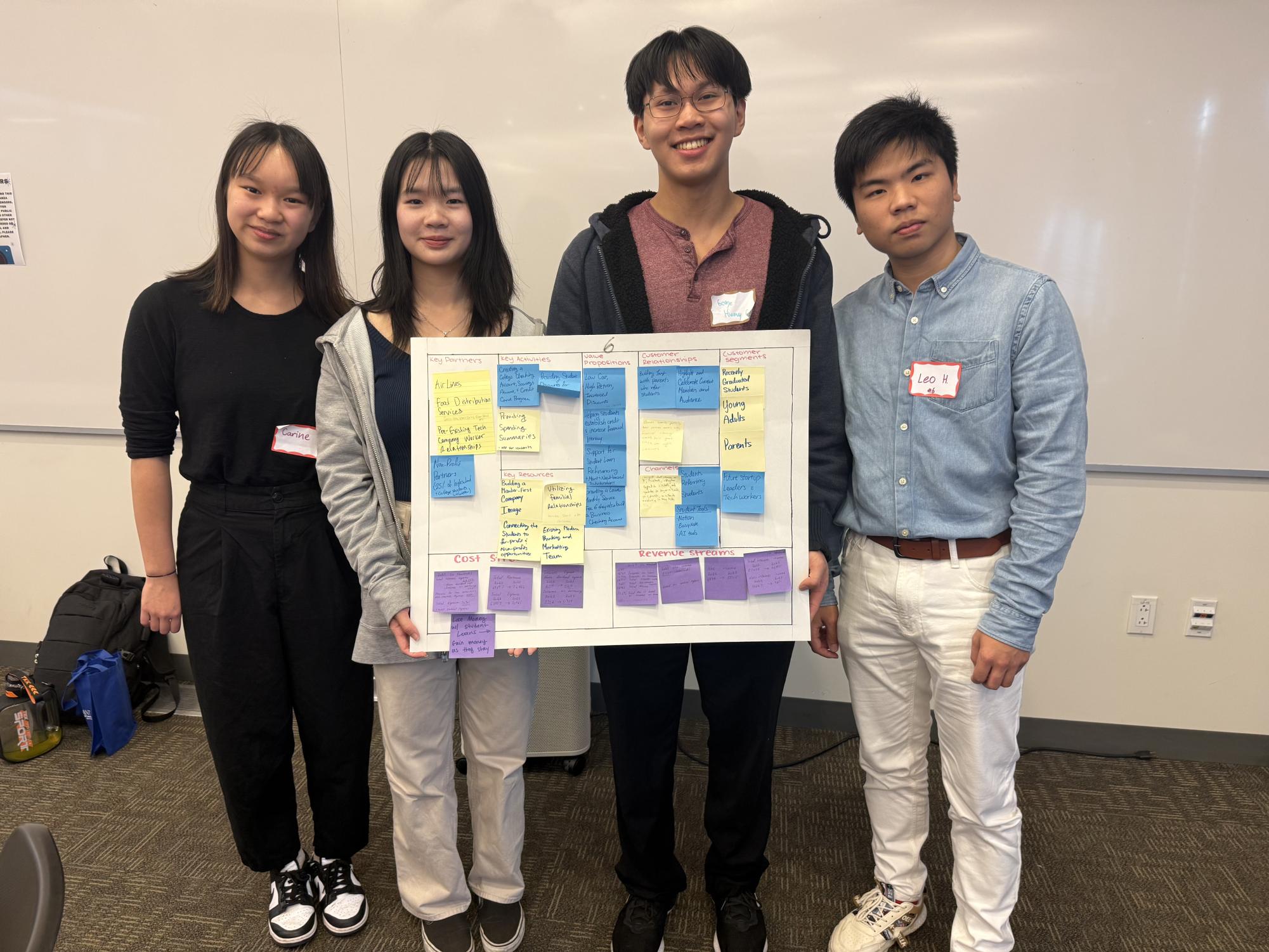
Team 6, which won first place, consisted of Sylvie Nghiem, 18, business administration major, George Huang, 18, business administration major, Leo Huang, 20, economics major and Carine Chan, 18, mathematics major.
Team 6 presented students with more banking services, such as students’ checking, which they may not have.
“Providing students with more bank services, including a student checking account which they didn’t have, (targets) the students’ parents who have more information on their finances,” Leo Huang said.
“It was my first time doing an actual competition, and I knew it was impromptu … not planned or rehearsed,” George Huang said. “We’ve been doing research toward downtown revitalization. We’re going to market toward Gen Z and especially their parents because that’s usually how young people get their bank accounts.”
“Our idea was to aim it toward college students because KeyPoint Credit Union doesn’t have a savings account for college students. Then we aimed to keep their membership with various marketing projects,” Nghiem said.
KeyPoint Credit Union sponsored the event, with Doron Noyman, vice president of business development and community relations, in attendance.
“Everyone’s a winner, because what happened is they got real-life experience,” Noyman said. “If they go to work for us, or work for someone else, they have something to remember.”
Noyman said that the competition gave students valuable skills in applying academic knowledge to practical scenarios.
“You want the experience. You want the understanding of that,” Noyman said. “When you go to school, you get your academic applications. But then how do you take them and apply them into real business?”
Noyman also praised the students’ ability to develop solutions under pressure.
“They had an hour and a half to write it, learn about it, learn about the company and put together a presentation,” Noyman said. “All of them did an outstanding job.”
While Noyman encouraged students to consider working for KeyPoint Credit Union after graduation, he said that the competition’s main value was in teaching collaboration across disciplines.
“Sometimes you work in marketing or operations or finance, and you have to learn how to work together to solve problems,” Noyman said.