
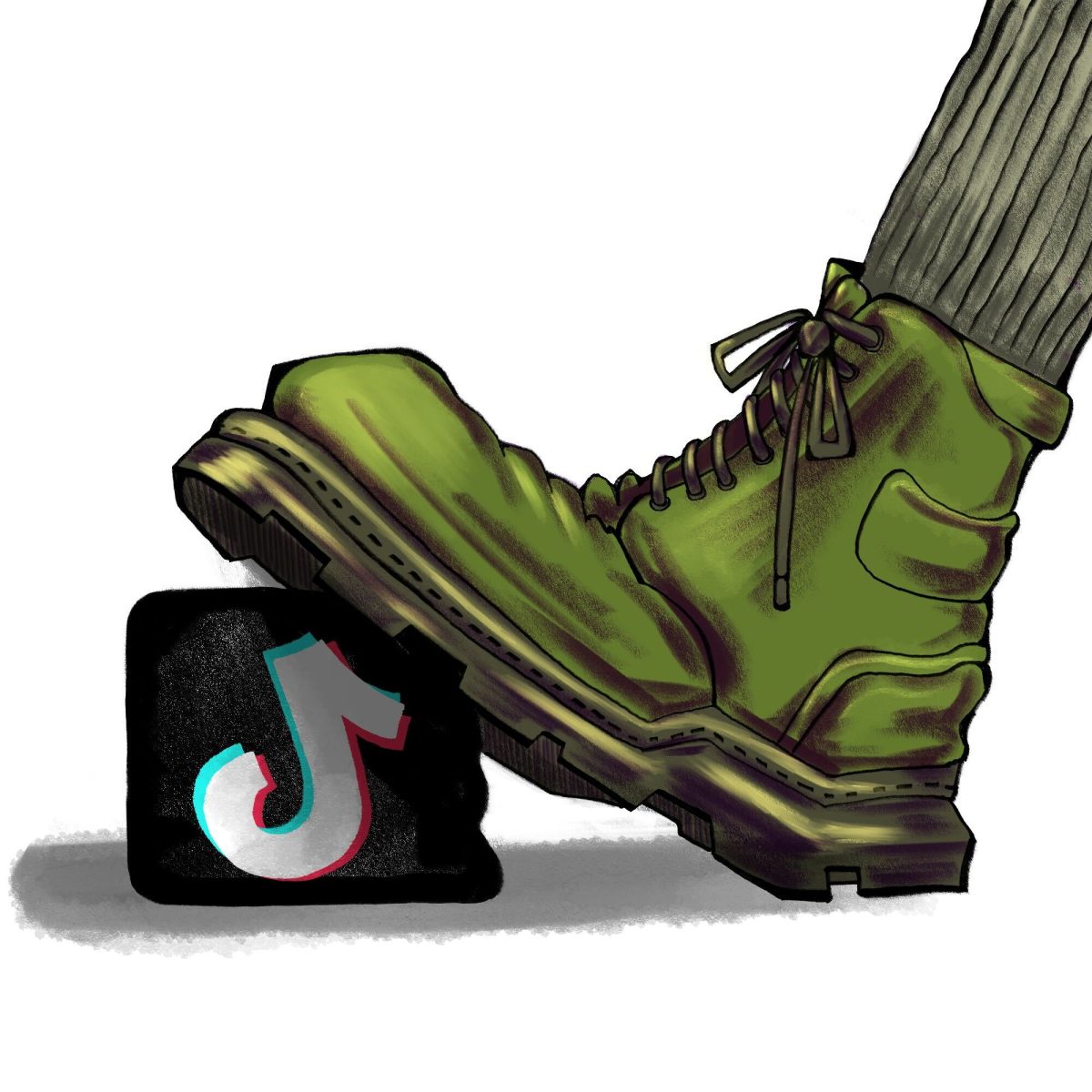
TikTok is massively popular, with 120.5 million American users on the app as of July. It has been the preferred source of entertainment, information and culture for many people for years now, though if its parent company, ByteDance, refuses to sell it, it will be inaccessible to American users on Jan. 19.
The major issue regarding TikTok is suspicion of it containing invasive software. TikTok is owned by a Chinese company, so these privacy concerns are all the more punctuated.
China has been openly hostile to the U.S. and there is suspicion, though it has never been proven, that the app has connections to the Communist Party of China. A study by Network Contagion Research Institute found there is “compelling and strong circumstantial evidence of TikTok’s covert content manipulation.”
Many social media services, and other applications in general, contain software which have been said to invade the privacy of its users. Sites like Instagram collect massive amounts of personal data and share it with third parties.
This is not good either, though with many of these companies, such as Instagram and YouTube, being owned by Americans, it is still less of a threat.
Also, when Americans are at the helm, there is potential to use the U.S. government to restrict these invasive features and content manipulation through legislative action. When dealing with China, we have far less control over this.
Another study by Network Contagion Research Institute compared the amount of posts with subjects relating to controversial Chinese issues such as Tiananmen Square, Hong Kong protests and the “Free Tibet” movement on TikTok and Instagram. It found that there was a massive discrepancy between the amount of content, with Instagram’s coverage dwarfing TikTok’s.
In the case of the “HongKongProtest” hashtag, Instagram had 173.7 times more content than TikTok, and in all available examples, the ratios showed a significant skew against “anti-China” content on TikTok.
TikTok has popularized numerous trends such as dances, challenges, songs and memes. Most of it is innocuous, harmless and ephemeral, though there have been instances of certain trends being destructive.
The “Kia challenge” trend from 2023, where people were shown how to easily carjack Kias and Hyundais, resulted in numerous thefts and arrests. In an interview with the verge in 2023, a service advisor for Germain Kia in Columbus, Ohio, said, “Before the videos on TikTok, we’d rarely ever seen that. … But as soon as that video came out on TikTok, that’s when it all started going crazy.”
TikTok is also a highly addictive application that has taken the youth by storm. According to a 2022 Statista study, the average time spent on TikTok for American children and teenagers per day is one hour and 53 minutes, with the amount of this group using it two to three hours a day being 22%.
The damage it may have inflicted to Generation Z’s attention span is also concerning. According to the Ox Journal, “technology usage and the prevalence of ADHD have undergone a parallel increase, with the disorder currently increasing at a rate of 35%.”
While there is no concrete confirmation that these two issues are totally related, many people have seen this phenomenon develop, and it is easy to infer that the mass consumption of short-form, overstimulating content has a connection to the decline in Gen Z’s ability to focus.
The growing prevalence of misinformation and political polarization have also been apparent.
Gen Z often do not read the news anymore, or visit sites to read articles.
Information is often fed directly through highly partisan internet sources, who are fallible, and are rewarded for outrage and sensationalism. Fake news spreads six times as fast as real news, largely for this reason.
These methods of information consumption are streamlined, lack any nuance or encouragement for the viewer to research further, and can contain misinformation. TikTok has been shown to route people towards incorrect information through its search engine according to CNN.
TikTok and certain users are currently suing the U.S. over what they deem an unconstitutional attack on their platform, though the court has yet to decide on which side they will stand on.
Additionally, Donald Trump, who had previously been an advocate for the ban, now said that he is against TikTok being banned. This may lead to further complications in the process to get the app removed in America.
It has yet to be seen what will unfold in the next few months. At the very least, ByteDance will not go out without a fight, but if they are unable to oppose it and it passes, that would be for the better.
It would not solve every problem considering alternatives like YouTube Shorts and Instagram Reels will not go away, but security concerns will have been partly addressed and dealt with, and perhaps it will set a precedent for how we should deal with other companies that invade our privacy.
TikTok has been a stain on the American zeitgeist of the 2020s, and its removal would be a welcomed, though belated, correction.