In a series of separate motions, the De Anza Academic Senate, Foothill-De Anza Faculty Association Political Action Committee and Interim De Anza President Christina G. Espinosa-Pieb issued support for undocumented students and staff across the Foothill-De Anza district on the week of Dec. 2.
The De Anza Academic Senate passed a resolution promising to prioritize the allocation of Foothill-De Anza district funds to cover existing staff positions within the De Anza student resource center, Higher Education for AB 540 Students, while the Foothill-De Anza Faculty Association Political Action Committee released a statement in support of undocumented students and staff on Dec. 2 and Dec. 4 respectively.
Following discussions with Vice Chancellor of Business Services Christopher Dela Rosa, Espinosa-Pieb also promised HEFAS a $60,000 B-budget, the category of discretionary spending for the college, in a meeting with HEFAS Program Coordinator Shaila Ramos-Garcia on Dec. 4.

HEFAS is an “institutional and educational program,” located in the East Cottage on De Anza’s campus, which provides undocumented, low-income and other AB 540 students with resources and opportunities. These include paid internships, legal support, counseling services, scholarships and textbook rentals.
Acknowledging the impact of hostile policy promises and rhetoric from the incoming presidential administration weighing on many undocumented students, the De Anza Academic Senate cited, “Our undocumented students and staff are living through a time of deep fear and danger for themselves and for their families and many of them will need extra support and access to resources as we enter an uncertain future with respect to their status and safety in our communities, all of which they are already experiencing on an emotional level.”
The Academic Senate resolution states that, while under state bill AB 1645, the district receives an additional allocation of $1,238.71 per each of the nearly 900 full-time AB 540 students enrolled, contributing over $1 million to the general fund in 2023. However, it states that “none of it comes to De Anza to directly support our undocumented students.”
If put into effect, this would prioritize directing funds from this general pool to fully cover Ramos-Garcia’s $120,000 salary, as well as upgrade the counselor position occupied by Felisa Vilaubi to full-time status, currently constrained to a 10-hour per week part-time role because of insufficient funds. Previously, Ramos-Garcia’s salary was sourced directly from AB 1645 state-given support, which mandates that all public California colleges and universities establish an undocumented student support liaison.

“That $120,000 would help us grow exponentially, we (could) create fellowships across all (of) the campus. We can create 20 fellowships with that amount of money,” Ramos-Garcia said.
The incoming administration under President-elect Donald Trump is projected to front a hard line towards undocumented people living in the United States. Faculty Association Vice President James Nguyen weighed in on the likely actions Trump will take towards undocumented people in the country.
“Trump has been talking about essentially deporting, estimates say, somewhere between 11 and 13 million people,” Nguyen said.
Key questions that Nguyen sees as most concerning to impacted students are, “(what’s) going to happen in terms of their status, right? Is DACA going to continue? And then also, what support is going to continue in terms of their education. Are they going to be eligible for in-state tuition? How is the talk around deportations going to impact them?”
Previously, HEFAS had relied on external funding for their operations, almost exclusively through AB 1645 as well as smaller contributions from various grant applications. From De Anza, they have consistently received under $20,000 per year from DASG, which covers four out of its 12 total intern positions.
These commitments have yet to be codified, and Ramos-Garcia reports that Pieb hopes to see these changes through by Jan. 1 of next year, before the end of her term. But Ramos-Garcia wants this to happen even sooner.
“If it’s not done by Dec. 16, we’re (HEFAS) going to the Board (of Trustees) meeting and continue to put pressure. … We still need more funds for next year,” Ramos-Garcia said.
These developments come on the heels of what was projected to be a dire 2025-26 fiscal year for HEFAS programming. Prior to this week’s institutional support, discontinuation of their usual grant money inflow left the group facing drastic budget cuts for the next year, as many forms of their usual support from external organizations were discontinued, including the Silicon Valley Community Foundation pausing grants from the LatinXCEL Fund.
“What this means for the students is that we are going to have to cut (intern) positions. 90% of all the funding that we receive through grants goes directly back to the students, because we need students (interns, fellows) to be able to support all of our population,” Ramos-Garcia said. “It means less events, less programming, less resources.”
Ramos-Garcia’s ideal vision is to have full school subsidization of HEFAS, independent from state law requirements.
“For some people, it doesn’t feel as urgent, because they don’t believe that (changes to protective California laws for undocumented students) might happen, but we don’t know,” Ramos-Garcia said, regarding the possible effects of the incoming Trump administration on HEFAS. “Other positions do not have specific funding from the state for them. Mine does, so there’s privilege, and it’s easy to say ‘Oh yeah, we’re already getting funding. Let’s put it to her.’ But there (are) so many other variables.”
HEFAS is an important place to many students, serving a population that includes undocumented students, low-income students, students of color and international students.

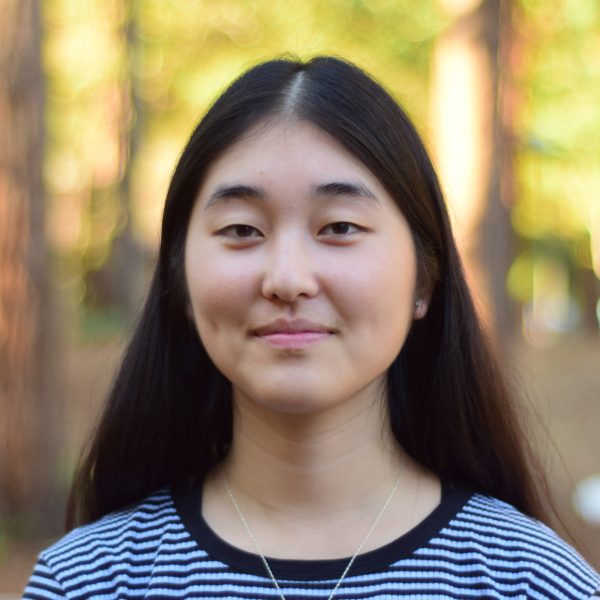
Matsuko Nakamatsu, 20, English and humanities major, who interns at HEFAS as the member coordinator, shares her thoughts on the center.
“My source of strength comes from HEFAS,” Nakamatsu said. “It comes from my community, it comes from my friends, and it comes from the small victories that truly help us heal, move forward and continue to dream.”
Though recent developments are moving HEFAS, and all the resources and opportunities it provides for undocumented students, into a more secure position within the school, Ramos-Garcia stresses that for her and undocumented students at De Anza, the fight is far from finished.
“(The $60,000 B-budget allocation is) going to allow our programs to just survive, not necessarily thrive. Survive,” Ramos-Garcia said.
Ramos-Garcia also highlighted the attention being placed on these issues now, and questioned where this institutional support has been between major attacks spotlighted in the media.
“For me, it’s about the last four years. Why haven’t we been doing this? Why haven’t we been (taking) action? I’ve been asking for institutional support for undocumented students since I was a student, for 15, 16 years,” Ramos-Garcia said. “It does make me feel some kind of way, like just because we’re in the news now, now people want to pay attention. So I think the message would be (that) it’s always important, not just because we’re under attack.”
Ramos-Garcia said that HEFAS is in the process of organizing a “Know Your Rights” workshop on Jan. 15, 2025 with legal advisor from Foothill College Montserrat Juarez.
(Editor’s note: It was stated that the LatinXCEL fund was “sunsetting,” but La Voz was informed that the fund is pausing grants temporarily. This correction was made on Dec. 13.)