
Following the election on Nov. 5, in which Donald Trump won both the popular and electoral votes to be elected for a second non-consecutive term, many De Anza students expressed concern over the results.
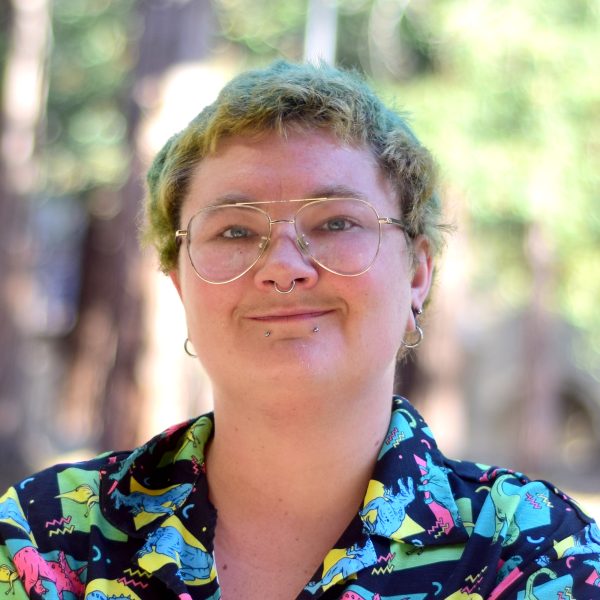
“I feel like it’s going to be detrimental to so many minorities in this country, and I think it’s starting a pathway for white supremacist leaders to be in office,” Noah Cildir, 18, a psychology major, said.
Cildir speculated that vice president Kamala Harris’s ethnic background and gender played a role in her loss.
“I think that so many people aren’t willing to admit that they wouldn’t vote for a woman, or a woman of color especially,” Cildir said. “It’s just crazy to see that America hates women that much.”
Others struggled with the reality of the results.
“Afterwards, I was just ready to believe all of the fraud allegations on Twitter,” Hal Wong, 19, a film and television major, said.
The negativity amongst De Anza students towards Trump is unsurprising: a La Voz poll showed that 28.8% of respondents supported Trump, with 71.2% favoring Harris.
In addition to the results of the presidential election, some students expressed dissatisfaction with the failure of certain California propositions — in particular, Proposition 32, which would have raised the state minimum wage to $18 an hour.
“I was just like, ‘Okay, I literally get paid minimum wage, so I’m not going to get paid more now,’” Wong said. Proposition 32 lost by a margin of 2%, with 51% of California voters voting “no.”
Wong also expressed frustration that Proposition 33, which would have repealed a ban on local rent control, failed. 60.5% of California voters voted “no” on the proposition.
“Can we not do good things for ourselves in this state?” Wong said.
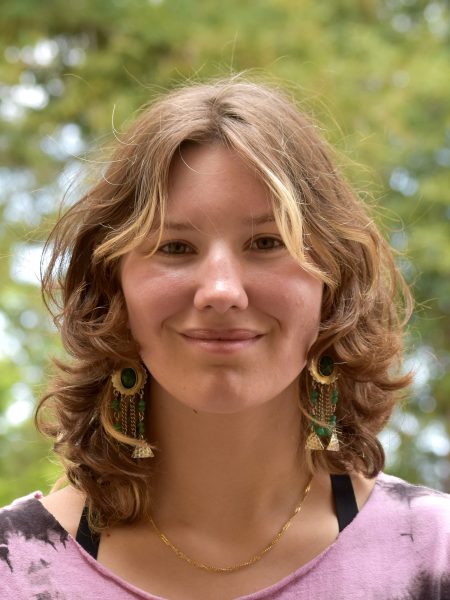
Despite the tense atmosphere amongst students, some expressed hope in the face of fear. Katie Lee, 21, an animation major, said that while going through the motions of daily life felt wrong at first, they soon came to a realization.
“Just existing, doing these little things I can control, to keep on living, is the greatest act of defiance I can do right now,” Lee said. “I can’t change anything about the circumstances, but my existence as a queer disabled person born with a uterus — just existing as that kind of person in this world is already an act of political defiance.”
Lee recognized the differing political atmosphere in other states, but emphasized the power of community.
“I have good friends of mine, long distance, who live in Texas, Florida, Vermont, and they’re all terrified, and I’m terrified for them,” Lee said. “We’re trying our best to be there for each other, but with the little power we hold, that’s about the only thing we can do.”
Lee added, “I’m grateful for them, and I’m glad I can be there for them and love each other. That’s another act of defiance that anyone can do; that’s where the hope is coming from.”