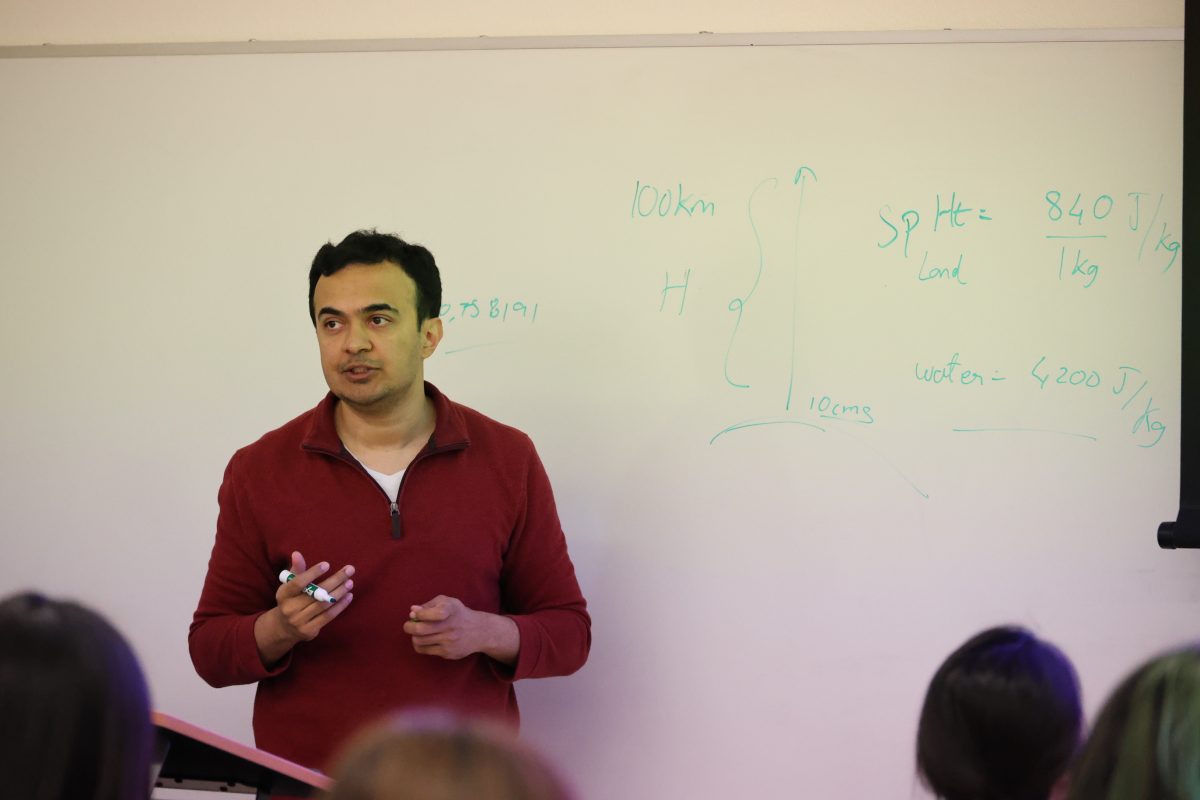
Thirty years ago, a boy in Mumbai, India waited for a cloud which let people know rain was approaching the area. Fast forward to fall of 2024, that boy has now become a man, teaching meteorology classes at De Anza College.
Neel Desai, an instructor in meteorology, said he has been interested in clouds and nature since he was a child. Desai said the climate in Mumbai is extremely hot and humid; it only receives rain from June through September.
Desai said, “Everyone in India, not just me, would wait for the rains, (and) I used to keep waiting for the first sign of the clouds.”
Although it thundershowers when it rains in India, Desai said he enjoyed that.
“By enjoying that, I knew I liked nature. I like science, even in school,” Desai said. “I had that passion and I wanted to learn more about clouds and nature.”
Although Desai became interested in clouds when he was a child, his educational journey in higher education started in a mechanical and aerospace engineering program at the University of Mumbai. After finishing his undergraduate degree, he came to the United States to study at the University of Michigan to complete a master’s degree in aerospace engineering.
Desai said the transition from undergraduate school in India to graduate school in the U.S. was challenging because the educational systems are different.
For example, Desai said he had to share one computer with two other students at his undergraduate school in Mumbai. The students had to share five computers with 15 other students in his coding class.
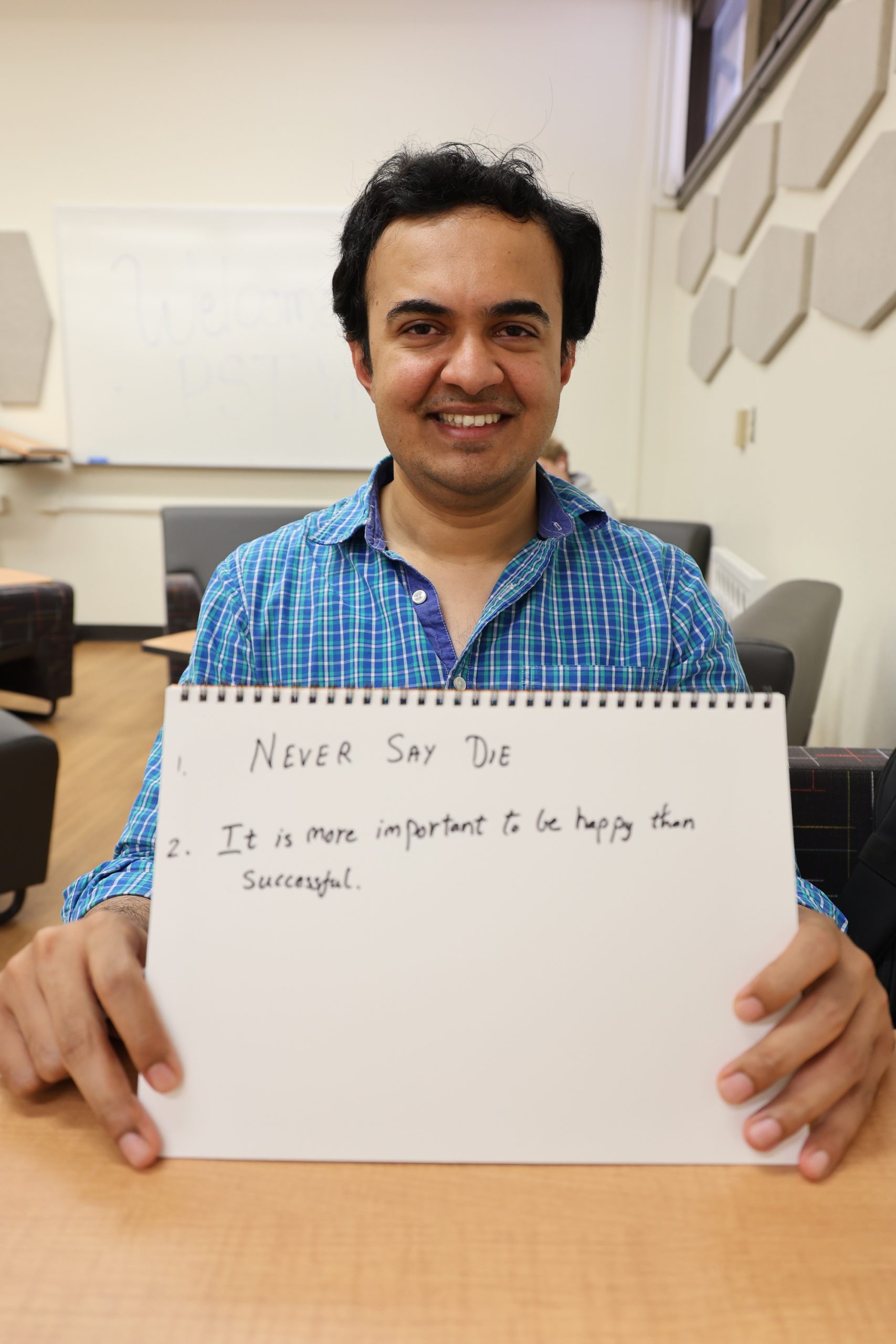
While one student types on the keyboard, another student takes notes and the other student moves the mouse and makes sure that the code is saved regularly because power outages often happened during the middle of the day at that time.
“We used to have problems because of the (lack of) rain, because most of our electricity comes from hydropower plants,” Desai said. “And the last rain is in September, so the lake starts to dry out by the time you reach February (and) March.”
When Desai studied at graduate school in the U.S., he had to do almost everything, such as writing code or making a graph, with his computer.
“Grad school was tough, but whatever I learned through it, it helped me,” Desai said. “I had two years of grad school (and) one year of research. I was able to do a PhD, because all that was useful.”
Desai said when he studied aerospace engineering, he liked the concept, but he did not like applying the concepts to airplanes. By chance, Desai got a project related to wind energy and atmospheric turbulence, and then he realized he liked nature. From that moment, he decided that was what he wanted to pursue.
Desai said he wanted to learn more about atmospheric sciences.
Desai said, “When I got the PhD admission, that’s when I asked my advisor, ‘Do we still not know something about our atmosphere, about our weather that I can help solve?’”
Then, his advisor said there were many questions in the field that need answers such as how rain forms. Desai used what he studied in aerospace engineering when he and his advisor did research.
When measuring a cloud, it can be quite difficult to get out of the plane.
“Since I have a mechanical engineering background, we made clouds in the lab,” Desai said. “We studied them, and we published them. People were like ‘This is something new.’”
Even though Desai has a doctorate in atmospheric sciences and meteorology, he said studying in college was tough because it is much different than studying in high school.
“But if you get over it, if you are able to learn, then the college degree helps you out,” Desai said. “You’ll get a broader perspective.”
Currently, Desai supports students at De Anza College as well as at San Jose State University where he also teaches classes.
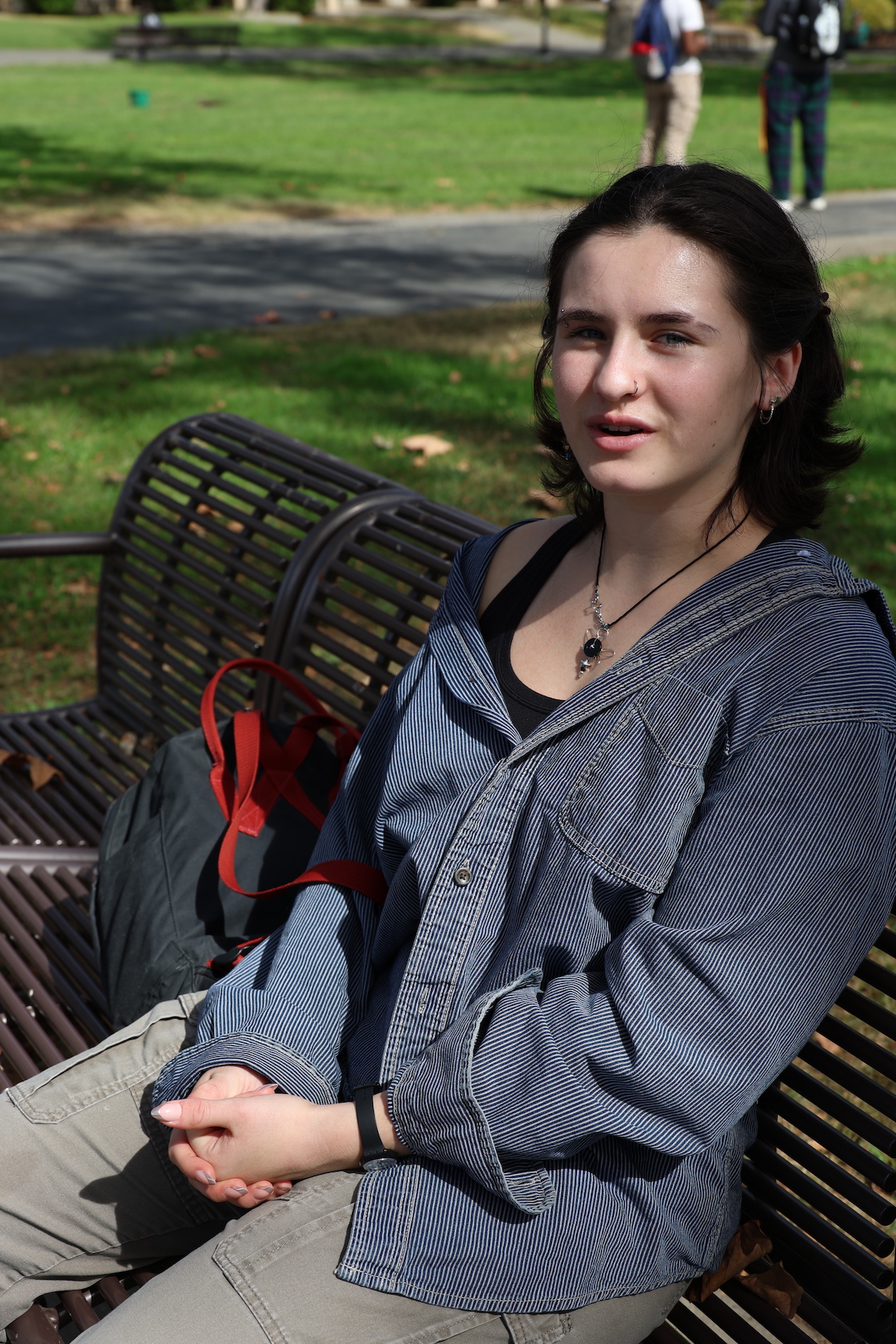
Cleo Greenberg, 19, psychology major, is taking Desai’s Weather and Climate Processes class. Greenberg said she is enjoying the class although science is not her favorite field.
“He’s a very good professor for someone that wants to know a surface level amount, or if you want to go deeper into it,” Greenberg said.“If someone wants to go deep into it, he will, but he tries to explain it very simply, and I really enjoy that. … For people that are interested, he does put in the effort.”
One of Desai’s coworkers said he was one of the best candidates to become an instructor at De Anza College.
Alicia Mullens, a meteorology instructor at De Anza College, said when she was looking for a part-time adjunct professor to cover for her while she’s on professional development leave, she first called out to her coworkers at SJSU, and it was then that Desai expressed interest in the teaching position at De Anza College.
Mullens said she felt confident after a couple of conversations with Desai, so she brought him in to meet the dean, and then Desai became an instructor at De Anza College.
Mullens is Desai’s coworker, but at the same time, she is also a student of Desai because she’s taking a class that Desai teaches at SJSU on carbon cycle meteorology.
“I kind of know how he’s teaching my De Anza students,” Mullens said. “And he’s doing a great job.”
Desai said De Anza students are focused on their career goals such as transferring to four-year universities, and he enjoys helping with the first steps for their career goals.
Desai said,“(For example,) they want to go to Berkeley, so they come to class, they really want to learn.”
Desai said that by teaching students how to look at data or how to answer questions, “If they get good now, they can do good at upper universities as well.”
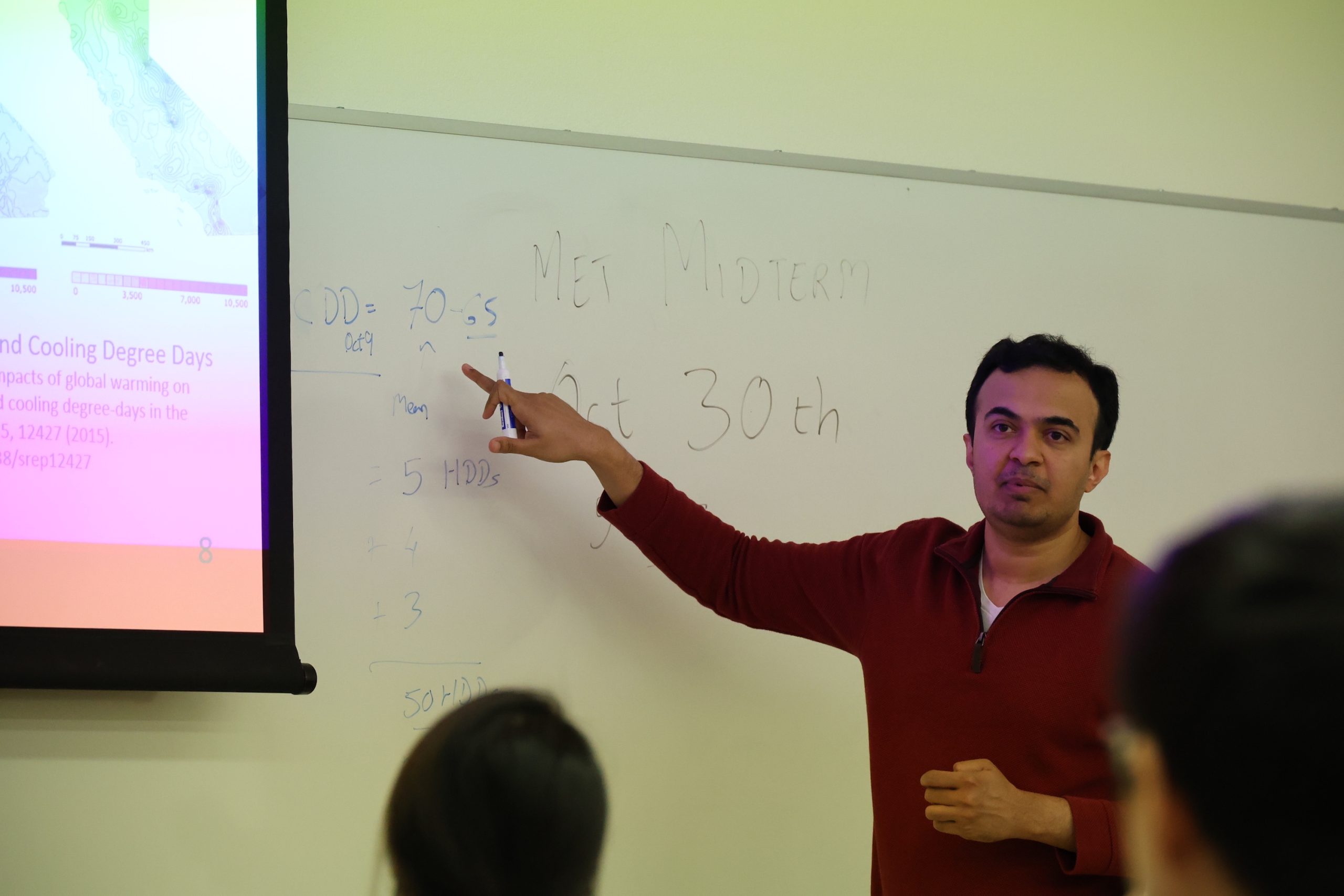
As a former international student, Desai said he understands how hard studying abroad is because the transitions are tough. Many things, including the culture, the way people do things and the language is quite different from where the student came from.
“Take that leap,” Desai said. “Don’t worry, everyone is the same. Everyone will make friends with you, and you learn a lot more if you integrate into the local culture.”
Desai said he is focusing on teaching meteorology at De Anza College, but he is also capable of teaching mathematics, physics and math engineering because of his teaching experiences while he was in graduate school.
“I’m hoping I can help out in other departments as well,” Desai said. “So that I can contribute to the whole division that way.”