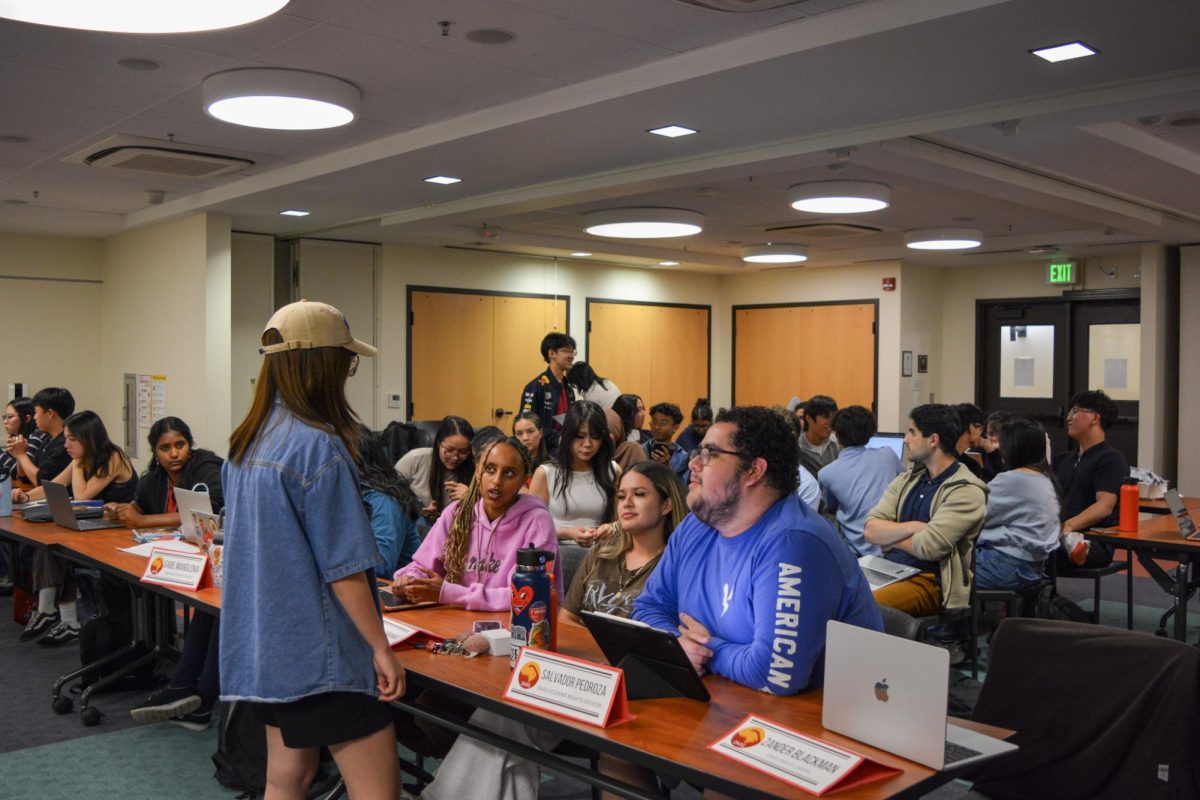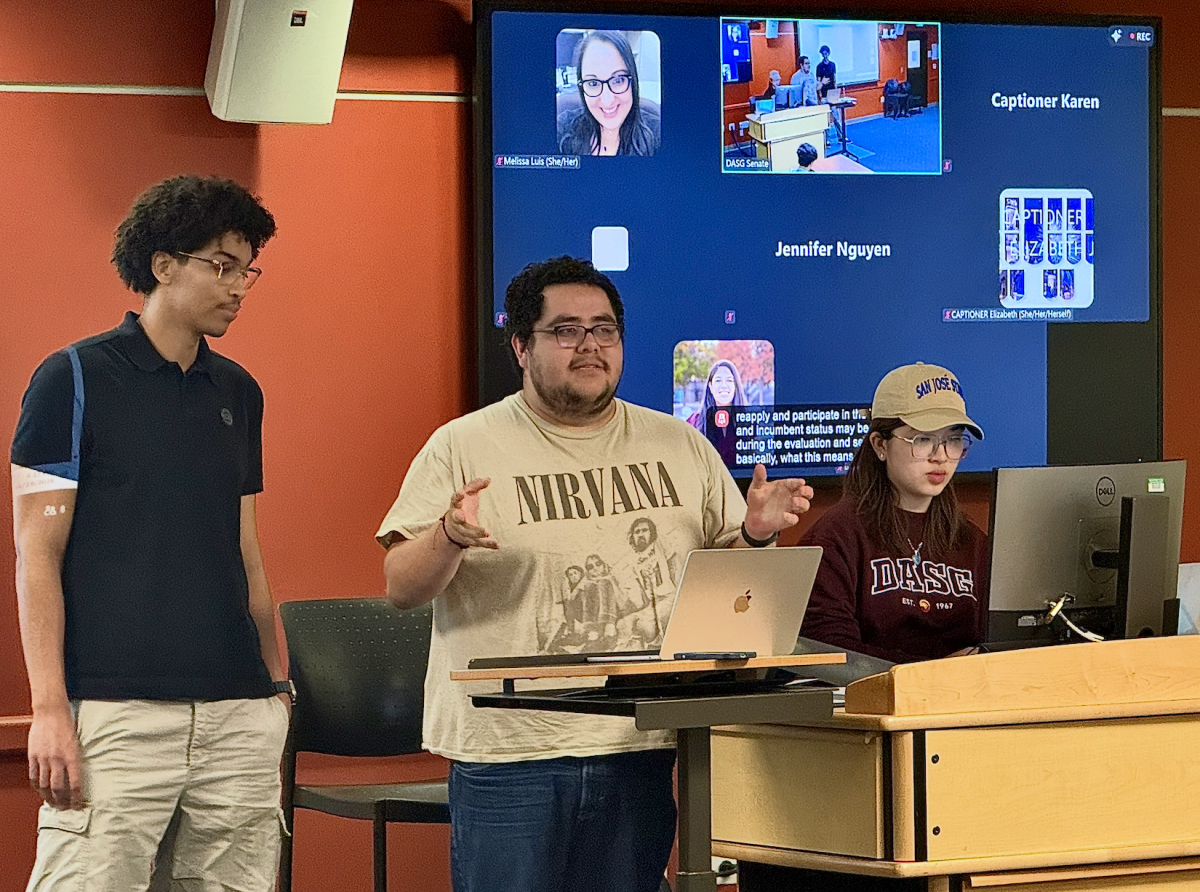
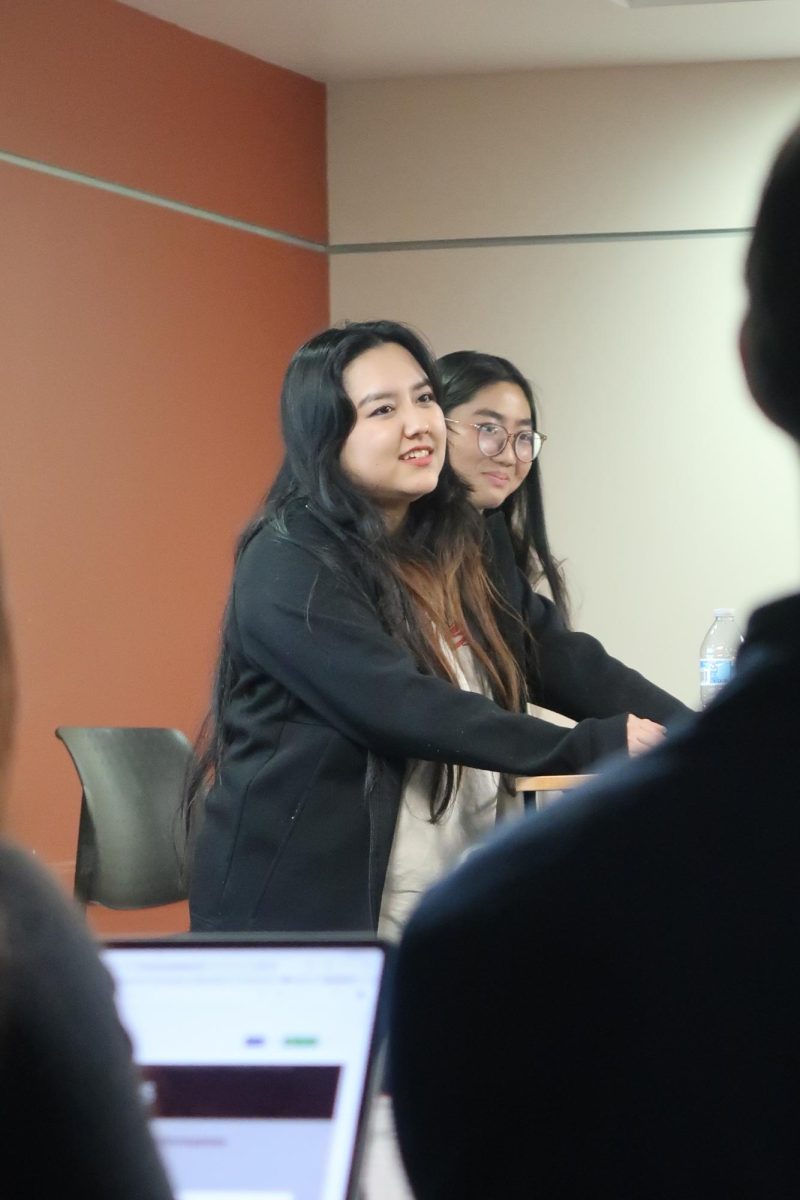
The De Anza Student Government administration committee proposed major changes to election code at the general senate meeting on Jan. 22, weeks before campaigning is set to begin.
The committee’s proposed amendments include that the president and vice president will each campaign independently, as opposed to running together, adding an election committee, and introducing a “15% table.”
To prevent extended elections, an issue faced in last year’s elections, the committee introduced the “15% table,” which streamlined the process by setting a vote threshold for determining winners based on how many candidates run in each race; under the new set of rules, a candidate would have to receive at least 10% of the total ballots cast in races with five or more candidates.
Prior to this, all candidates had to receive at least 15% of votes cast, regardless of the number of candidates running in their respective race, in order to be considered elected in accordance with Article VI, Section 1.A of the DASG Elections Code.
“No candidate will be considered elected as a DASG Senator who receives less than fifteen percent (15%) of the total votes cast in the general election,” the code states.
Vice President Aura Ozturk, 19, computer science major and Elections Commissioner Wadi Lin Lei, 21, computer science major, introduced the changes during the committee meeting.
“These changes came from wanting to make the election process easier, fairer and better for everyone,” Lei said. “We saw that students wanted more flexibility in voting, and candidates needed a system that gave them more independence and fairness.”
Lei went on to highlight frustrations with the old code which led to the creation of the new version. Lei also restated Ozturk’s point of renaming the vice president’s position to the “Chair of Administration.”
“The separation of the president and vice president (Chair of Administration) roles into individual tickets allows candidates to focus on their individual platforms and strengths, giving voters more distinct choices,” Lei said.
Lei highlighted the overwhelming workload of the elections commissioner, suggesting the creation of additional support roles to distribute responsibilities.
“By replacing the elections committee with the administration committee, we now have a more streamlined system,” Lei said. “The administration committee’s responsibilities regarding elections are clearly defined for all students to know and be aware of.”
Lei said that this adjustment would not only ease the burden of the elections commissioner duties but also provide more opportunities for students to get involved in the election process by running for these new roles.
Chair of Finance Aditya Sharma, 18, electrical engineering and computer science major turned the conversation by raising the possibility of a runoff election.
“If someone has been disqualified from the elections, the votes that they have received should not be counted towards the total number of ballots received (for their race) since they are not in the race anymore,” Sharma said.
The majority consensus agreed with Sharma’s concerns; the rule will be changed in the upcoming election.
This adjustment ensures that disqualified candidates will no longer impact the overall vote count, adding fairness and accuracy to the election process.
“We believe this new system, with the adjusted percentages based on the number of candidates, offers a more balanced way to tackle the chances of a lengthy runoff election,” Lei said.