
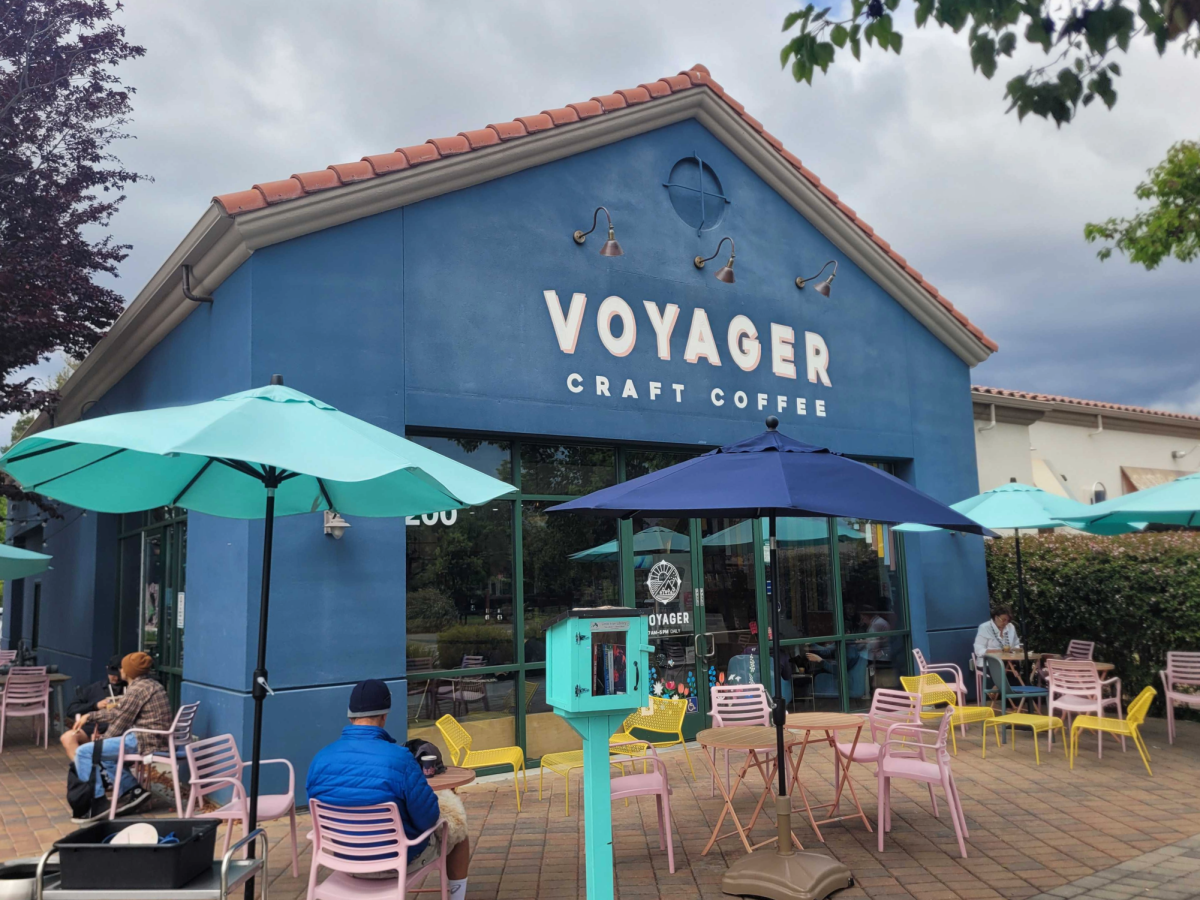
The Cupertino City Council passed a proposal to replace the Stevens Creek Office Center, including Voyager Craft Coffee and Panera Bread, with 122 for-sale housing units at its April 7 meeting at the Cupertino Community Hall.
“Cupertino is a world-class center of innovation and opportunity,” Housing Action Coalition Advocacy and Operations Association Witt Turner said. “But the chance to own a home here has become a real vanishing reality for families and workers …. This project is a necessary and logical solution.”
Harvest Properties proposed the plan to the Cupertino Planning Commission on March 24, calling for a “Use Permit, Tentative Map, Architectural and Site Approval and Tree Removal Permit,” according to meeting documents. These permits were approved at the April 7 meeting.
The development would bring 66 small-lot single family homes and 56 townhomes, including 24 affordable units, to the 6.9-acre site. As of now, the project has no set timeline.
“The median price right now of a single-family home built in the 1960s is $3 million,” Councilmember J.R. Fruen said. “These (new housing units) are all coming in beneath that. … At one and a quarter (million), there’s very little in the city that you can find.”
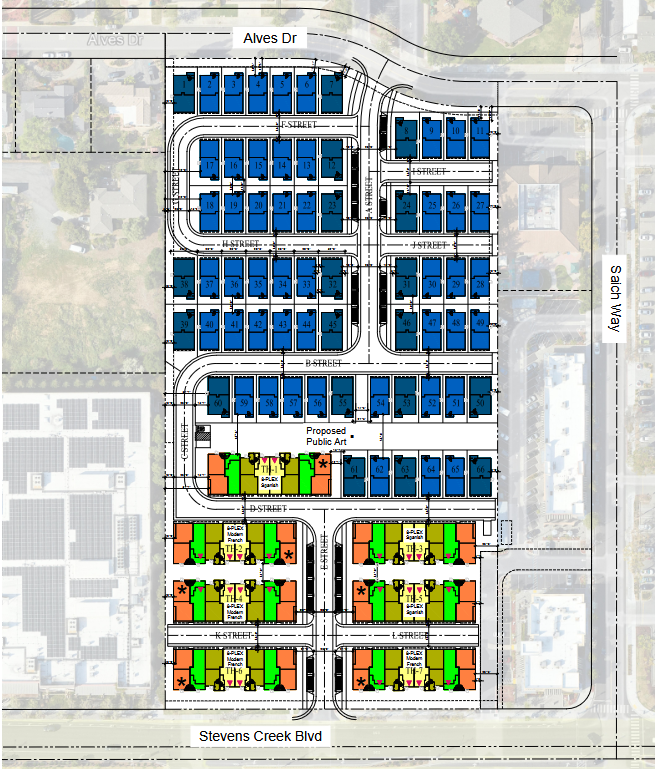
Director of Harvest Properties Kevin Choy said the project became feasible after Apple, which owned 65% of the plot, vacated the office buildings.
Choy also said the project addresses a regional housing supply imbalance.
“For-sale homes have been severely underproduced in this region with development heavily skewed toward rentals.” Choy said. “This product helps meet that missing supply for homeownership.”
The proposed housing would reduce traffic in the area by up to 40% according to Harvest’s research, Choy said in the meeting.
“The anticipated number of trips per square foot for the commercial office versus that of the residential … dramatically lower,” Choy said.
Harvest Properties is working with Voyager and Panera, planning to help them stay in Cupertino. The company team “has come to an agreement” to assist Voyager with finding a new location because “actions speak louder than words,” Choy said.
Owner and co-founder of Voyager Lauren Burns said that the future of its location remains uncertain.
“Right now, we are working to find a new home in Cupertino, but we have not found a viable space,” Burns said. “We support the increased housing; we hope there will still be room for places like Voyager.”
Some residents opposed the project because of the local business impact. Long-time Cupertino resident Esin Demirlioglu said Voyager’s struggle to find a new location is concerning.
“Although I like the proposed development in many aspects,. I strongly oppose the proposed removal of Voyager Cafe, and Panera Bread,” Demirlioglu said. “It (Cupertino) was where we built our lives and that life was centered around local businesses.”
Ari Badiei, 23, environmental horticulture and design major, said the plan’s opposition doesn’t consider the below-market-value housing’s incoming residents or their needs.
“The people who live there (near the proposed development) are much wealthier than I thought,” Badiei said. “Those are the people who are going to Panera Bread out of convenience on their day-to-day, like ‘this is the heart of Cupertino.’”
Daisy Castillo, 20, photography major, said he is cautiously optimistic about the proposal.
“I’m pretty stoked for housing to open up to potential residents, but I just can’t help but feel a sense of distrust,” Castillo said.
Castillo questions whether the below-market-value housing will address the housing affordability crisis considering Cupertino’s high housing prices.
Despite such concerns, Castillo still said the housing plan is a step in the right direction.
“As much as it might not be affordable,” Castillo said, “it’s still housing at the end of the day.”