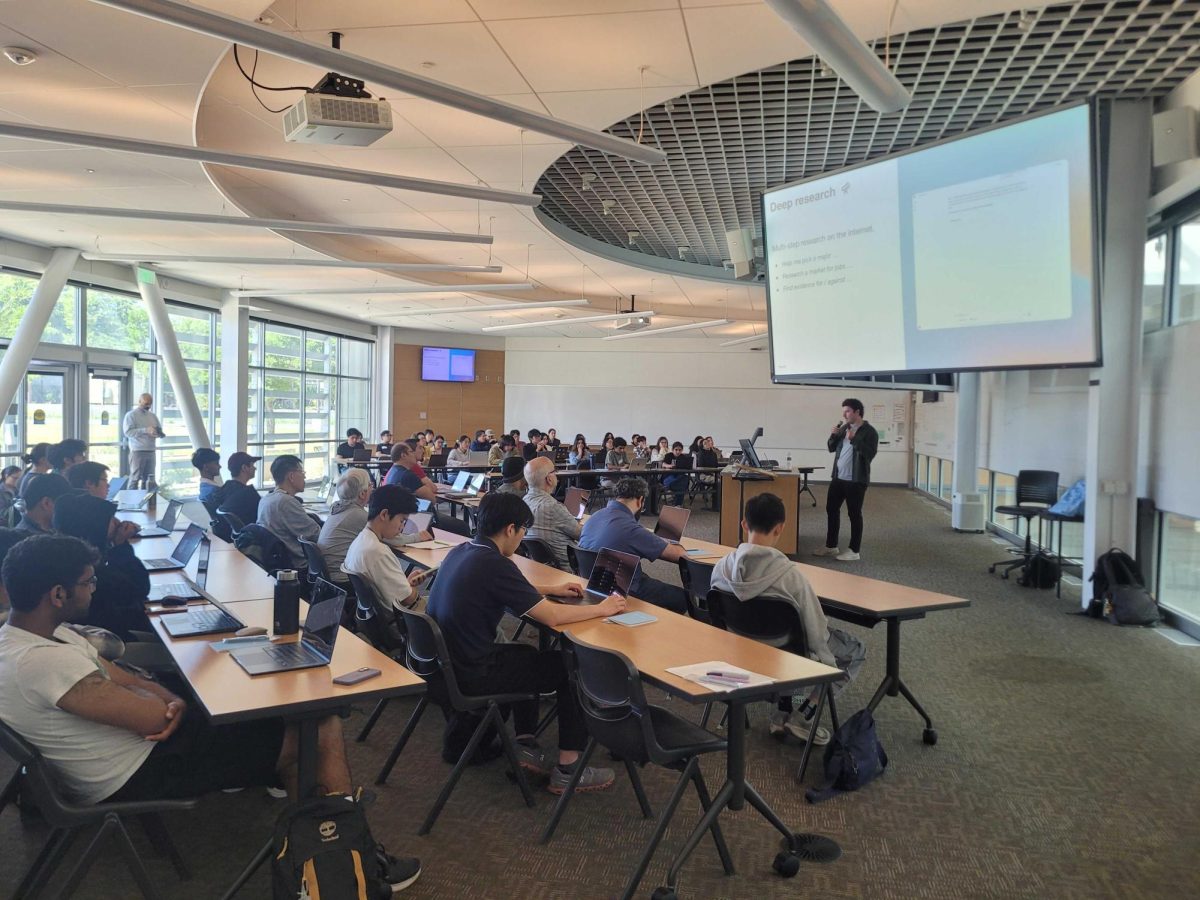
Students learned to efficiently use generative AI in coding projects and daily life at OpenAI Academy’s workshop on May 9 at De Anza College’s Media and Learning Center.
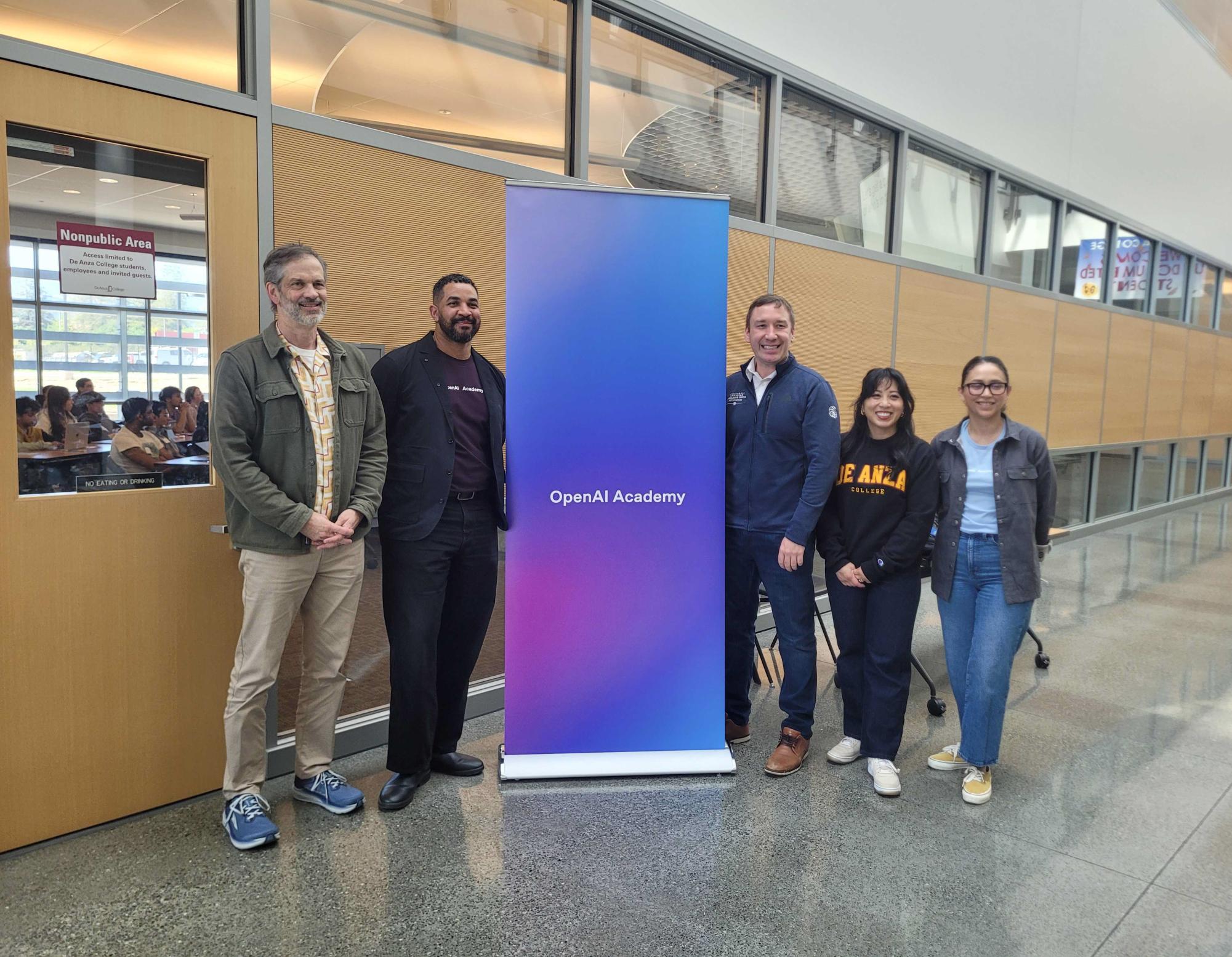
“It’s our first OpenAI Academy at a community college in California,” Mattie Zazueta, OpenAI global affairs representative, said. “We did it because this technology is becoming embedded in our day to day lives more and more and having the skills necessary to know how to use this tool is becoming more important.
Several current and former Foothill-De Anza District administrators in attendance said they believe AI is the future.
Patrick Ahrens, assemblymember for District 26 and De Anza alumnus, said that we are at the beginning of the AI revolution, comparing it to other revolutionary technologies like the wheel and the printing press.
Foothill-De Anza Vice Chancellor of Technology and Innovation Jory Hadsell said the workshop marked a milestone for both OpenAI and the district.
“This (academy) is a huge honor,” Hadsell said. “Our students have direct access to the folks from OpenAI.”
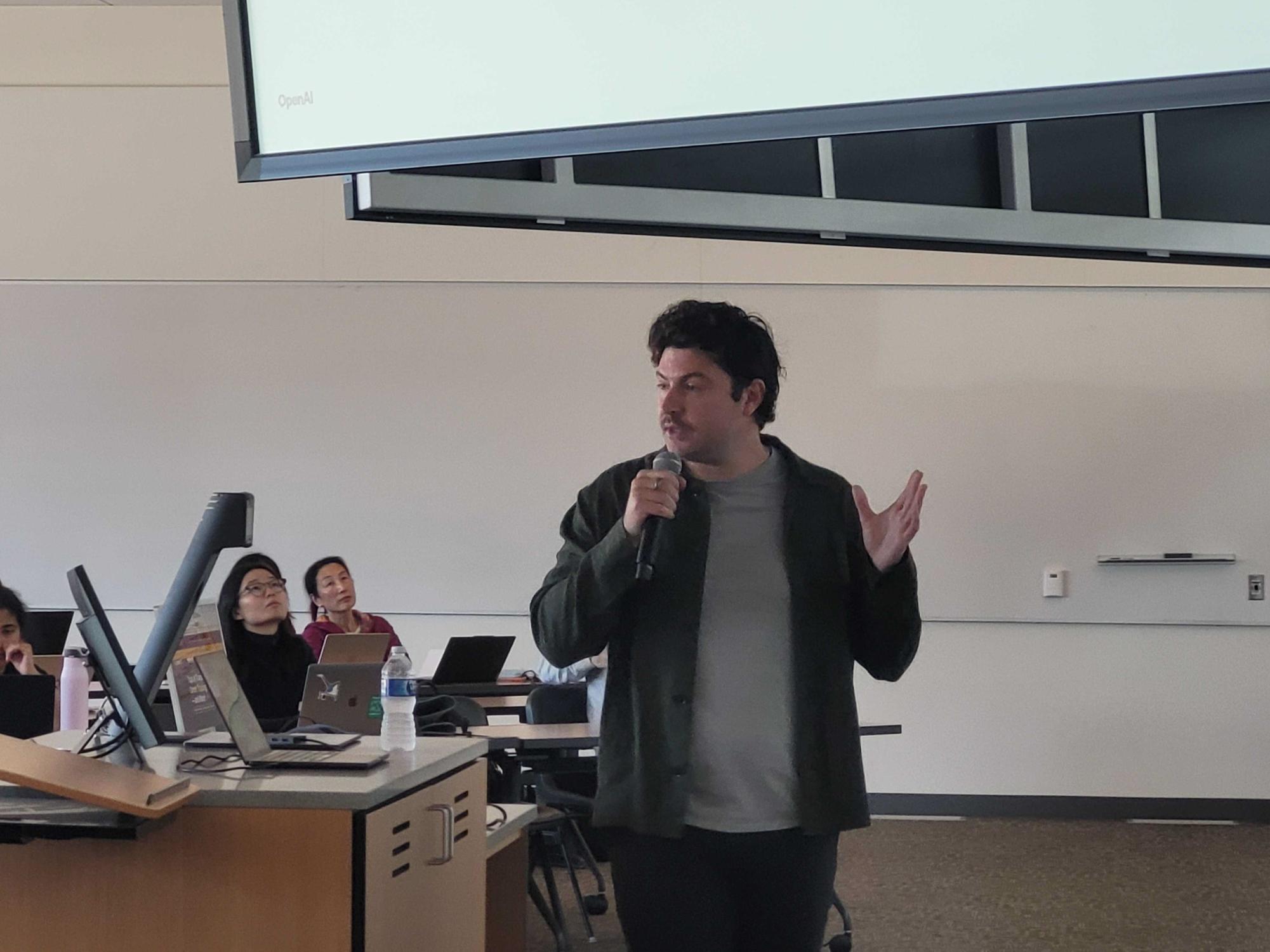
Sean Lubbers, OpenAI Go-To-Market staff member, facilitated the workshop and taught attendees how to effectively prompt ChatGPT for research and image generation.
In the event’s second half, Lubbers explained Codex, a prompt-based, ChatGPT-powered coder that generates computer programs from text prompts, then gave participants 45 minutes to enter conversation English prompts or vibe code.
“It was my first time doing an educational event, but it was great,” Lubbers said. “The energy was super high and people were super engaged and active.”
With over 60 people attending, OpenAI staff said they considered the event a success.
“There was a lot of interest, and we ended up having to create a waitlist,” Zazueta said.
Zazueta said OpenAI wants to expand access to AI education through similar workshops.
“We want to reach as many people as possible,” Zazueta said. “Particularly folks who might not have access to this type of programming.”
Ben Sandstrom, 26, economics major, believes the workshop was worthwhile.
“It was interesting seeing the difference between what you want to start with at the beginning … versus what you can do at the end,” Sandstrom said.
The workshop comes after the recent Board of Trustees approval of AI degrees and certificates.
“Our district is trying to position itself to be a leader in the AI space,” Hadsell said. “To help ensure we have all the programs that our students will need to be able to find the best employment and have the best career opportunities.”
De Anza Student Government President Jayven Huang, 20, computer science and business administration major, shared the administration’s optimism but remained wary of AI’s negative impacts.
“There are a lot of negative consequences to using AI,” Huang said. “I read a study saying that AI uses a lot of water because they need to cool down the GPUs.”
Despite concerns, Huang said AI will become more integrated into society.
“Even though there are a lot of consequences to the environment and to society in general,” Huang said. “We just have to adapt to it at the end of the day, and we will have regulation in the future.”