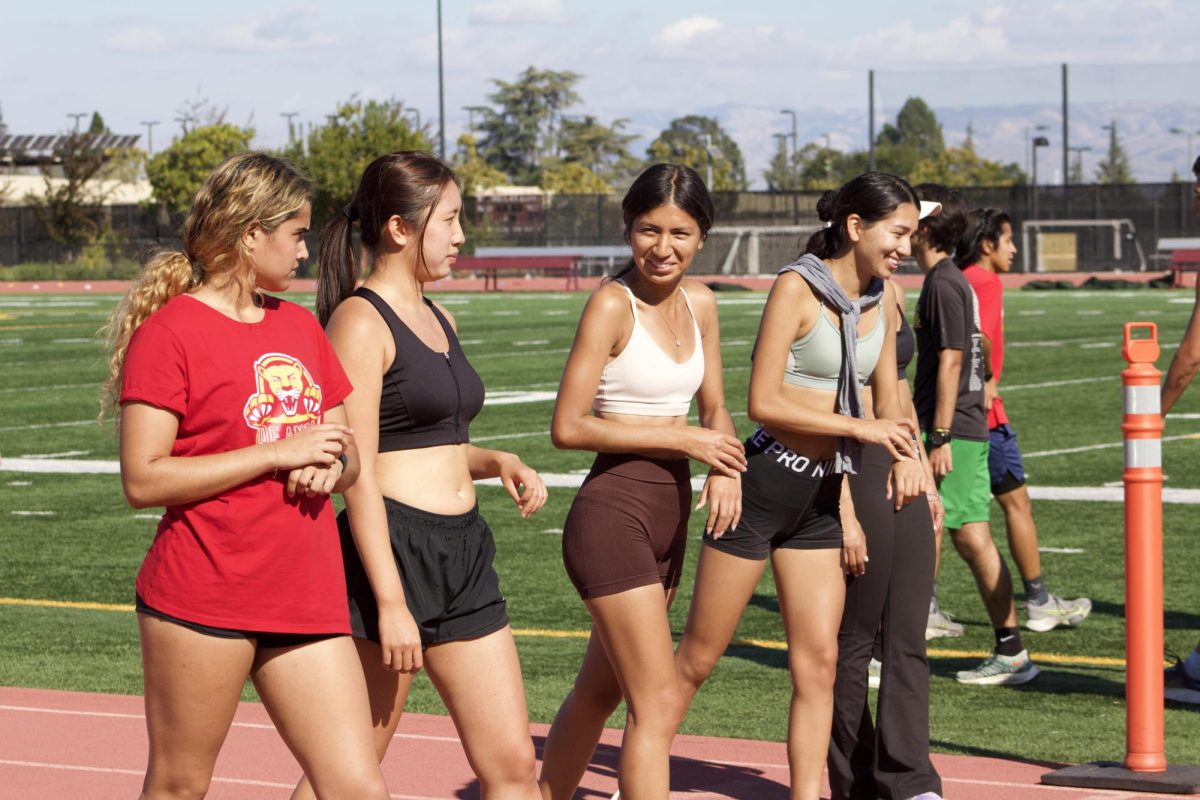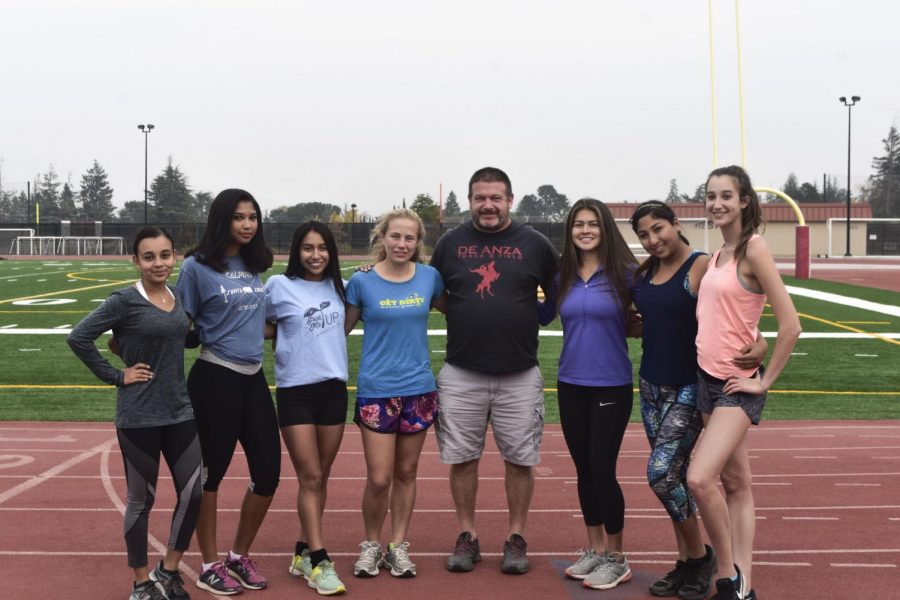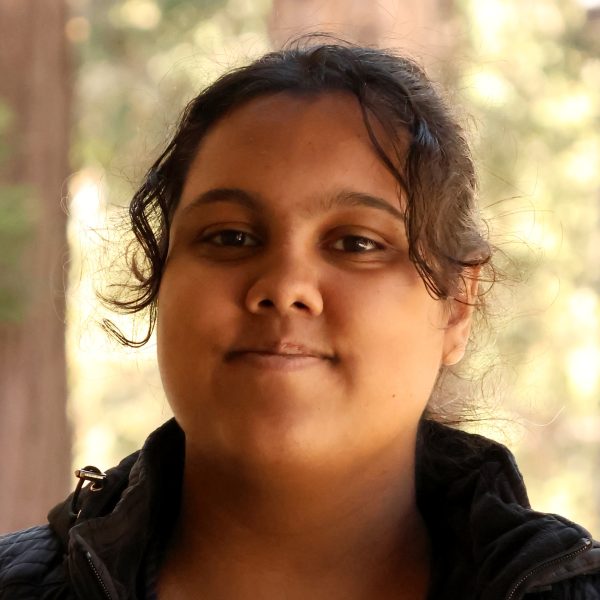
On Nov. 18, The Mountain Lions Sportscast on La Voz News at De Anza College featured a discussion with three female cross country athletes, Nathaly Bernal, Angela Ellis, and Corinne Thelen, members of the team who won the 32CA Regional Championships on Nov. 7 and went into state championships the following Saturday on Nov. 22.
La Voz reporters Ashritha Chand and Jennifer Yamanaka asked them about their process, what motivates them and how they felt about the season overall. Podcast filmed by Jennifer Yamanaka and Ashritha Chand
[0:00] Ashritha Chand: Hi, my name is Ashritha.
[0:03] Jennifer Yamanaka: And my name is Jennifer.
[0:05] Chand: Welcome to our show, The Mountain Lions Sportscast on La Voz News at De Anza College.
[0:08] Yamanaka: This is our very first episode, and I’m so excited to talk about your experience as an athlete here at De Anza College.
[0:13] Chand: I’m here with…
[0:15] Nathaly Bernal: My name is Nathaly.
[0:17] Angela Ellis: I’m Angela.
[0:19] Corinne Thelen: I’m Corinne.
[0:21] Yamanaka: And if you could, please tell us your major and age as well.
[0:25] Bernal: I’m a biology major, and I’m 18.
[0:28] Ellis: I’m a biology major, and I’m 25.
[0:31] Thelen: I’m also a biology major, and I’m 21.
[0:37] Yamanaka: Thank you so much. Today’s topic is the overall day in the life of a cross-country athlete and how cross-country athletes prepare for upcoming competitions.
[0:47] Chand: I wanted to start off with a round of applause for winning the 2025 3C2A NorCal Championship on Friday, Nov. 7.
[1:02] Yamanaka: That was a big win.
[1:06] Chand: Can you tell me how it felt winning the regionals for the first time since 2012?
[1:16] Bernal: I think it was pretty cool. When I was in high school, we didn’t really win, so it’s really nice for us to actually win as a team.
[1:23] Ellis: Yeah, I’ll just add a little anecdote. I remember at the end of the race, about 800 yards to go, our coach was yelling at me, like, “We’re tied.” And he had said that at the last race, and I was like, maybe he’s just saying this to motivate me to catch some girls, like we can actually be tied again. But then he kept yelling it. I’m like, oh, maybe this is true. And I ended up catching them. And I remember thinking, I know how hard everyone else on the team was running, so if I didn’t catch them even though everyone else had, I would feel very sad. So I’m glad he wasn’t lying. We were tied. So, lesson learned: believe your coach.
[2:01] Thelen: Yeah, no, I think it was the same thing for me because where I was, I was also right with someone on the other team that we were really competing with. And, you know, it’s just really motivating knowing you’re not just running for yourself, you’re running for your team. Sometimes you want to give up, but knowing that if you stay in it and beat that person, you’re helping your team out. It was really surreal finding out that we won.
[2:30] Yamanaka: Was it, like, overall a good, like, team effort?
[2:34] Bernal: I think it was. We all had massive PRs. I had 50. I’m pretty sure Angela had 20–30. So it was a really good team effort, and it was actually really close. I think we were five points.
[2:50] Ellis: It was, yeah, like 62 to 58 or something.
[2:53] Bernal: So I think we all performed well as a team.
[2:56] Ellis: Yeah. I’ll just add: the previous race, at the start, I remember our coach was a little upset at the positioning of Nathaly, me and Erica, and he kept telling us, like, catch this pack that was right in front of us. So we learned from that race. And this race, it was great to hear at the one-mile mark, “Great execution, you’re right where you need to be,” because that’s not what we were hearing at the previous race. Do you have anything to add?
[3:19] Thelen: I don’t think so.
[3:22] Chand: Okay, can you walk me through a typical day — like, how you prepare before a competition?
[3:32] Bernal: I feel like I try not to think about it too much, because if I think about it a lot, I stress myself out and get really nervous. I just try to stay away from foods I know will upset my stomach the day after. Besides that, I just don’t really pay all that much attention to the race beforehand.
[3:55] Ellis: I agree. Sometimes there’s a little bit of dread if I’m not really addressing the race, because I know some pain is coming and I kind of dread that. But a way to focus is to visualize running the race in my head beforehand. It helps me because, in a way, I’ve already done it. That’s part of the pre-race routine. Also, eating smartly so my stomach doesn’t hurt the next day is important.
[4:21] Thelen: Yeah, I think it’s about not getting too in your head and remembering this really isn’t that serious. Sometimes it feels like life or death — like, “I want to do really well” — but really, we do this because it’s fun and because we love it.
[4:43] Yamanaka: Was winning gold a testimony to your preparation and improving running times?
[4:53] Ellis: I would say yes. We’ve been PRing every race. In previous seasons I’ve been on, I’ve never seen this level of improvement week by week for myself or my teammates. I feel like our coach has a very smart training plan. There were minimal injuries, and different from previous seasons for me, I didn’t feel overtrained. So when the race came, I had fresh legs and was ready to go. I think there’s been very smart training and timing of workouts and workload.
[5:24] Thelen: Yeah, I think even early in the season we could feel that we were going to improve a lot. Going into NorCal, I think we were ranked fourth or fifth as a team, but we knew we were capable of more, and we ended up coming out in first, which was awesome.
[5:39] Bernal: So I think yes, because as you mentioned — I didn’t think about that — but I didn’t feel overworked toward the end of the season. And Angela mentioned the massive PRs. I feel like our efforts were worth it, and compared to the other girls, we’re still going strong.
[6:02] Yamanaka: So both me and Ashritha have played competitive sports in the past. I used to play competitive basketball in middle school.
[6:11] Chand: And I used to swim competitively in high school.
[6:17] Yamanaka: Did you guys participate in competitive sports before college, and did that include running?
[6:27] Bernal: Before I started running — I started in high school — but before that, I played soccer for 12 years. It wasn’t competitive… I don’t know.
[6:37] Ellis: Did you do games?
[6:39] Bernal: Yeah.
[6:41] Ellis: Then yeah. I just ran in high school.
[6:44] Thelen: Yeah, I also ran on and off in middle school and high school.
[6:52] Chand: What motivated you to join the cross-country program here at De Anza, and what got you to stay committed?
[7:01] Bernal: I started running in high school, and I really liked improving, but then I had a slump. My cousin had been here before, and I heard good things about the program, so I thought I’d give it a shot and see if I still liked running. When I ran and saw my coach supporting me and improving my times, I committed. The culture with the girls is great — on my old team I was only close to two people, but since we’re smaller, it feels more intimate.
[7:36] Ellis: I hope my coach doesn’t hear this, but what originally got me to sign up was priority registration. I’m not a traditional student — I’m coming back to school for a second time — and I wanted to get my classes in time to move on to a different career. So the timing was the reason. But I stayed for the reasons Nathaly said. The team is wonderful. I love having training partners. The coach is great. I’m running PRs. I didn’t expect the season to go this well, and I’m excited for track, too.
[8:09] Thelen: I got back into running after taking a couple of years off. I didn’t run my junior or senior year, and then my first year of college I didn’t run at all, and I felt like part of me was missing. I was at another college that didn’t have a team, so I reached out and started running here. Having a sense of community and not just going to class and going home — it’s really nice.
[8:38] Yamanaka: Is there a favorite moment or memorable moment going out to meets or outside practice as a team?
[8:49] Bernal: Low key, my favorite moments are the bus rides, especially on the way back. After meets people are usually tired or don’t have the energy to talk, but that’s when our energy is the most. It’s so fun talking with both the guys and the girls’ teams. We’re just talking about whatever, playing games. It’s comforting and nice.
[9:13] Ellis: I love our group chat. One of our teammates, Erica, makes her own images and sends them in the chat, so I really enjoy seeing them.
[9:20] Thelen: Yeah, I just agree with what they both said.
[9:26] Chand: How have you, as an individual, and your teammates grown since the first track meet this year — as a person or athlete?
[9:41] Bernal: I think we have. In the beginning, I wasn’t close with anyone except Erica and her friend Sienna. I felt like I was tagging along. I’ve grown as a person — more social — and I feel like the others around me have grown, too.
[10:02] Ellis: I hadn’t raced for a long time until this year, so the first race we did in SoCal was rough because I didn’t remember how to go about it. I’ve gotten better at racing, pacing, knowing what to expect and how to deal with the pain.
[10:21] Thelen: I’ve gotten better with consistency. Last year I’d just show up when I felt like it, which wasn’t often, and I wondered why I wasn’t doing better. This year I’ve been intentional about showing up every day and putting in the work.
[10:41] Yamanaka: How do you balance academic coursework with your practice schedule?
[10:48] Bernal: Honestly, I don’t know how I do it, but it gets done. I put morning classes because I can’t focus after practice, but surprisingly my grades are good. There’s not really a schedule — it just gets done.
[10:55] Ellis: I’ve always found I manage my time better when I have more on my schedule. I waste less time when I have less time to waste. Practice helps structure my day.
[11:08] Thelen: It’s definitely hard. I’m not doing as well academically as I have in the past, but the trade-off is worth it.
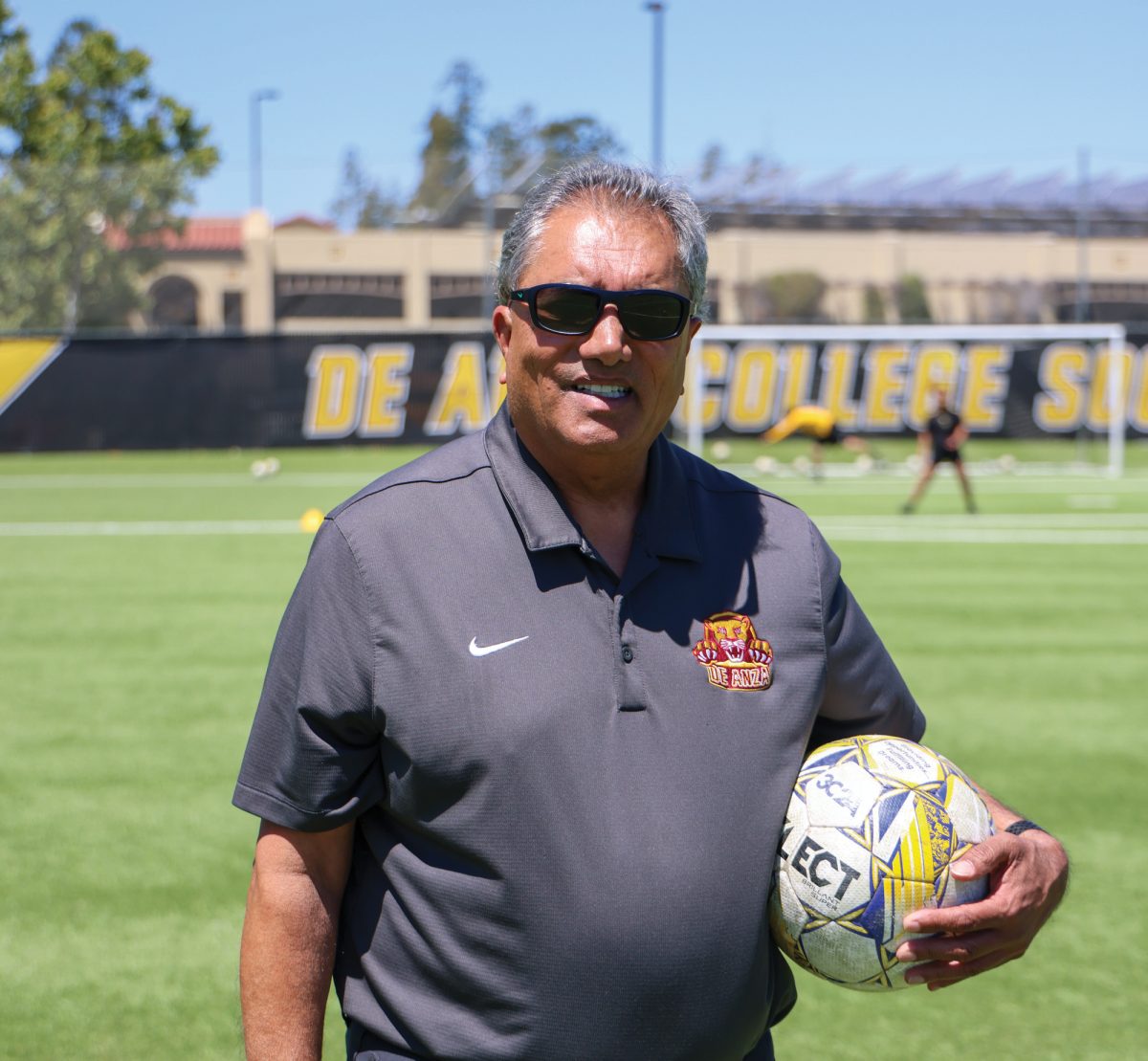
[11:21] Chand: This season there’s a new coach, Mr. Andy Ponce De Leon. What’s changed about the program, and how has that helped you improve as a team or at meets?
[11:37] Thelen: Last year didn’t feel stable. We had one coach at the beginning of cross-country season who left, then another came in, and we had an assistant coach during track who also left. We went through like three coaches. Having stability and someone who’s consistently there is really nice. He cares about the program and the longevity of it and future seasons. It’s cool to see that.
[11:54] Ellis: I wasn’t here last year, but I’ll add one note. After our NorCal win I asked him how he thought our season was going, referring to both the girls’ and guys’ teams. I thought he would say something like, “It’s great for my first year,” but the first thing he said was, “I wish the guys made it to state.” That shows he has high expectations for the team, which is fair because he works hard to meet those expectations. He got Nathaly and me some really nice racing shoes; hopefully the rest of the team gets some. He pulls strings to help us succeed.
[12:34] Bernal: It’s not really about last year’s coach, but in high school my coach was just a teacher, not someone trained. Experiencing a coach who supports you is really nice.
[13:13] Yamanaka: It’s nice how certain leaders can push you to continue. Some leaders only focus on flaws or say they have low expectations because you’re not doing well. But he’s focused on improvement and encouragement. What is something about your teammates or coaches that helped you improve this year?
[14:11] Bernal: For teammates, especially Angela — I didn’t have someone to run with before, and having Angela helps so much. It makes workouts and runs better. She’s kind of a gauge point for me, so I know where we’re supposed to be. And with my coach, I like that in workouts, sometimes things aren’t perfect — we have bad workouts — but instead of being disappointed, he helps us see the positives. It helps long-term, especially for mental health.
[14:32] Yamanaka: What is something about your teammates or coaches that helped you improve this year?
[14:41] Ellis: Training with Nathaly has been really helpful. We’re the only duo with similar enough times to train together and hit similar splits. I’m lucky to have a training partner. And Nathaly is crushing it — getting PRs every week — so it’s cool to see her excel.
[15:30] Thelen: Having a coach who focuses on the positives is nice. In running, coaches can be really negative and wonder why you’re not improving. That’s one reason I stopped running for a long time. Having someone supportive who says maybe you had an off day, but your season isn’t over, and there’s time to improve — that’s really nice.
[16:05] Chand: What’s one piece of advice you’d give your past self at the beginning of the season?
[16:23] Bernal: Not to be so hard on myself. At the beginning I would constantly compare myself to old times. It didn’t affect performance, but mentally it messed me up. I’d tell myself to have fun and enjoy the race.
[16:45] Ellis: I’d tell myself to trust my coach more about racing strategy. I tend to start slow and comfortable to save energy, but I didn’t do that at the last race and it worked out. I wish I’d implemented that sooner.
[17:02] Thelen: At the beginning I was frustrated. I took a long break over summer and wasn’t where I’d been in track. I felt like starting over and wondered if it would work out. I wish I wasn’t so hard on myself and knew that in the end it would work out.
[17:33] Yamanaka: We need more people to apply for Journalism 61A next quarter. As a public service announcement: join the student publication staff at De Anza College. The paper is La Voz, Spanish for “the voice.” Students learn how to use their First Amendment rights to create and publish La Voz news, social media and videos. Journalism 61 is open to all students. Be an award-winning journalist — see you next quarter.
[18:11] Chand: Well, that does it. This has been Ashritha.
[18:14] Yamanaka: And Jennifer.
[18:16] Chand: Until the next episode, tune in on the La Voz News website at lavoznewsdeanza.com.