
It would be typical to begin an opinion piece on the value of English degrees with a list of trite sentiments that explain the power of the written word and the transformative, healing effect of contemplative reading.
Instead of trying to convince you that English is, in fact, a valuable major I will propose the following: Education is in and of itself a transformative force.
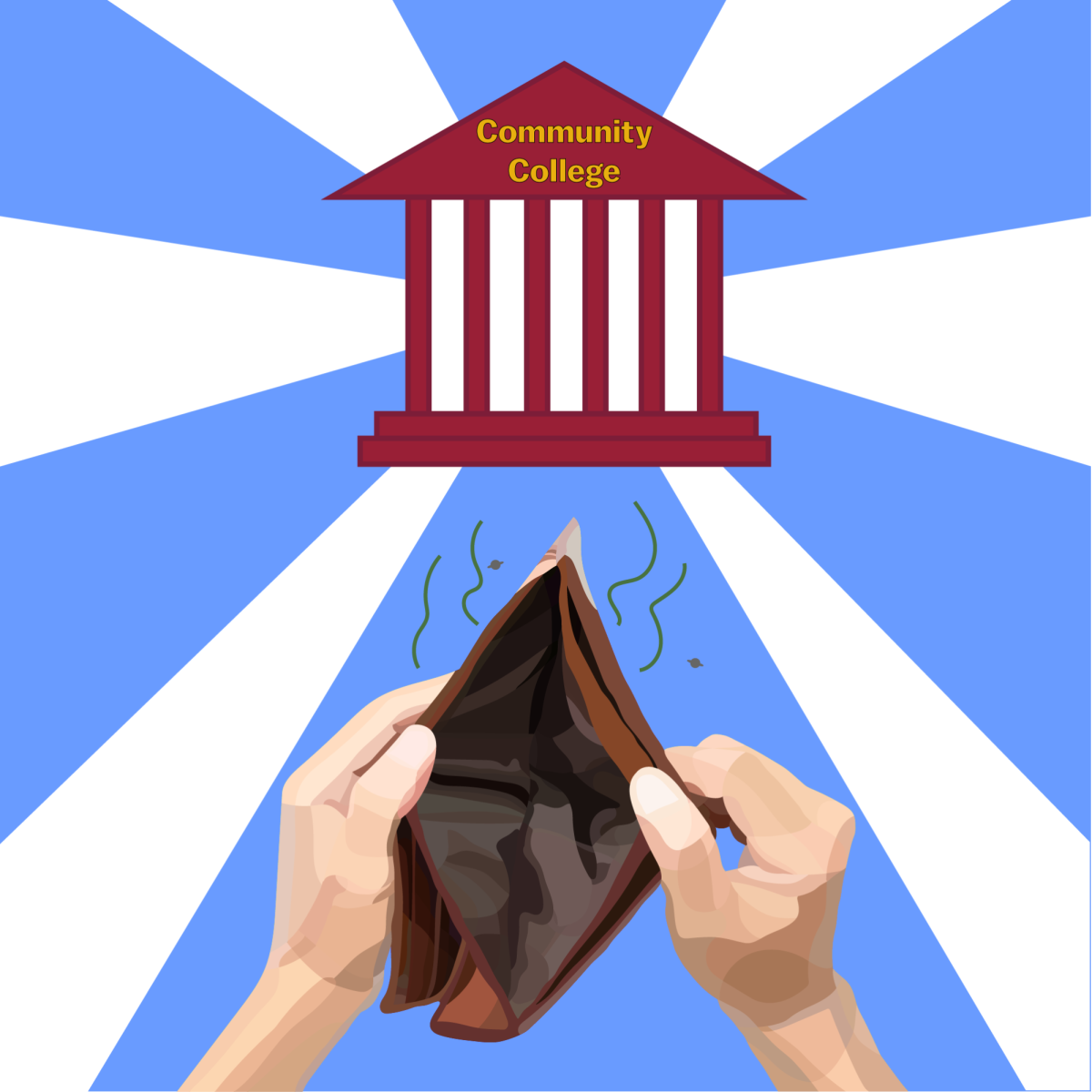
As an English Major, I am used to telling people what my major is and hearing them justify its value to me. There is the shock in their eyes as I tell them that I study English, the fear that sprouts in their minds as they imagine my life of desperate poverty
I would not be able to honestly argue in favor of this educational philosophy without acknowledging that we are losing the fight. According to a 2023 report from The New Yorker, the number of English majors fell by nearly 40% between 2012 and 2020 at Arizona State University.
This trend is also present at the nation’s most selective universities. By the start of 2020, the English major had declined by 75% at Harvard University over the span of 15 years.
It is especially concerning that even at the most “prestigious” universities in our country, fields like English are increasingly being passed over.
All of this data is emblematic of a succinct, underlying belief that governs the educational choices that are being made by students today: Education is a means to an end—and that end is attaining economic and social power.
Some will argue that criticisms around choosing other “practical” majors over English come from a place of privilege. While it is privilege to overlook the earning potential of a field of study My critique, is not with the students’ choices but the system in which they are made
If our current educational system compels students to pick degrees that are increasingly pre-professional, then it does so under the risk of abandoning the very principles that the American liberal arts educational philosophy was founded upon, principles that go back to the Ancient Greeks and Romans.
Some will contend that education needs to evolve, that it is unrealistic to expect a large number of students to invest time and money into studying the ideas of thinkers from hundreds of years ago, while technology exponentially advances.
I find that as we see technology advance, human connection will start to become rare. As we all begin to live more online, we will talk less, empathize less and understand each other less.
It is in these moments when literature, and the liberal arts in general, will be valuable—because, after all, what is narrative but the study of the human condition? As our lives begin to intertwine with a global technological system that uses artificial intelligence, we will need something to help us understand who we are.
Others will argue that it is unfair to judge students for choosing degrees that lead to a high-paying career. They will argue that an English degree does not offer an opportunity to attain a decent livelihood. At first, this argument appears to be true: According to ZipRecuriter, nationwide, English majors earn $53,610 a year while fields like Accounting earn an average of $68,326.
English majors tend to pursue careers in academia and teaching that typically pay less. It is not the major that determines the low pay that English majors generally garner, but the career choices that recipients of English majors make.
Outside of academia, English degrees are sought after in fields like consulting and technical writing. These fields tend to pay more, averaging career earnings of over $100,000 and $80,000 respectively.
In a world that convinces us that everything is a means to an end, in a college admissions process that rewards applicants for feigning passions and then selling out to the highest bidder—whether that be finance, tech or consulting—an English degree does not immediately prove fruitful in pursuing.
In order to revive the English degree, we need to reexamine the way that we view education, not as a way to make money and attain social status, but rather as something valuable and transformative in and of itself.