
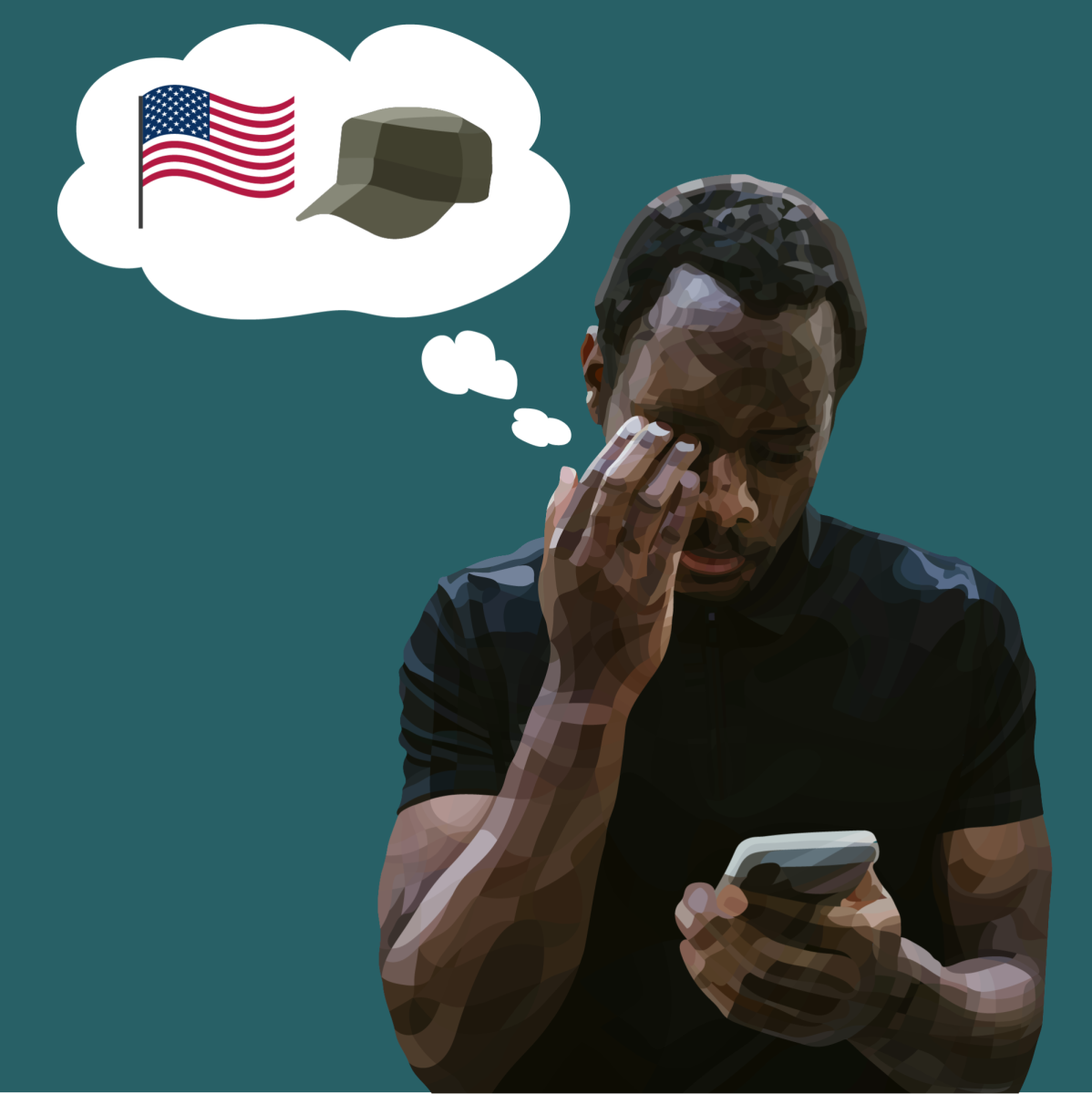
Following the United States and Israel’s bombing of Iran on Feb. 28, social media users created posts in concern for a potential draft, but their reasoning is illogical.
This reaction is common whenever the United States intervenes in foreign affairs. It’s a sentiment to either make light of the situation or one that is taken seriously.
A factor that further escalated the notion of a military draft is a White House press secretary Karoline Leavitt’s March 4 statement.
Leavitt said there are no plans for ground troops to be sent to Iran, but it won’t be left “off of the table” as an option.
There hasn’t been an official draft call since late 1972 for the Vietnam War, with military service being voluntary since 1973.
This isn’t the first time the internet has talked about a military draft, where the internet reacted similarly due to misinformation.
Such events included the assassination of Iranian General Qasem Soleimani in January 2020 and the House of Representatives passing the National Defense Authorization Act in June 2024.
In a Jan. 3, 2020 briefing, President Donald Trump said, “Soleimani was plotting imminent and sinister attacks on American diplomats and military personnel, but we caught him in the act and terminated him.”
This didn’t lead to a military draft, but it increased tensions between the United States and Iran.
There were fake military draft text messages being sent, in which the U.S. Army had to respond to disprove the credibility of these texts.
The U.S. Army said that the draft is the decision made by selective services, with the fake texts being sent by a group posed as the U.S. Army.
One case that had me dumbfounded was the automation of military registration through the National Defense Authorization Act, or NDAA.
The act was created to remove the requirement of citizens manually registering for selective services, which was mandatory since 1980 and doesn’t enforce a draft.
I personally had to do this myself, along with my friends once we turned 18. It’s to ensure the government has people in case of a national emergency.
Governments treat drafts as a discouraged last resort; most governments are aware that a majority of citizens oppose a draft and want volunteers who are more willing in the first place.
The US government didn’t need a draft in its war on Afghanistan, despite there being an estimated 800,000 American soldiers deployed throughout 20 years.
United States citizens shouldn’t be concerned over the military draft because volunteer recruits will perform better than the average person, it will make people lose faith in the government further and there hasn’t been a draft in over 50 years.