Editor’s note: A previous version of the article incorrectly stated that the Kirsch Center released 1,500 monarch butterflies this year. The center is breeding double the amount it released the previous year. The article has since been corrected.
The environmental science department plans to release double the amount of monarch butterflies it did last year.
Since the 1980s, western and eastern monarch butterfly populations have dropped by 90% and 80% respectively, according to Environment America.
“When we came back from COVID on campus, one of the things I noticed is that we had a great amount of milkweed all throughout (the Kirsch garden),” said Diana Martinez, environmental studies lab technician. “I realized that we had a lot of larvae, a lot of eggs on the milkweed.”
This inspired Martinez to collect and care for butterfly eggs and larvae to later release them with help from student volunteers and staff.
Monarch butterflies are essential to pollinating wildflowers and serving as food for other animals, according to the US National Park Service.
Martinez aims to expand the butterfly program to include breeding swallowtail butterflies found on campus.
According to Martinez, swallowtail butterflies are attracted to the fennel plant that grows in the Cheeseman Environmental Study Area.
Alicia Del Toro, faculty in the environmental studies department at De Anza, said she also supports broadening the butterfly program.
Martinez said that California is one of the three biodiversity hotspots in the USA.
“This year, we’re hoping that we will release a lot more,” Martinez said.
Though, breeding butterflies is not all sunshine and rainbows.
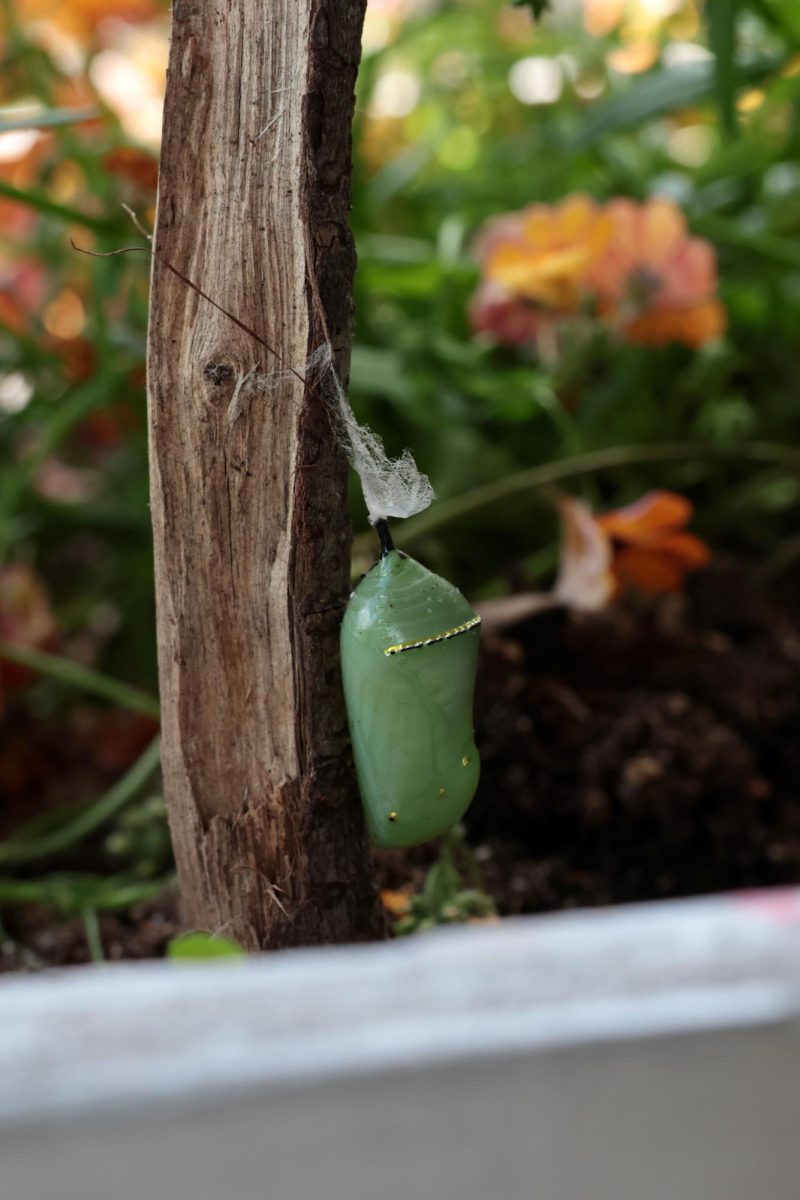
During this year’s Earth Day celebration, the center had a bowl filled with butterfly carcasses to demonstrate butterflies bred in captivity are more likely to survive, but many do not survive into adulthood.
Stefanie Garza, 21, biology major and president of the Zero Waste and Climate Awareness Club said some of the dead butterflies are still in their cocoons or had damaged wings that rendered them flightless.
Martinez said students can volunteer to care for monarch butterflies at the Kirsch Center by filling out a form.