

Several educational departments at De Anza College have finished developing Open Educational Resources content plans to reduce costs for students.
These plans are underway thanks to a $1.6 million budget through acceleration grants for the Zero Textbook Cost Degree Grant per a Jan. 12 report.
ZTC is a government-funded program that lowers textbook costs at California community colleges by creating OER materials and resources like LibreTexts and OpenStax. The program started in 2016, with an initial $5 million budget.
This later accumulated to $115 million in 2021, with expectations of full implementation of ZTC pathways to finish in the fall of this year, or by the deadline, Jan. 2027.
There are many reasons why ZTC and OER have been implemented over the years and have grown since then. One of these reasons is the frustration that instructors feel toward the cost of textbooks.

“Our classes are supposed to be affordable and approachable,” said James Perla Adams, instructional librarian and OER coordinator. “OER was developed to be open and collaborative with other instructors, but free for students.”
Throughout the month the math, biology, kinesiology and communication departments have finished implementing OER material, or are finishing up production.
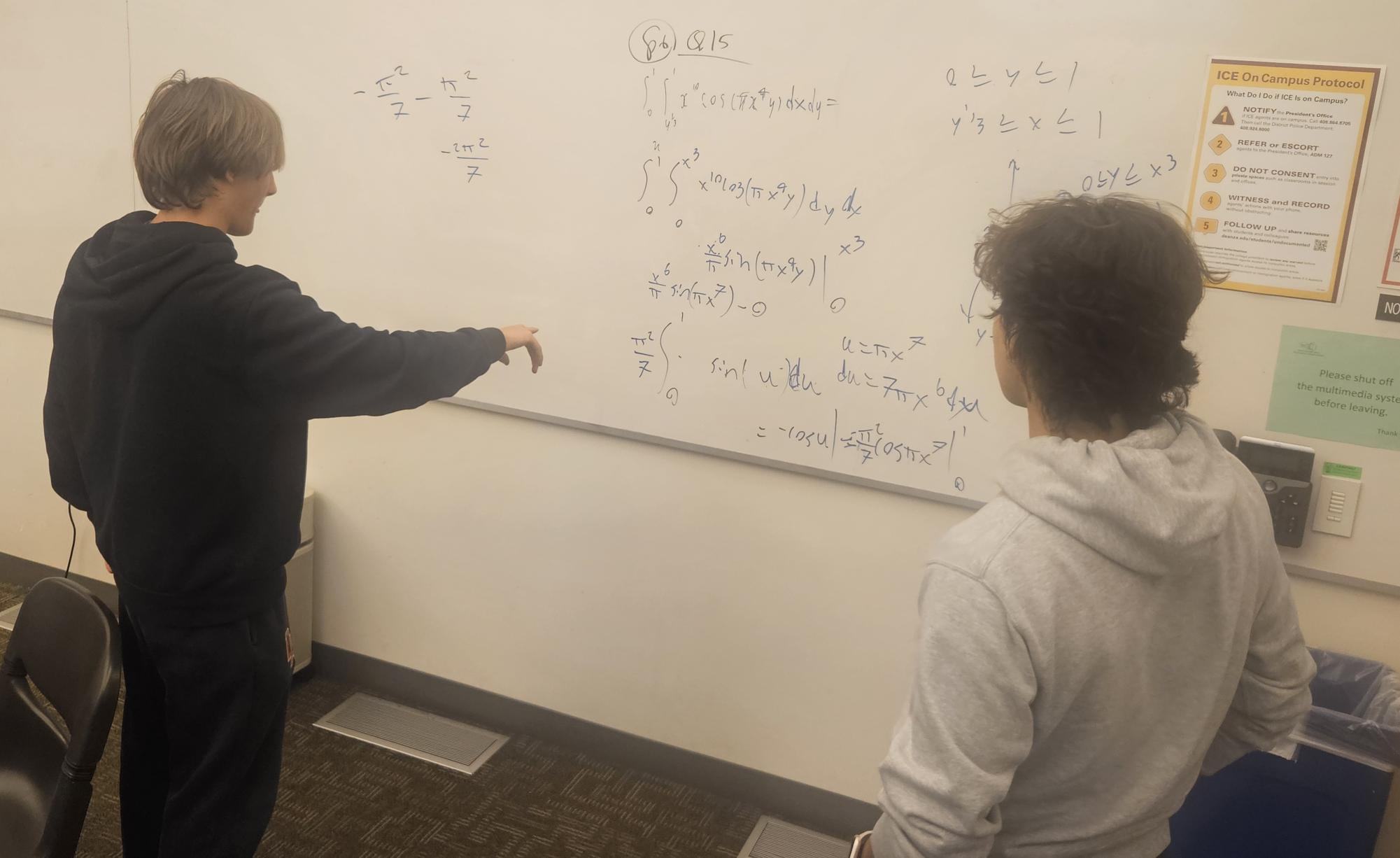
Fatemeh Yarahmadi, a math instructor and department coordinator, said developing OER material takes a lot of work, which includes complying with institutional requirements and converting the format to instructional ones.
“Developing a full course structure using OER can require substantial front-loaded effort, often comparable to writing extensive original material. It requires both subject expertise and careful instructional design,” said Yarahmadi. “That said, once built, the materials are sustainable and continuously improvable.”
According to Yarahmadi, creating free resources for students allows instructors to curate their curriculum to be more flexible instead of following a “fixed publisher sequence,” allowing for “better alignment with course learning outcomes.”

Faculty members working on the ZTC program hope students will use the materials they created.
“Instructors ensure students have affordable materials,” Shagun Kaur, ZTC grant coordinator, said. “They (faculty) sit down for hours to write materials for their students.”
OER and ZTC materials are accessible on De Anza’s website and instructors also provide them through Canvas.
AJ Ordoñez, 18, business administration major, said it’s more convenient than purchasing a textbook because you don’t have to create multiple accounts or get a physical copy.
“It makes the process easier for registering for classes,” Ordoñez said. “You can just jump right into the assignments and not have to worry.”
The quality of OER and ZTC materials does vary from course to course because of funding, according to Adams.
“I have instructors come to me, and they say, ‘There’s no representative text I can find that is zero textbook cost for my discipline,’” Adams said. “That’s a very real desire from instructors here on this campus to make OER.”
Faculty members have shown interest in expanding ZTC if the program receives more funding.
“Ultimately, I hope ZTC evolves beyond cost savings into a model of faculty-driven, equity-centered curriculum design, especially in rigorous sequences like calculus, linear algebra and differential equations,” Yarahmadi said.
Beyond the initial grant of $180,000 for one ZTC pathway in March 2023, acceleration grants are optional. This shows how much is being done to improve a student’s learning experience.
“If students are less stressed, it helps teachers push students to succeed,” Kaur said.