
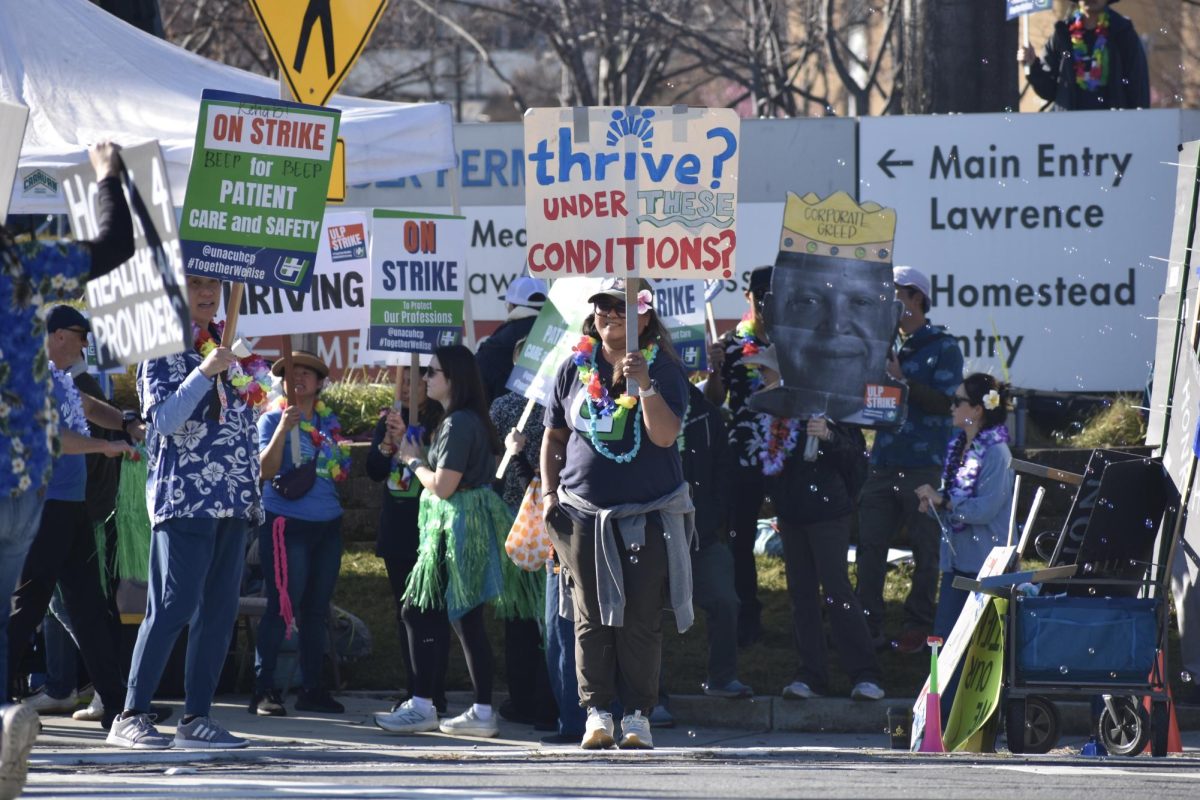

Thousands of nurses, pharmacists, rehabilitation therapists and other specialty professionals working at Kaiser Permanente in the Bay Area joined the 31,000 on strike across California and Hawaii on Jan. 26.
According to the Associated Press, workers demanded a 25% wage increase, an offer Kaiser Permanente countered with a 21.5% raise and claimed would cost patients.
Hospitals have to recruit outside nurses to make up for the strikers, which leads to some patients having appointments online and rescheduling certain surgeries.
“I’ve been waiting to reschedule an appointment I had for my shoulder. Since the practitioners are on strike, I’m not sure when that will be,” Ryan Santillan, 21, nursing major said. “I’m willing to wait this out until they get what they deserve.”

Kaiser Permanente commits to reach agreements with employees while providing “high-quality” and “affordable” care, it said on its website.
Natalie Mares, 39, a registered nurse at Kaiser Permanente said that while she agrees nurses need better conditions, she sympathizes with patients whose care is delayed.
“I will always side with the nurses. I also acknowledge though as a nurse, it is my responsibility to care for my patients,” Mares said. “I don’t agree exactly with the striking because ultimately the patients are the ones being affected.”
The United Nurses Alliance of California/United Health Care Professionals union said healthcare workers strike over “unfair labor practices and bad-faith bargaining,” while Kaiser executives say it is strictly about wages.
The union said it will stay on strike until it reaches a fair agreement for wages and staffing.

“My Kaiser isn’t on strike because our staff turnup is very good,” said Sonya Virrueta, 27, registered nurse at Kaiser Permanente who sees patients from Gilroy and Morgan Hill. “The other Kaiser in San Jose is on strike because they don’t have the staffing that we have; for that, I stand with them and their choice to protest.”
It’s unclear when Kaiser Permanente and the union will reach an agreement to end the strike.
“At the end of the day I feel like it’s a government issue,” Mares said. “It really sucks because nurses are just one division that are being affected by this and the patients are the ones getting the end of the stick.”