The Foothill-De Anza Board of Trustees discussed a new AI tool to help reduce cheating and AI misuse during the Monday, Aug. 4 meeting – a move supported by some faculty, but met with concern from some students
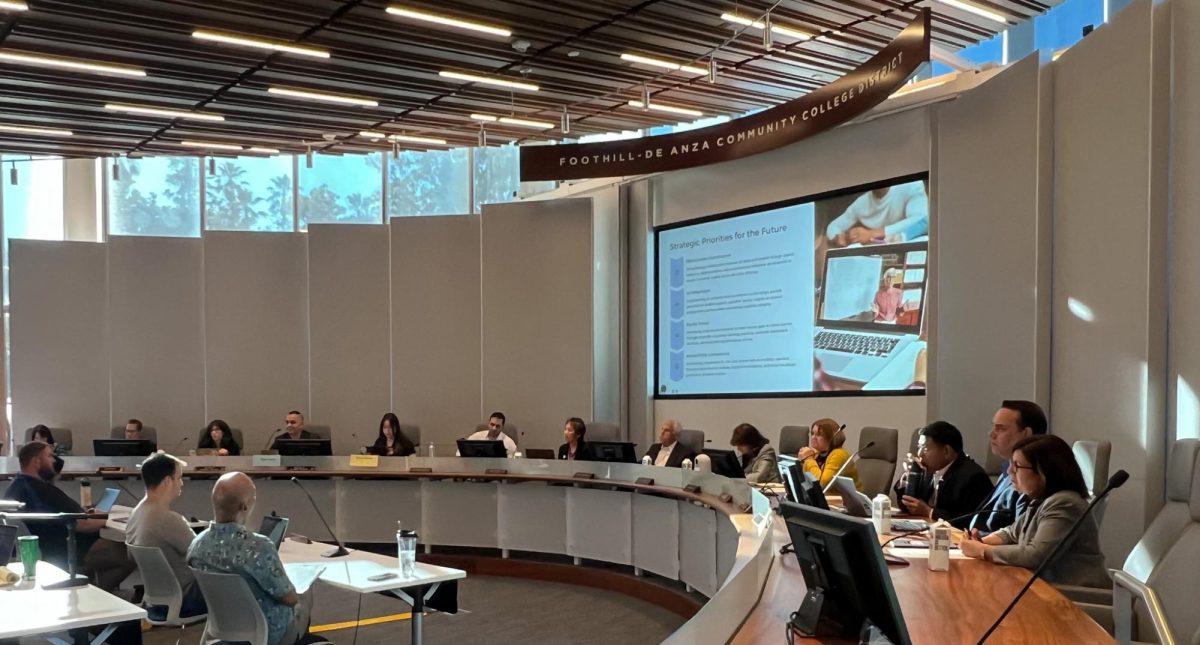
During a presentation to the Board of Trustees, Lené Whitley-Putz, dean of online learning at Foothill College, and Gabriela Nocito, dean of online learning at De Anza College, said some faculty members are eager to integrate AI tools into Canvas, while others remain concerned about potential cheating.
Whitley-Putz said the colleges are looking for tools that can enhance both the student and professor experience while also helping curb cheating. “And we think Rumi is one of those,” she said.
Rumi is a tool that utilizes AI to track students’ writing behavior and restricts actions like copy and paste. It also supports responsible use of other AI tools like ChatGPT and Gemini while giving professors insight to how their students are using those tools in their assignments.
According to an interview with the founders of Rumi conducted by the Haas School of Business at UC Berkeley, Rumi, when integrated with Canvas, tracks every AI prompt and edit with a time slider giving professors insight into the whole writing process.
Whitley-Putz said that tools like Rumi are part of a broader effort to build trust and interaction in online classrooms.
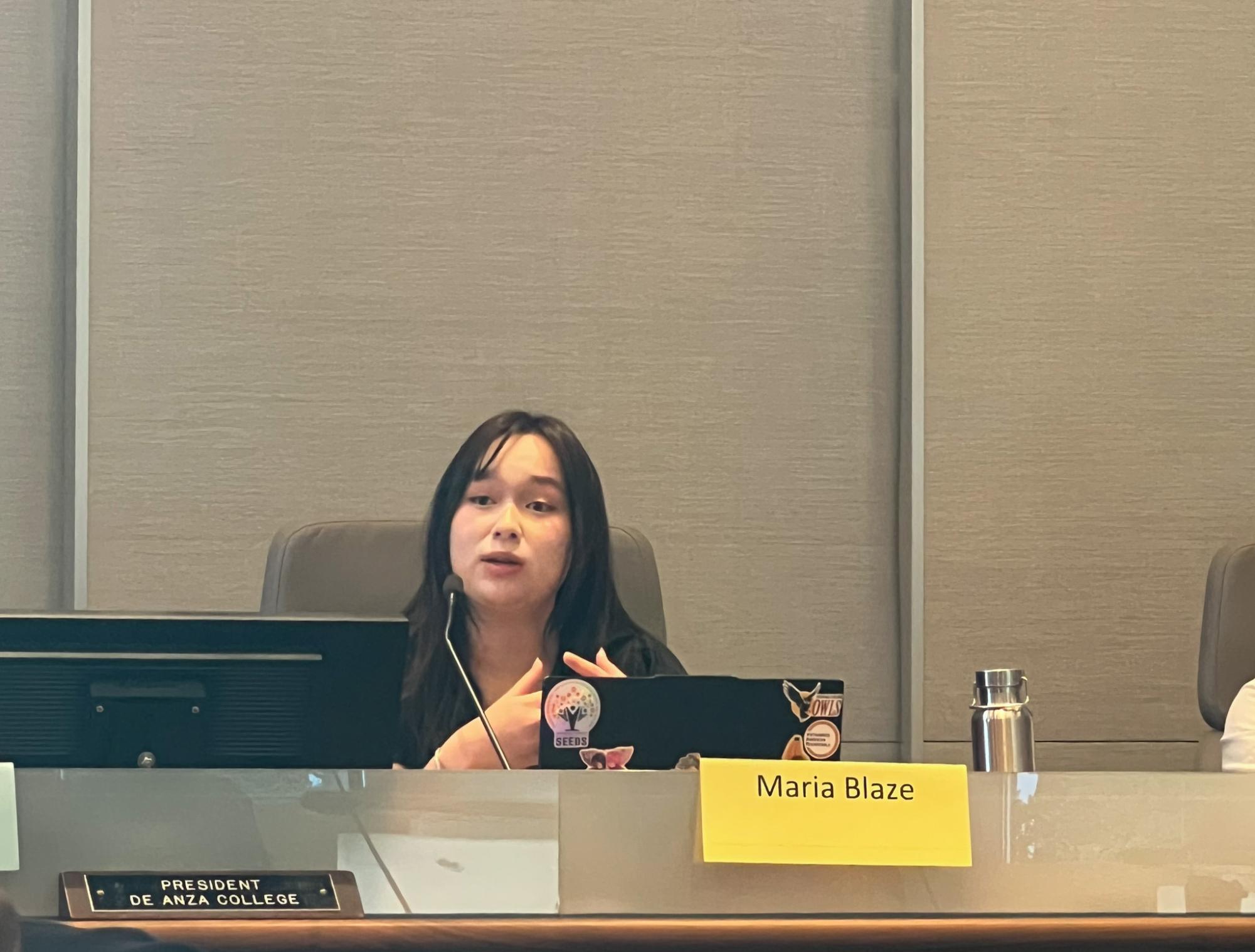
Student Trustee Maria Blaze, 18, political science major, raised concerns about how tools like Rumi might affect ESL students.
“The issue with this is for students whose first language isn’t English, when they translate things and paste it, sometimes that’s detected as AI,” Blaze said.
Blaze said these tools are a great way to build trust between students and faculty but she wants to make sure that “students won’t get left behind.”
Whitley-Putz responded that Rumi has language settings and a built-in translator to avoid false flags, but it only works if instructors are properly trained on how to use it.
She added that student and faculty feedback from the program at Foothill is also being shared with De Anza.
“Professional development is critical to any type of pilot,” Whitley-Putz said. “We were working with a psychology instructor and an English instructor and we got lots of feedback from their students.”
Foothill plans to expand the pilot program in the fall and hopes to gather more student feedback and host faculty workshops throughout the quarter. While no student workshops are currently planned, Whitley-Putz said they may be offered in the future at the request of faculty using the tool.
Even though Rumi is currently only being piloted at Foothill, De Anza is kept informed about Foothill’s efforts. Materials and ideas are regularly shared between the two colleges.
“We continue to meet on a monthly basis just to make sure that we share resources,” said Nocito.
Whitley-Putz said the goal is to keep both campuses aligned on the tool’s development and potential.
“We keep De Anza apprised of everything that we’re doing with this tool,” Whitley-Putz said. “In hopes that we’ll be able to collaborate soon.”