
The Board of Trustees approved the De Anza Student Government Finance Committee’s $1.35 million Fund 41 budget proposal for the 2025-26 school year, which includes increasing an optional student fee by 20%, on May 5. The committee deliberated the budget in February, following its expected timeline.
The current optional DASG membership fee, also known as a card fee, will be $12 beginning July 1. From May 2024 to this March, the fee collected over $535,000 in revenue for Fund 41, a budget for De Anza College programs.
Students can opt out of paying this fee by submitting a written request.
The committee suggested three possibilities to “improve” the budget — implementing this fee increase that “will have the most significant impact out of all our suggestions,” said Alan Ma, 18, computer engineering major and next year’s DASG Chair of Finance.
Other suggestions were to create student discounts and fundraisers with local businesses and to analyze the flea market financials, “which is one of our most significant governing sources,” Ma said. The flea market generated over $325,000 in revenue this fiscal year, to date.
These programs will likely capitalize on the $2 increase to the optional student fee.
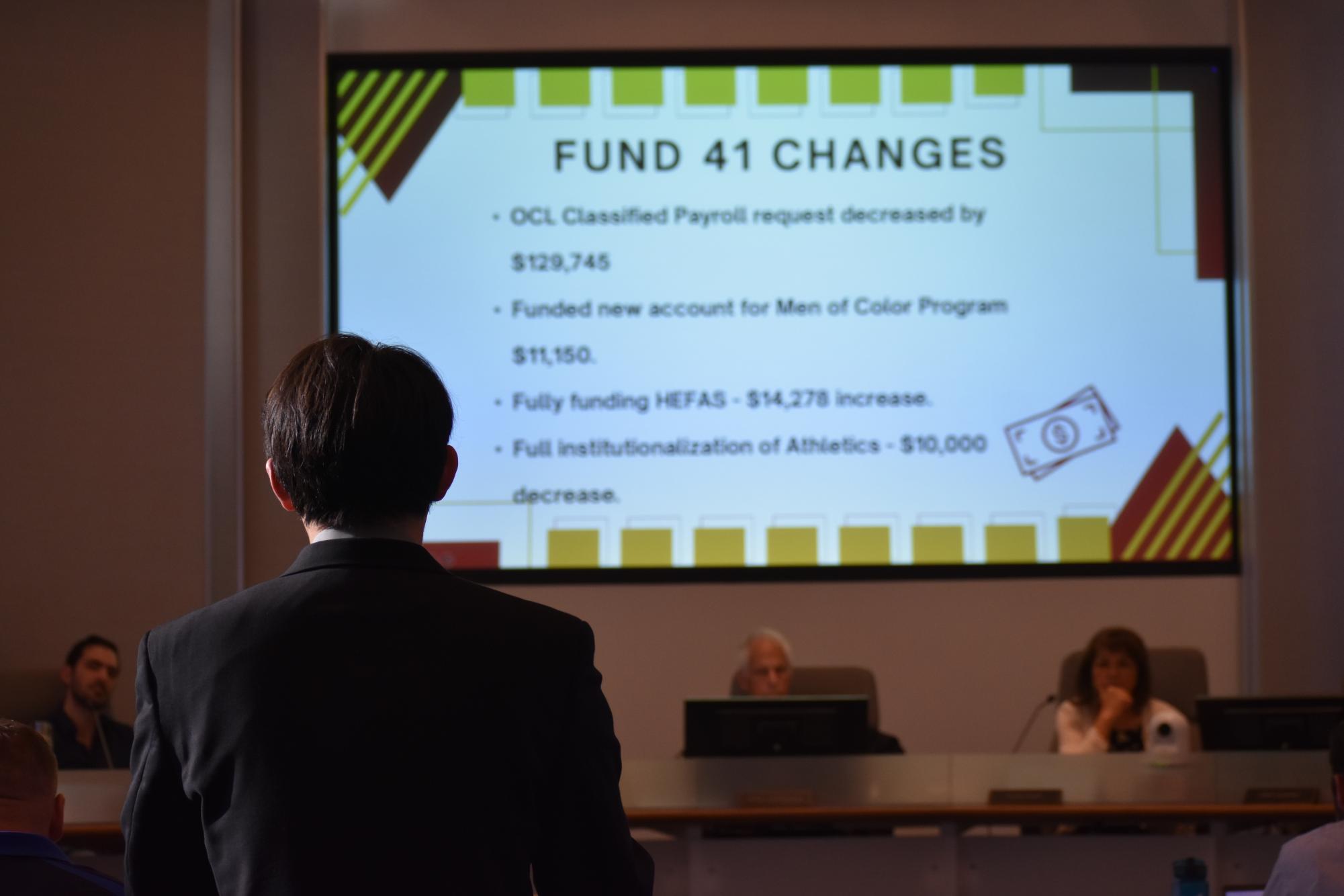
The committee also approved Fund 41, providing Higher Education for AB 540 Students, a program emphasizing support for undocumented or low-income students, with the nearly $40,000 it requested, a 130% increase from its 2023-24 budget and a 55% increase from the current 2024-25 budget.
Aditya Sharma, 19, DASG Chair of Finance, said the committee built the expense map of Fund 41 with a focus on diversity, equity and inclusion and environmental awareness to align with the “core values promoted by De Anza.”
“We wanted to fund HEFAS because of the stuff going on with the Trump administration,” Sharma said. “We wanted to support undocumented students during this time.”
The committee will discontinue funding the athletics department, which received $45,000 in the 2022-23 school year.
“We are aiming for a full institutionalization of the program,” Sharma said. “We want the college to fund it.”
The committee presented the budgets’ history and changes and said there was a $200,000 decrease to Fund 41 from last fiscal year. The federal government granted DASG relief funds during the COVID-19 pandemic that have not been fully spent or replenished.
“The COVID relief funds did help,” said Yan Ming Teng, 20, economics major and committee budget analyst. “But now of course it’s going down again, as we use up those one-time funds.”