

With a renewed push for mass deportations under President-elect Donald Trump’s proposed policies, undocumented students at De Anza College are navigating an uncertain and often frightening reality — wondering what the future holds for them and their families.
Roughly 11.7 million undocumented persons live in the U.S., and roughly 400,000 undocumented students are enrolled in higher education in the country. That includes the 900 undocumented students at De Anza, as specified in the recently passed resolution in support of AB 540 students in the De Anza Academic Senate.
Matsuko Estrada Nakamatsu, 20, English and humanities major and an Undocu-STEM special projects coordinator, is one of those students.
Nakamatsu’s family immigrated to the United States from Japan when she was 3 years old, after the 2008 economic recession caused her parents to lose their factory jobs. They initially came to California on tourist visas, intending only to visit family, but chose to stay to avoid poverty and hardship.
“We came here with nothing,” Nakamatsu said. “I had only the clothes in my little suitcase. And for the first two months of school, I didn’t have any more clothes other than that.”

Nakamatsu said the adjustment was difficult. She struggled with a language barrier, needing a translator to communicate with her teachers and classmates. Her family, which consisted of her, her little sister, mother and father, shared a single mattress in her aunt’s home, sleeping close together for warmth.
Nakamatsu said her mother struggled to find employment and her parents didn’t own a car and relied on public transportation to get by
“I remember my mom crying every day for a year because she couldn’t find a job,” Nakamatsu said. “I think the biggest thing was coming to reality that we weren’t going back to Japan; my mom and I really struggled with that.”
Nakamatsu discovered she was undocumented at age 15. She said it was a shock to her, especially after years of asking her parents when they would return to Japan.
“I always asked my mom, ‘When can we go back home? I want to go back to my house, my toys, my friends,’” she said. “My parents would always tell me, ‘The tickets are expensive. Don’t worry, we’ll go back home.’”
Brandon Serrano, 29, business administration major, said he also had a tumultuous journey as an undocumented student. His family came to the United States from Mexico — when he was 4 years old — to seek medical treatment for him. After he finished high school, Serrano returned to Mexico — unaware that he was leaving — just as Deferred Action for Childhood Arrivals was announced.
DACA is a federal program enacted in 2012 by President Barack Obama that protects eligible undocumented immigrants who came to the United States. as children from deportation and allows them to work legally.
“Had I stayed, my life would be completely different today,” Serrano said.
Upon facing new challenges back in Mexico, Serrano’s family decided to return to the United States. They endured a grueling three-day trek through the desert during which Serrano got separated from his parents.
“Out of a group of 34, only about eight of us made it,” he said.
The uncertainty of his status weighs heavily on Serrano.
“I have nothing for me,” he said. “Unless there’s any sort of reform or changes in the immigration laws, there’s nothing.”
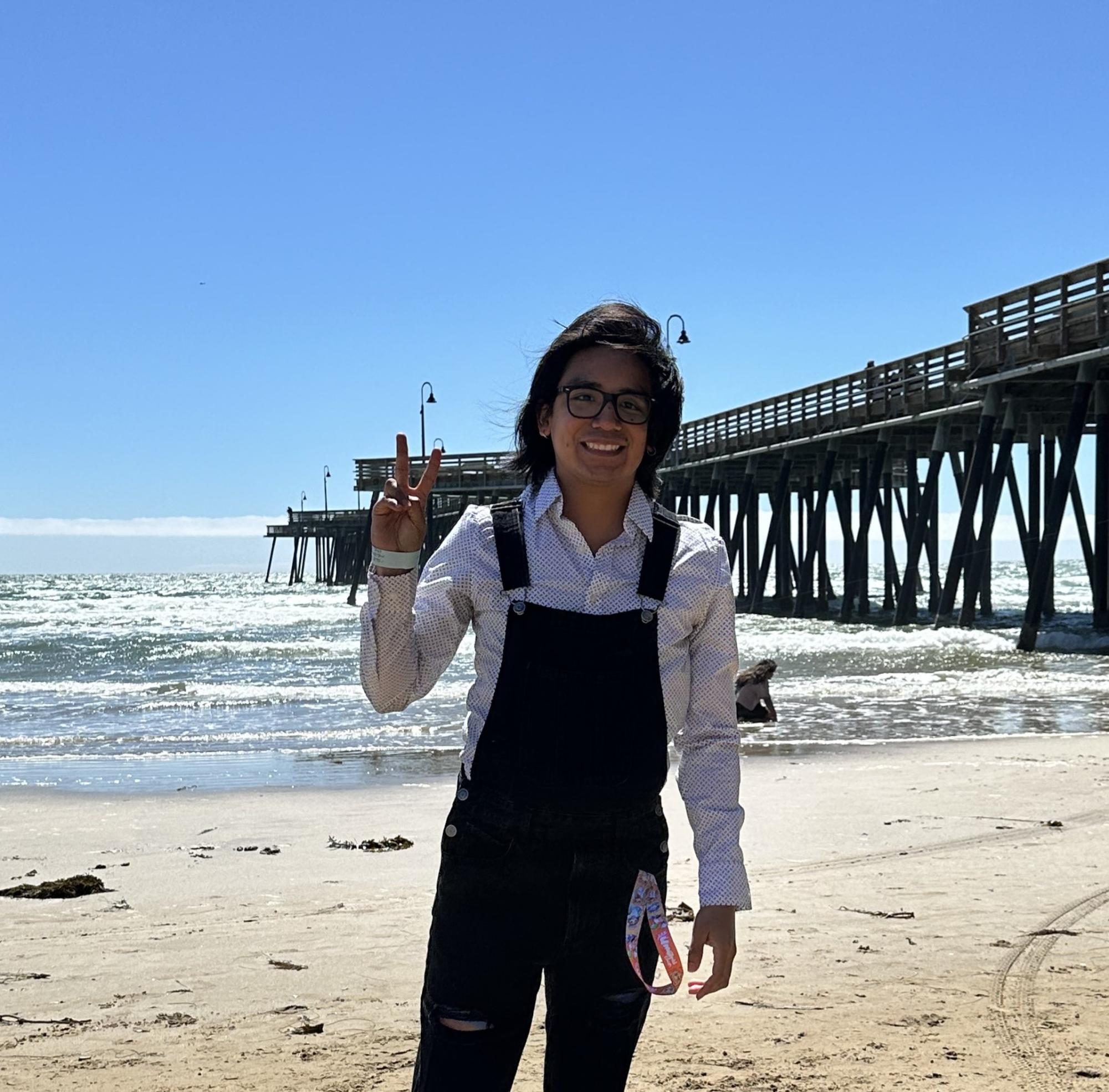
Since returning to the U.S., Serrano is still applying for DACA and is hopeful that his application will be accepted.
For undocumented students like Nakamatsu and Serrano, the threat of deportation looms large under the current rhetoric coming from President-elect Trump.
“It feels like you’re drowning and you cannot get back up to the surface,” Nakamatsu said.
Nakamatsu opened her home to other undocumented students as a resource center. And when Donald Trump won the presidency in November, more than 20 students came crying and upset.
“I had to grieve for a whole week,” Nakamatsu said. “I felt nauseous. Because I have nothing to go back to.”
De Anza offers some relief to undocumented students through its Higher Education for AB 540 Students program, which provides free legal support, counseling, textbook loans and workshops to educate students about their rights. The program aims to reduce financial stress while fostering a safe and supportive space for undocumented, low-income and AB 540 students.
HEFAS was facing a funding crisis in November, but on Dec. 2 and Dec. 4, the De Anza Academic Senate and the Foothill-De Anza Faculty Association Political Action Committee each passed resolutions pledging to prioritize the allocation of district funds to maintain existing staff positions within HEFAS.
Nakamatsu, who interns as member coordinator for HEFAS, emphasized the value of HEFAS.
“They’re not just important to me, but to every student who needs our resources,” Nakamatsu said. “For a lot of our students, they might be international students or asylum seekers, and they need that help.”
James Nguyen, a political science and Asian American studies professor at De Anza, emphasized the importance of supporting undocumented students amid growing threats.
“How do we protect our students? How do we keep them safe?” Nguyen said. “What policies can we coordinate so that we’re clear on what we can do to safeguard those students on campus?”
According to Nguyen, deportations are a real possibility that De Anza and California should be ready for.
“Are there going to be ICE raids happening in neighborhoods in the South Bay?” Nguyen said. “Are ICE enforcement officials going to be showing up on our campuses?”
If ICE does end up showing up on campus there is currently a discussion on what staff on campus can do to protect their students.
“If someone from ICE showed up at a classroom asking for an undocumented student … we would immediately direct them to the president of the college rather than submitting the student to the ICE official,” Nguyen said.
Nguyen also highlighted historical parallels, comparing the current political climate to events like Japanese internment during World War II and Operation Wetback in the 1950s.
Operation Wetback was a U.S. immigration enforcement initiative in 1954 that targeted undocumented Mexican immigrants, resulting in the mass deportation of over one million people. The operation involved harsh tactics, including raids and sweeps, and has been criticized for its human rights abuses.
“There’s a history of using immigrants as scapegoats during times of economic or political instability,” Nguyen said. “It’s an old playbook, stoking fear and xenophobia to further political ends.”
Despite the challenges, Nakamatsu draws strength from her community.
“I find a lot of strength in my sister and in my fellow students I work for,” Nakamatsu said. “Resilience doesn’t mean you have to stay strong all the time. It also means that you get the help to get back up again.”
Serrano refuses to let his uncertain status deter him.
“I stay hopeful that if nothing happens, I can continue studying, and transfer out of De Anza,” he said. “Eventually, I’ll find some way to fix my status.”