On May 10 at Bright Cyc Studios, a small, white-walled rectangular space in downtown San Jose, was packed with around 30 audience members. As the soothing and panoramic background music emerged, “A Muslim in the Midst” raised its curtain.
The play, written by Anand Rao and directed by Vinita Sud Belani and Kushal Chatterjee, transformed a 90-minute car ride into an exploration of prejudice, class divide and the struggle to see beyond our assumptions.
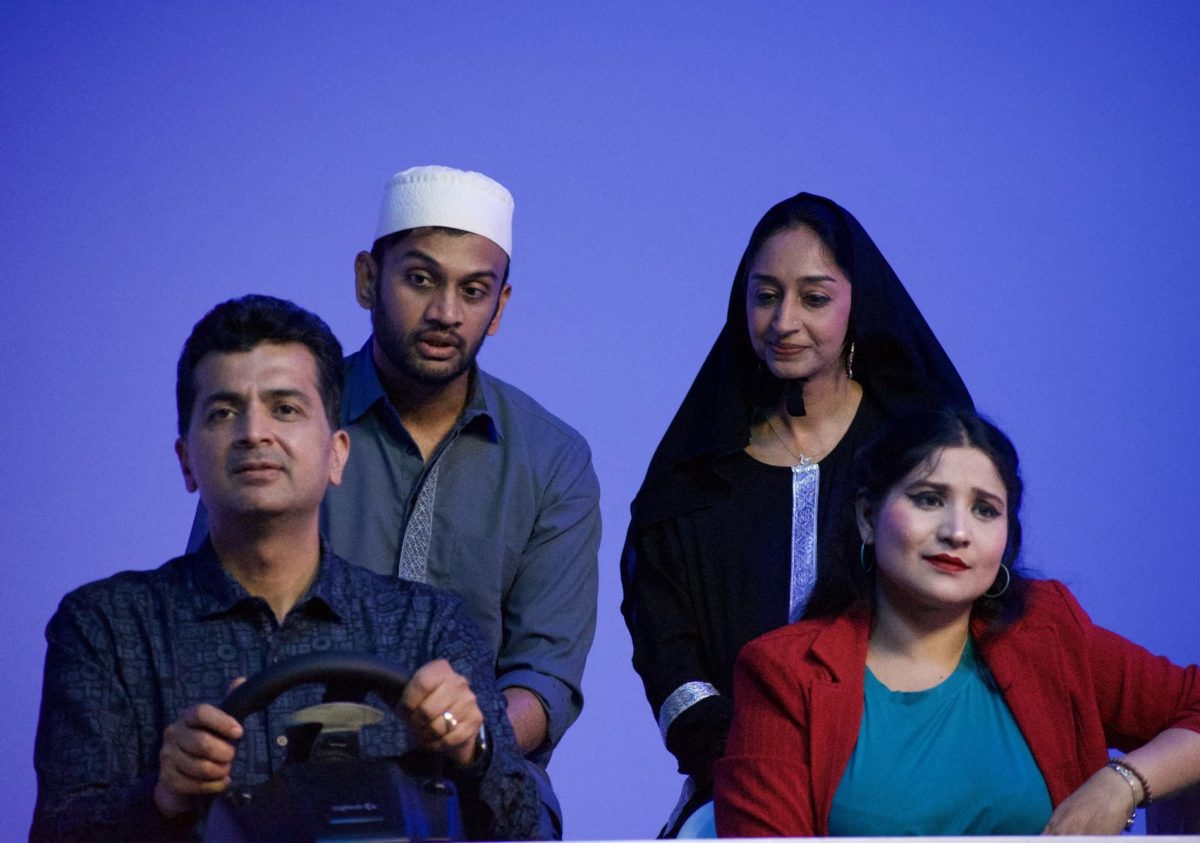
It takes place on Sept. 14, 2001, in Bangalore, India. A rural Muslim couple, Haneef, and his pregnant wife, Shabana Pasha, are stranded late at night and desperate for a ride. They encounter Raj and Priya Sunder, a Hindu executive couple, who offer to drive.
The car soon fills with a tense dialogue. Raj and Priya, proud of their Westernized values, question Shabana’s silence, assuming she is oppressed by Haneef.
When Haneef insists that a man should be the sole provider in the household and that women are safer staying home and providing support, Priya challenges him.
Priya probes into Shabana’s personal choices and decisions, such as her healthcare and attire. She questions if Shabana truly wants to live that way. Shabana says she does.
“I will do whatever he (Haneef) wants me to do … My husband will decide what is good for me … He will protect me,” Shabana says, to the Sunders’ astonishment.
The series of questions and answers reveal a clash between modern and traditional ideals of female independence, the dual-income households and career ambitions and the value of self-determination.
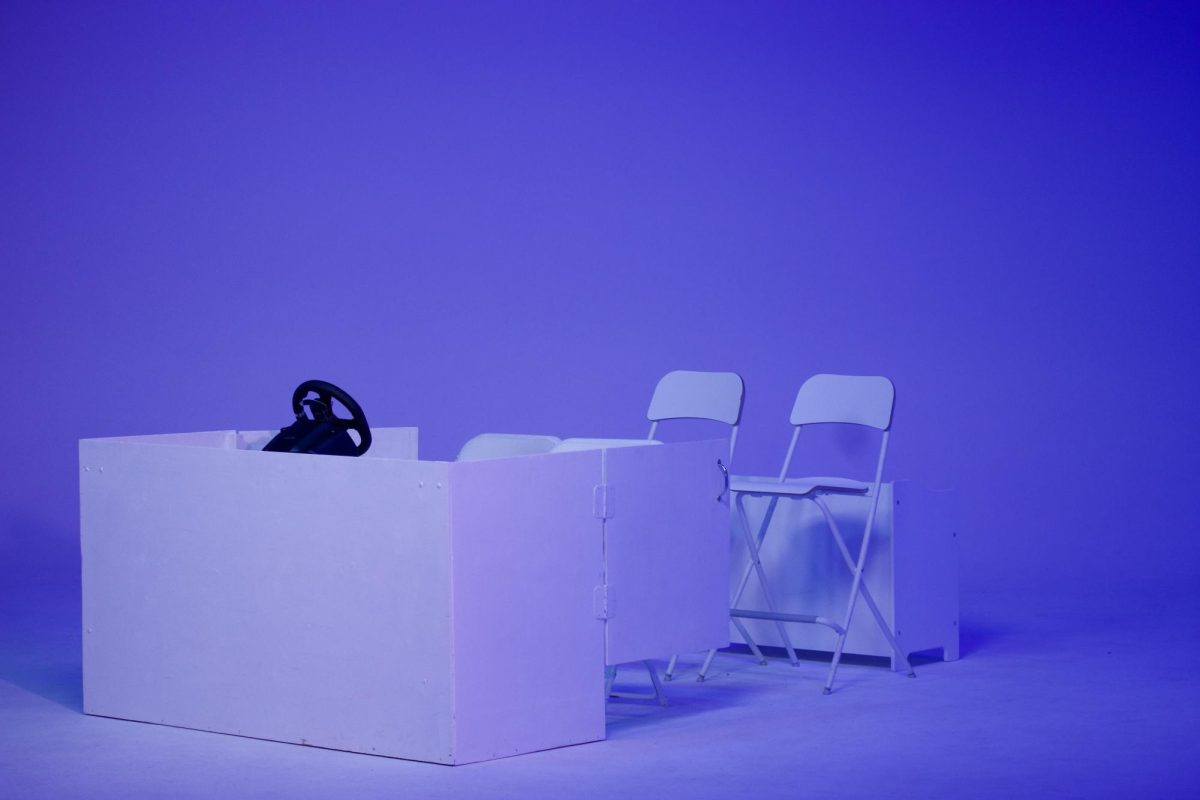
The play’s stage design is simple yet effective. The minimalist set — four white wood panels as car doors, chairs for seats and a steering wheel attached to the front panel — strips away distraction and helps audiences focus on dialogue and character development.
A particularly memorable but unintended aspect of the play was the high school senior prom happening upstairs. The thumping music from above inadvertently created a suspenseful atmosphere.
Beyond the script and performance, the production raises important questions about representation. There were no Muslim cast members, and when director Belani asked if there were any Muslim people in the audience, nobody raised a hand.
Though Belani said they “don’t cast based on religion,” the portrayal of a male-dominated Muslim household might inadvertently foster stereotypes for audiences not familiar with the Muslim community.
“A Muslim in the Midst” is not an easy play to watch, nor should it be. The conversations between characters demonstrated that the preconceived ideas can lead to fear, misunderstanding and judgment.
The events of the car ride leave Raj, Priya and the audience with the lesson of staying curious and grateful for diverse perspectives. It encourages the audience to resist the urge to reject opinions or values that differ from their own.
“A Muslim in the Midst” reminds us to have an open and inquisitive mind rather than an arrogant or superior attitude when encountering things that seem subordinated. People need to be comfortable not having all the answers and approach disagreements with genuine inquiry.
The ending of the play is ambiguous. When a police broadcast over the radio announces the search for a man and woman possibly associated with “Pakistan-based terrorist agency Lashkar-e-Taiba,” the story is left to the audience’s imagination.
As the cast members bowed to the applause, one question hung in the night air: when we encounter those different from us, will we roll up the windows or invite them in?