
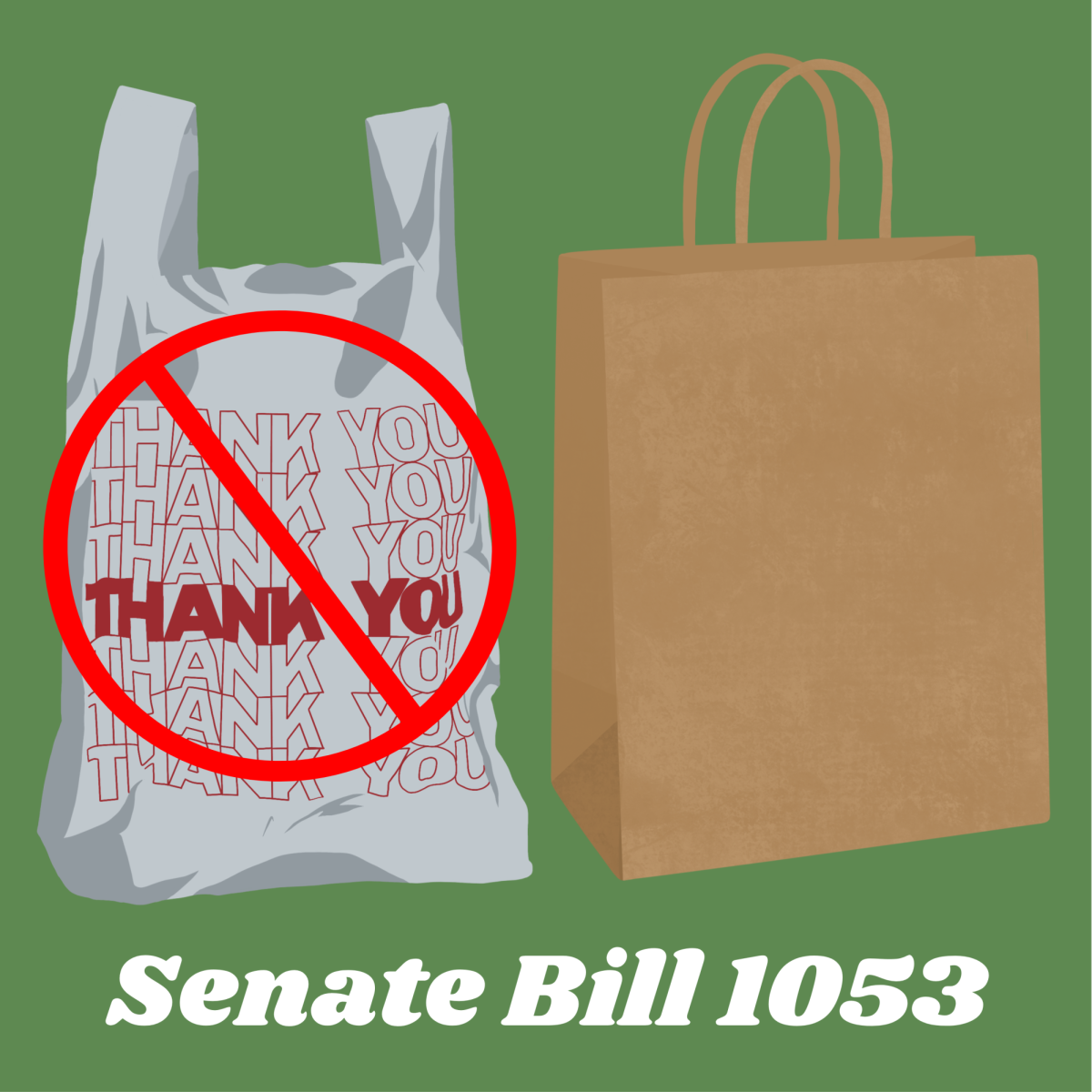
On Jan. 1, Senate Bill 1053 took effect, banning grocery stores from selling plastic bags. It is a positive step toward sustainability, but it’s only a small contributor to the environmental problems California faces.
SB 1053 replaces Senate Bill 270, a bill that prevented grocery stores from providing thin, single-use bags, and aimed to reduce plastic waste.
The problem with SB 270 was a loophole: plastic bags could still be distributed if they were thicker, because they were considered reusable and recyclable.
SB 1053 closes this loophole by removing plastic bags from the conversation. Thick plastic bags did not solve the problem because, in some cases, customers treated them as single-use..
Regardless of thickness, plastic bags still harm wildlife and do not fully break down like biodegradable paper bags.
This law does not apply to restaurants and nonprofit organizations. It also does not prevent shoppers from bringing their own plastic bags, as long as grocery stores and other establishments do not provide them.
Despite SB 1053’s enactment, grocery stores are still allowed to use plastic bags when handling raw meat, as recommended by the California Department of Public Health to help prevent cross-contamination and bacterial leakage.
Compared with plastic bags, paper bags use up more resources to produce. However, the environmental impact of plastic landing in landfills outweighs the extra costs of producing paper bags.
Even though SB 1053 addresses plastic waste, it is only a fraction of the sustainability issues California faces. The food we eat and the fuel we consume cause greater environmental issues than plastic bags.
The meat industry is notorious for taking up a huge share of our water supply ,with about 1,800 gallons of water required per pound of beef, accounting for 34% of irrigated water use in the United States.
Pivoting toward plant-based proteins, including chickpeas, tofu and beans, can improve sustainability efforts.
Using fossil fuels to power infrastructure and transportation contributes significantly to global carbon dioxide emissions, with about half of California’s energy coming from crude oil in 2024.
SB 1053 is a great law in making plastic bags less prevalent in California, but we need to do much more than this law does in solving sustainability in California, like eating less meat and walking or biking whenever possible instead of driving.