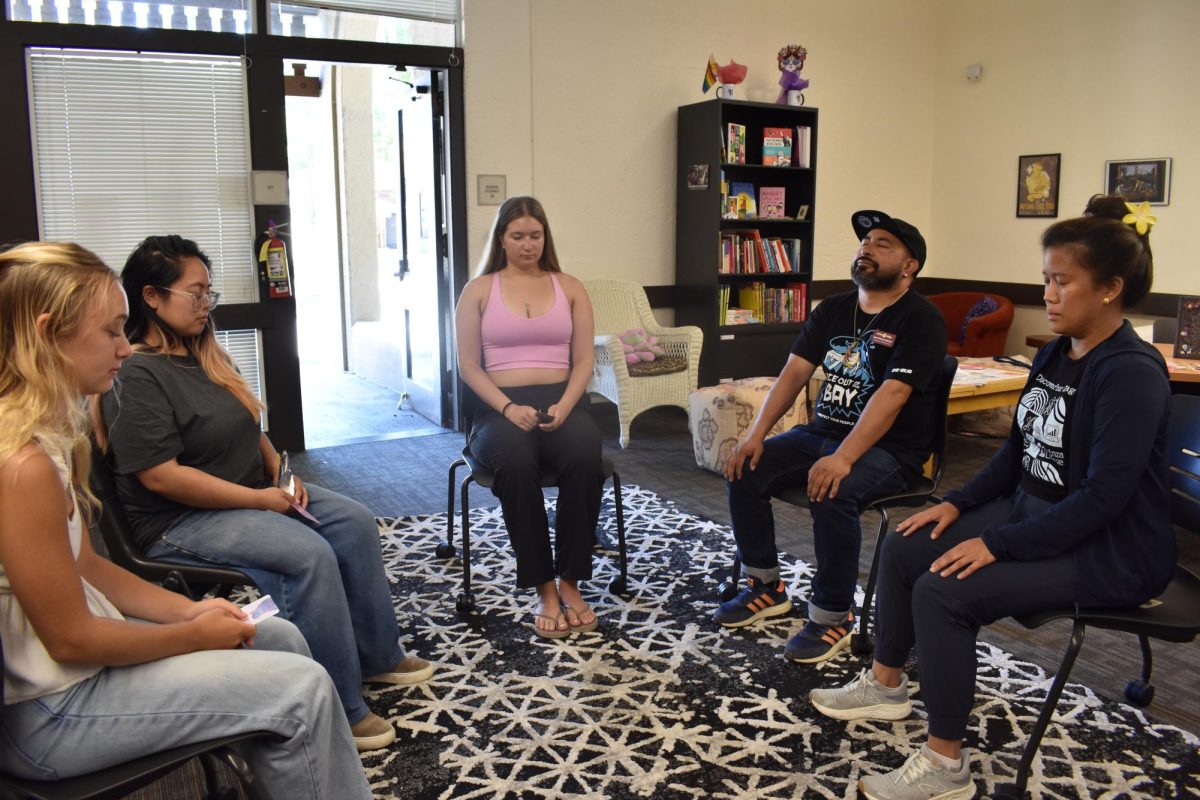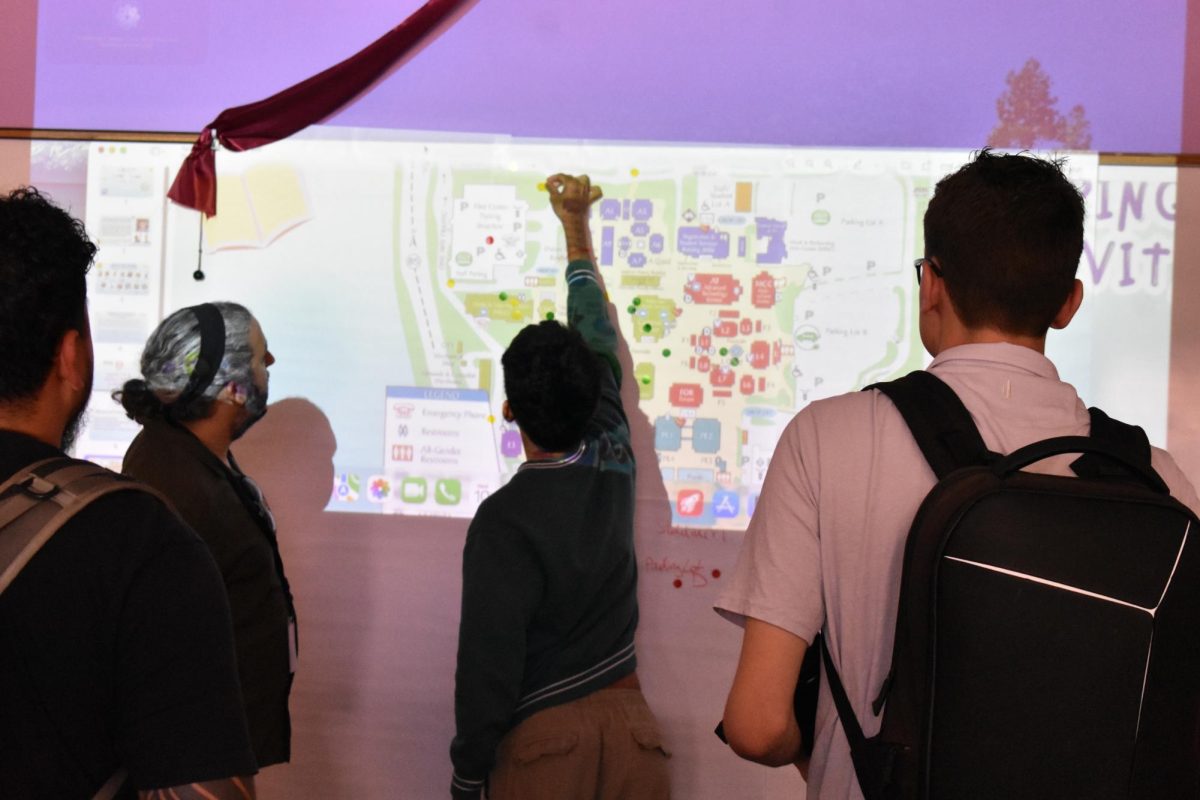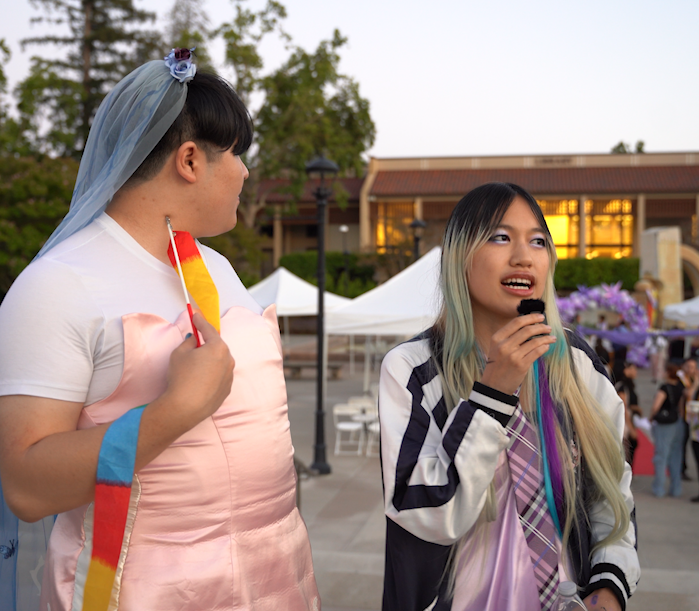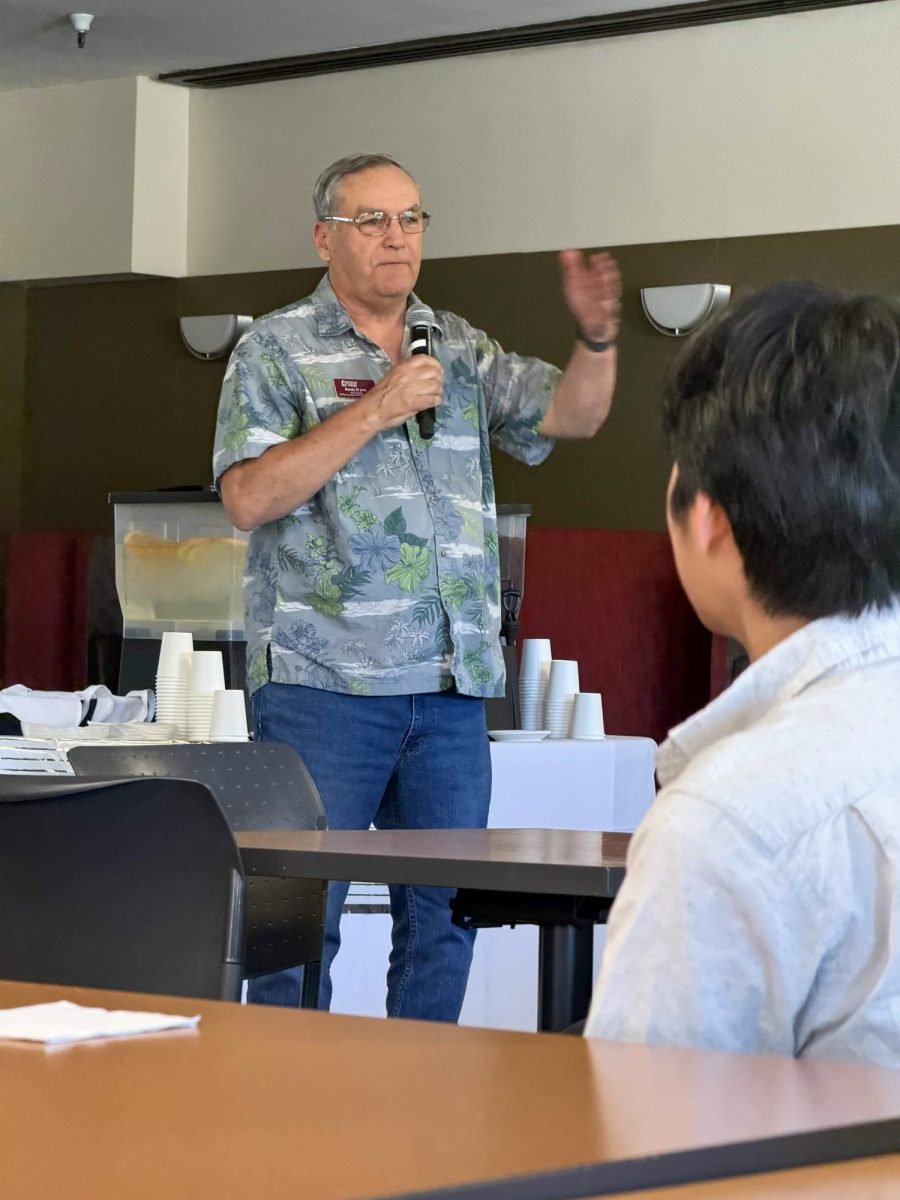
The Vasconcellos Institute for Democracy in Action (VIDA) hosted its 2026 Winter Project Fair in Conference Rooms A and B at De Anza on Jan. 14.
In attendance were a variety of student support organizations and off-campus action groups such as the Pride Center, HEFAS, FA-PAC and Grassroots Ecology. According to Cynthia Kaufman, director of VIDA, the institute maintains relationships with “community partners,” or local organizations that students are able to volunteer with.
“Sometimes for students, if you say, here’s a list of places you can volunteer, it can be a little bit intimidating,” Kaufman said. “And it’s less intimidating to just walk into a room and talk to a person.”
VIDA posted a sign advertising the event in the Hinson Campus Center, just outside the entrance to the cafeteria.
“There’s such a very good chance that someone who didn’t know about this before could just see the sign there or check it out,” FA-PAC intern Gabe Manglona, 19, political science major said.
VIDA tries to host these events every quarter. On Oct. 13, the organization hosted its Fall 2025 Project Fair. This quarter marked the second in-person Winter Project Fair since the event was cancelled due to the Covid-19 pandemic. Kaufman expressed excitement to see “campus life starting to come back.”
VIDA intern Salvador Pedroza, 19, political science major, acknowledged that “there’s room for us (VIDA) to improve,” expressing his wish to invite more programs to future project fairs. “We have dozens of programs and organizations on campus that can come that would fit this event and the criteria we’re requiring,” he added.
Transcript:
0:02
WRITTEN:
The Vasconcellos Institute for Democracy in Action (VIDA) hosted its Winter Project Fair in conference rooms A and B at De Anza on Jan. 14.
0:07
SALVADOR PEDROZA:
We are having our Winter Project Fair. So we do a lot of social justice work and politically charged work in the South Bay. A lot of the work that we do is kind of organized around the campus and around students: student awareness programs, awareness campaigns, know your rights campaigns. We want to help in any way we can.
0:24
CYNTHIA KAUFMAN:
De Anza has quite a few classes that require community engagement as part of the class. It’s sort of integrated into the curriculum. And so we train faculty in how to do that. We support faculty in doing that work. And then we also support the faculty by having relationships with places where students can volunteer, what we call community partners. So once a quarter, we invite community partners to come to campus at a time when students can then come and meet them. Because sometimes for students, if you say, here’s a list of places you can volunteer, it can be a little bit intimidating and it’s less intimidating to just walk into a room and talk to a person.
0:57
ANGELINA PHAM:
It was like the De Anza newsletter, on the email in the event section, they said that there is going to be a resource fair happening here, and I’ve been looking for more volunteer opportunities or to get more involved and to see how I can explore what is needed in the area and how I can help.
1:14
GABE MANGLONA:
I previously thought it was just the VIDA Project Fair, but we saw ones outside of VIDA, such as FA-PAC, which I’m with, and then the Pride Center.
1:23
CYNTHIA KAUFMAN:
We have one here which is a student who went through our program last year and is now a paid organizer working on transit issues, and so because he was volunteering last year, he knows about all of this, so he’s now coming looking for volunteers himself, which is a really sweet, kind of a full circle situation.
1:38
ANGELINA PHAM:
I feel like not many people talk about how important public transit is in an increasingly car dependent society, and it’s kind of playing into how our community’s becoming more isolated, more divided, and I just feel like it’s something that people should talk about more.
1:55
SIENA WATSON:
We host community workdays pretty much every weekend. We have a community workday where people can come and learn about the ecosystems that they visit. At our workdays, you can remove invasive species or plant native species to help replenish or reintroduce more biodiversity to spaces that have been degraded.
2:13
GABE MANGLONA:
Having all these organizations where people can volunteer with to make an impact or even just get help from right near where everyone’s eating lunch, there’s such a very good chance that someone who didn’t know about this before could just see the sign there or check it out, and then they’ll have access to resources or they’ll find somewhere they can volunteer.
2:31
ANGELINA PHAM:
A lot of people just come to CC and go to class and go home, but they’re not aware of the resources around campus.
2:38
BRANDON SERRANO
I think every student should also have some sort of idea of what’s going on at the college.
2:44
SALVADOR PEDROZA:
And I think opportunities like this, like project fairs and the events that De Anza hosts is a great opportunity for any student to come, just check out your campus, even though if you’re only here for one day a week or whatever, just come check out the opportunities that we have to offer.
2:58
CYNTHIA KAUFMAN:
It’s a way to do career exploration. It’s a way to give back to your community. It’s a way to make connections and relationships, and a lot of students find that the volunteer work that they do is some of the most impactful and important work that they do while they’re a student at De Anza.