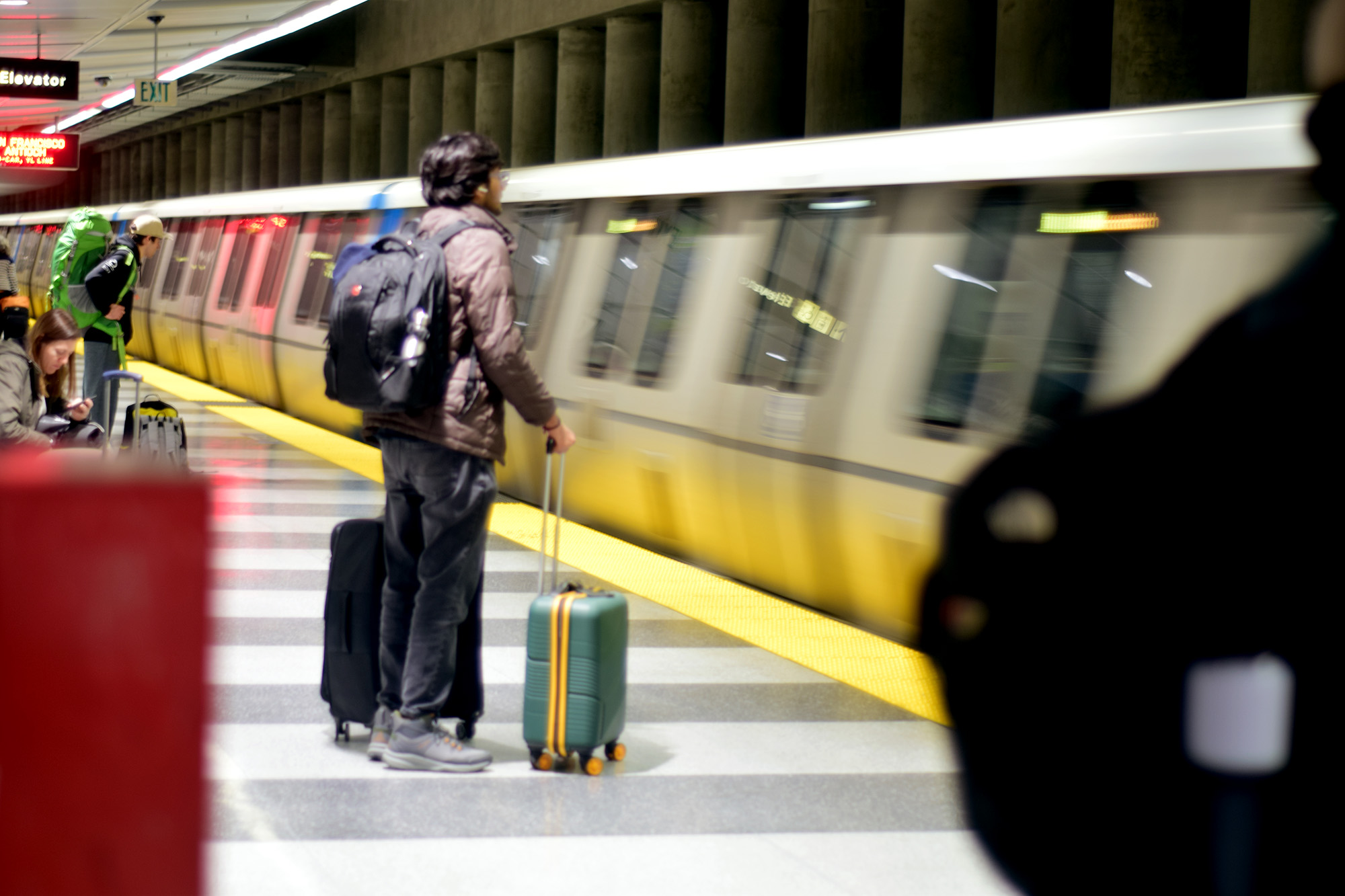
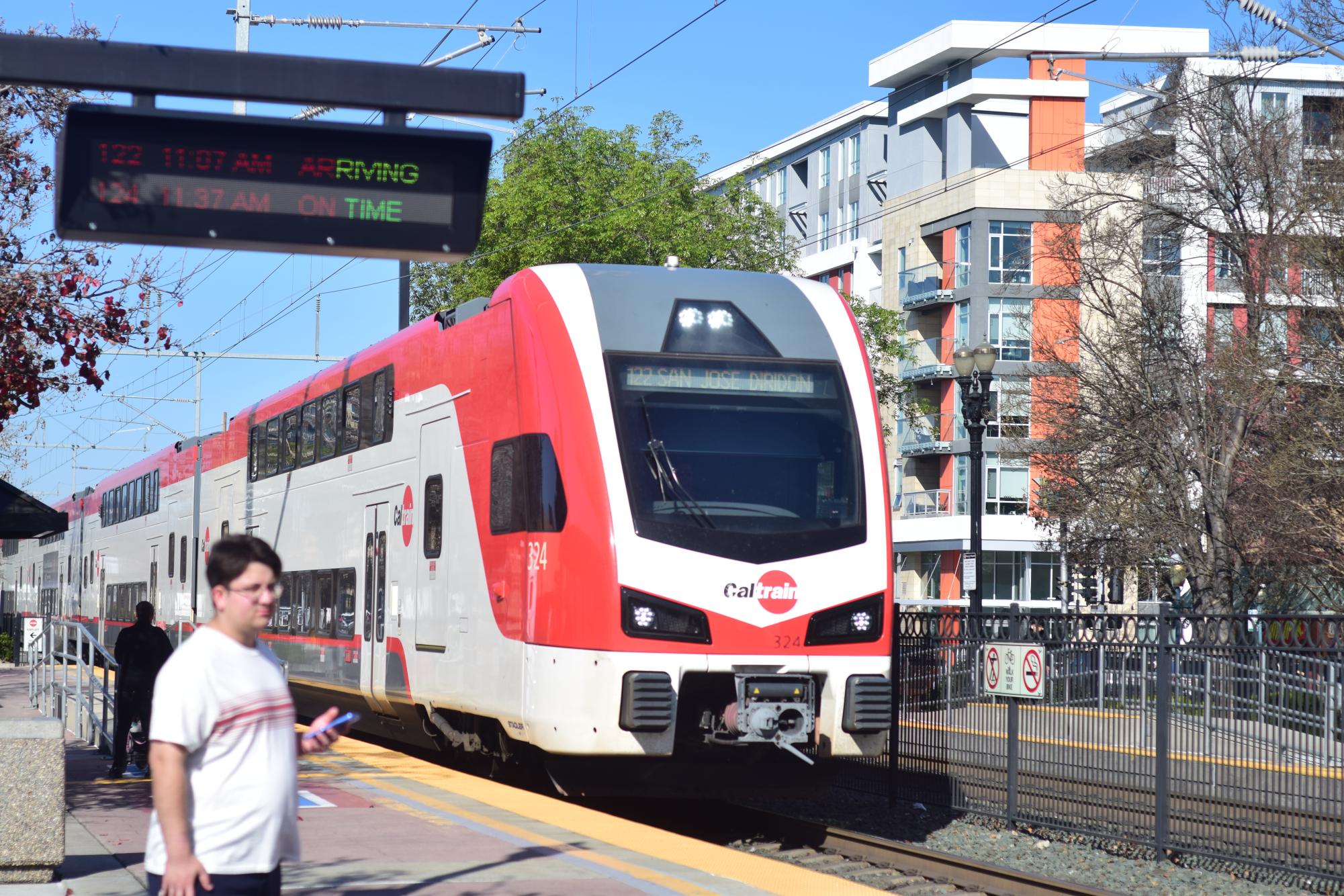
Twice a day, 21-year-old biology major Perla Diaz completes a transit marathon: a SamTrans bus, a Caltrain ride and a VTA bus.
Without reliable public transit, Diaz said her “worst case scenario” would be relying on Uber every day, which is “not cheap.”
Diaz is one of many De Anza students who rely on public transit to get to school and work. Without new funding such as through the regional transit funding measure Senate Bill 63, these agencies plan to cut services starting 2027, leaving students with fewer ways to get around.
The funding crisis
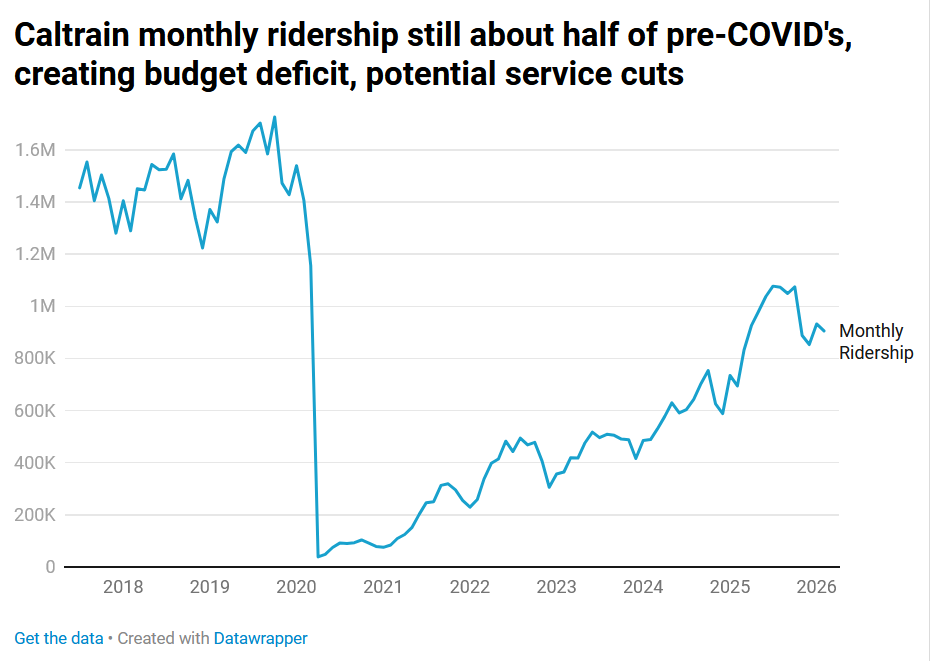
Caltrain, AC Transit, Muni, and BART must address a projected $800 million deficit total starting the fiscal year beginning July 1.
Before the pandemic, these agencies largely depended on fare revenue, mainly from downtown San Francisco commuters, to cover operating costs.
Transit agencies, especially those that cross county lines, have not recovered to pre-pandemic ridership with remote work on the rise and downtown San Francisco still below 2020 occupancy.
“The people who were commuting on Caltrain, BART or AC Transit and then taking Muni … stopped,” Harry Neil, 24, Transbay Coalition volunteer lead of the South Bay and history major, said. “Enormous, enormous financial deficits came about because of that.”
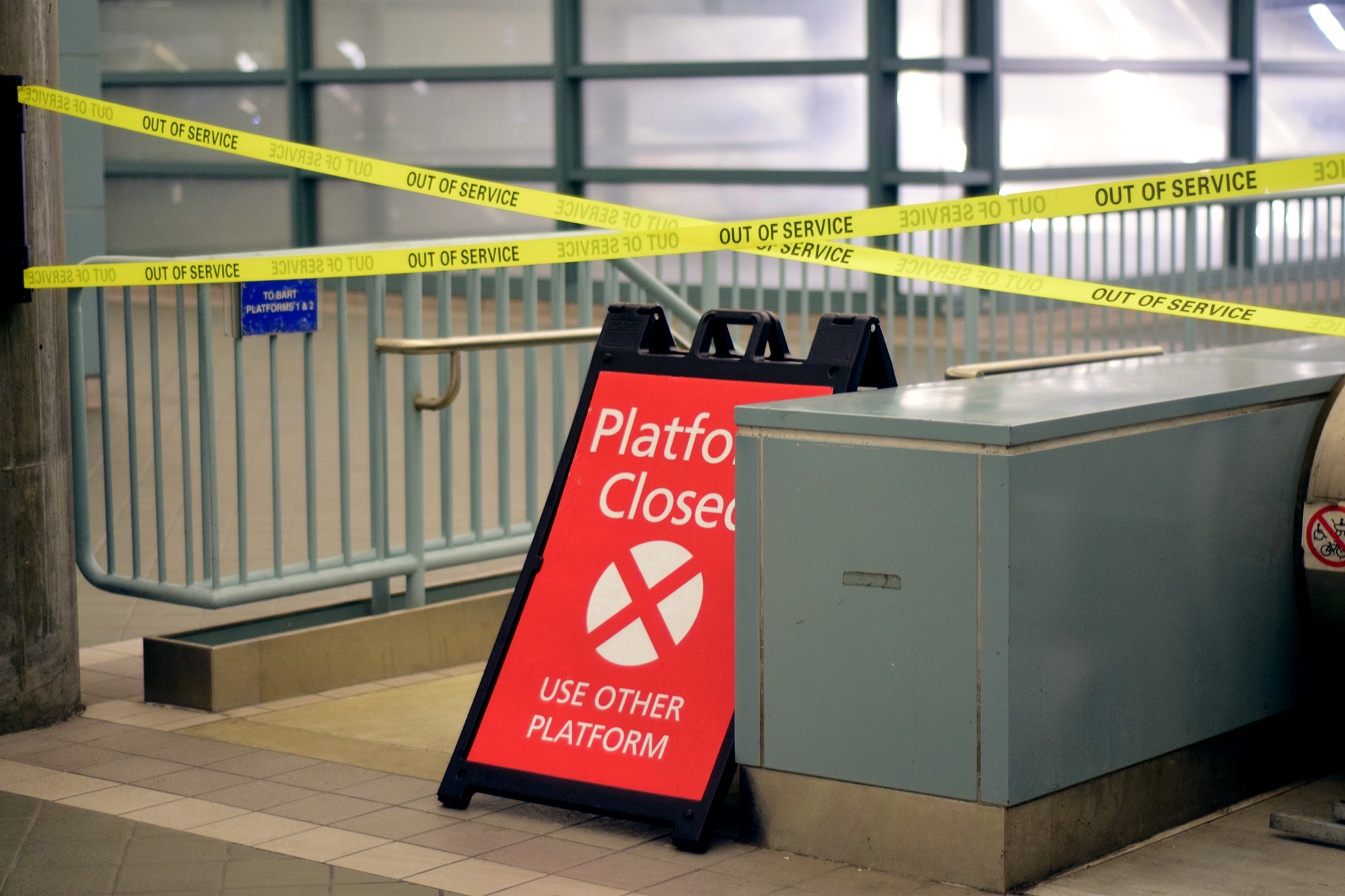
To stay afloat, Bay Area transit agencies plan to make drastic service cuts.
- Caltrain could cut weekday service to only once an hour, end weekday operations at 9 p.m., close more than a third of its stations and cut weekend service entirely.
- BART could close up to 15 stations, end service at 9 p.m. and reduce train service by 70%.
- AC Transit could cut 37% of services, reducing service to half of pre-pandemic levels.
- Muni could slash 20 bus lines, end regular service at 9 p.m. and halt cable car operations.
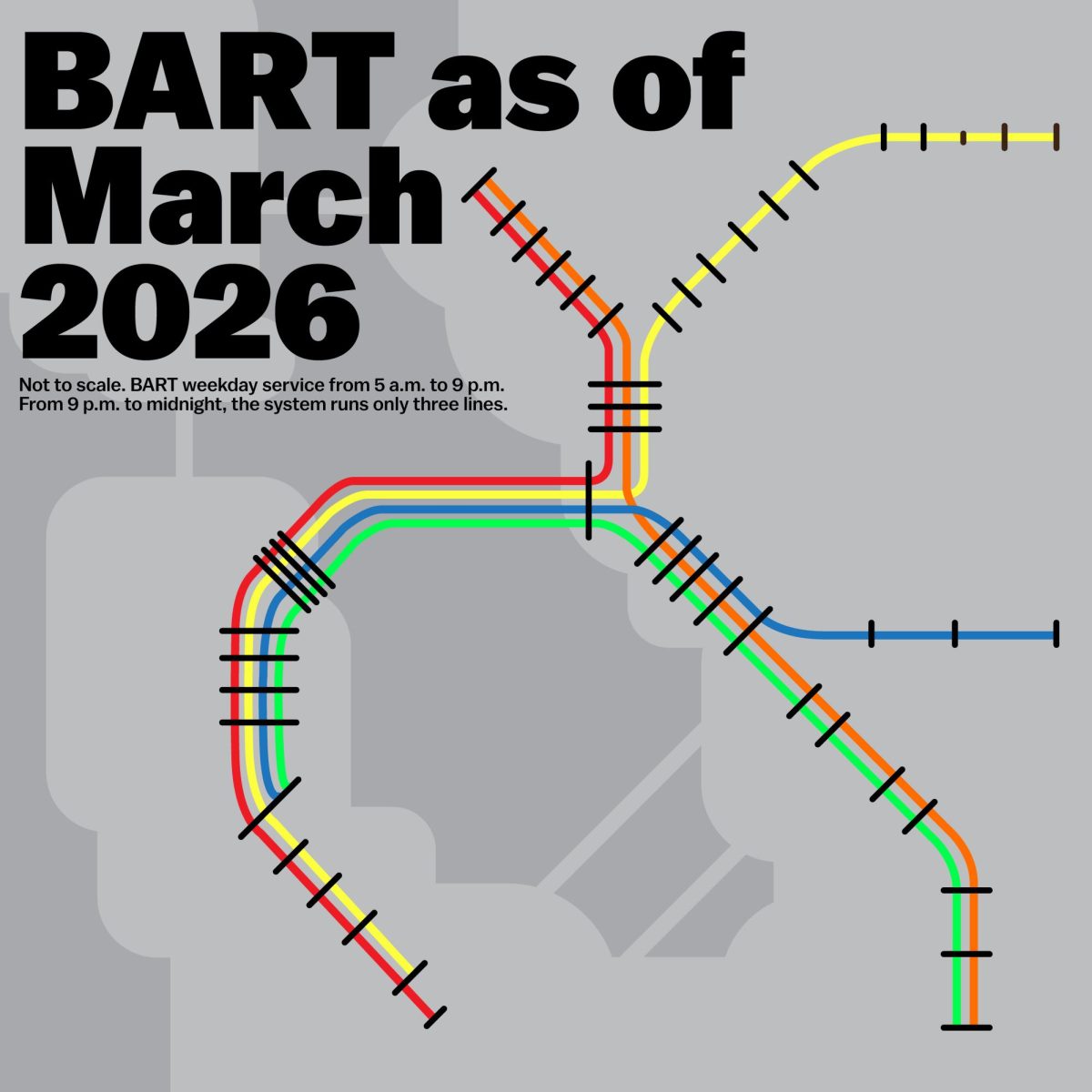
“They (transit agencies) are going to have to cut services if they want to be financially sustainable,” Neil said. “That is going to mean catastrophic results for our economy … and for our most vulnerable communities.”
Impact on De Anza transit riders

One in five De Anza students live either outside Santa Clara County or in Milpitas, the northeast-most city in the county. The transit cuts disproportionately impact students who live farther from campus or take night classes.
“I see a lot of working people or students late at night after their shift (on public transit),” Diaz said.
The reduced Caltrain schedule would bar students who rely on it, such as Diaz, from taking in-person night classes that end at 7 p.m. or later.
“It would be really tight for me to get there (to and from campus) schedule-wise,” Diaz said. “Worst case scenario, I would have to get an Uber everyday. It’s not cheap.”
Hour-long gaps between trains would cut into time for homework, jobs or rest in addition to extra SamTrans or Muni buses to get home.
Student commuters from Milpitas and the East Bay would have even less time on campus, forcing students to either leave earlier or rely on AC Transit buses, since BART plans to end service by 9 p.m. starting January without new funding.
BART would also hike fares by 30% and reduce frequency from every 10 minutes to 30 minutes.
Bumps beyond the ride
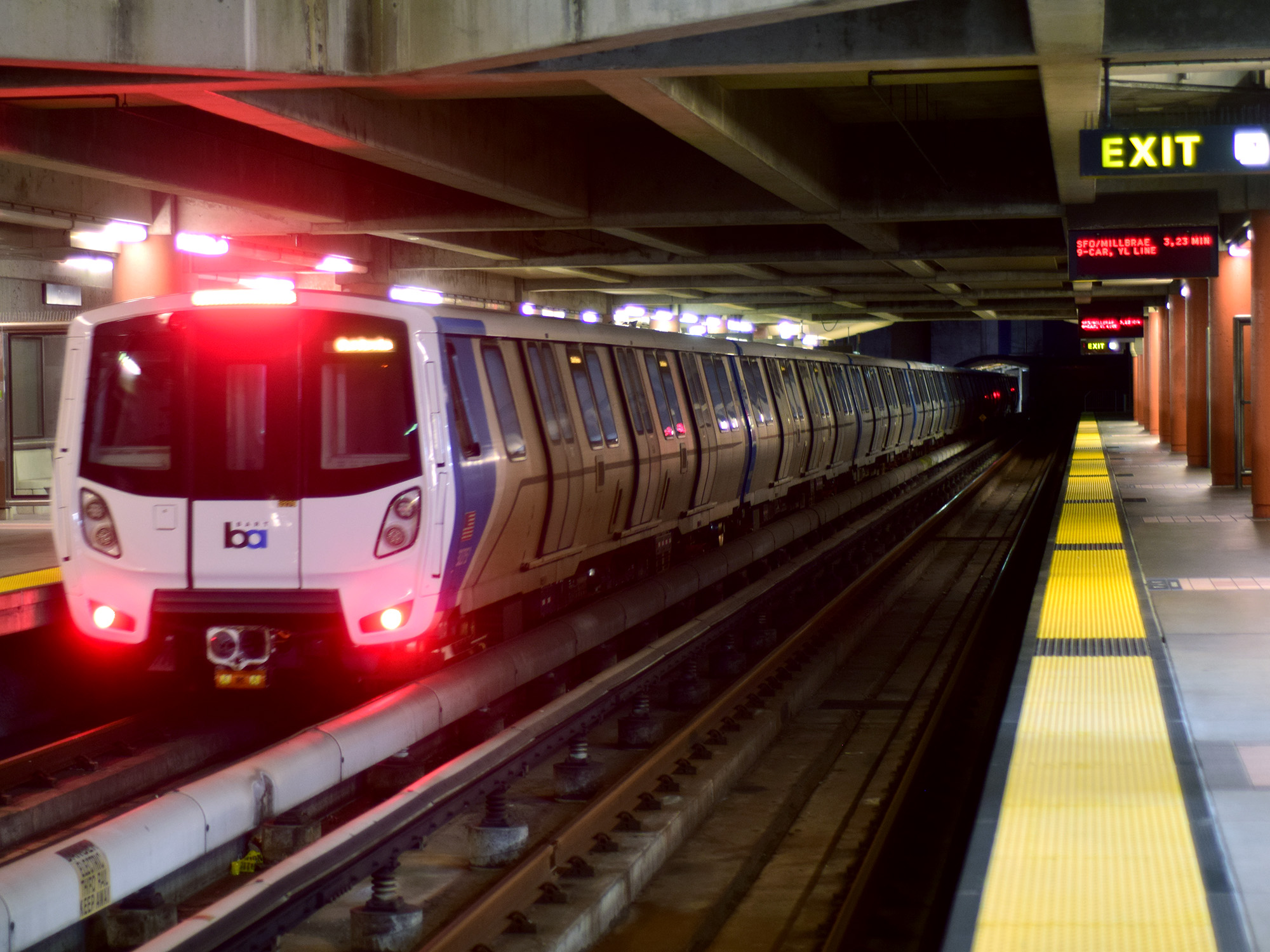
“For $800 million in cuts, that’s $4 billion of damage to our region’s economy,” Neil said.
Cutting public transit services will have broader consequences beyond economics.
“These budget deficits will inevitably increase traffic congestion and make our cities even more auto-dependent, exacerbating greenhouse gas emissions and climate change,” Jana Sanders, part-time environmental studies faculty, wrote. “Public transit is essential to meet our regional climate targets.”
Keeping the wheels turning

On Oct. 13, Gov. Gavin Newsom signed the regional transit funding measure SB 63, also known as the “Connect Bay Area Act.”
“The bill authorized a signature-gathering effort to go onto the ballot,” Neil said. “Whether it’s here in Santa Clara County, up on the peninsula, in the East Bay or in San Francisco.”
Supporters must collect 186,000 signatures by September to advance the regional transit funding measure onto the November ballot.
The measure aims to resolve the $800 million transit deficit with a half cent sales tax in Alameda, Contra Costa, San Mateo and Santa Clara counties and a one cent sales tax in San Francisco county for 14 years.
While agencies could start receiving funds from SB 63 in 2027 if it passes, Newsom also approved an interim $590 million emergency bridge loan on Feb. 19 to support Bay Area transit agencies.
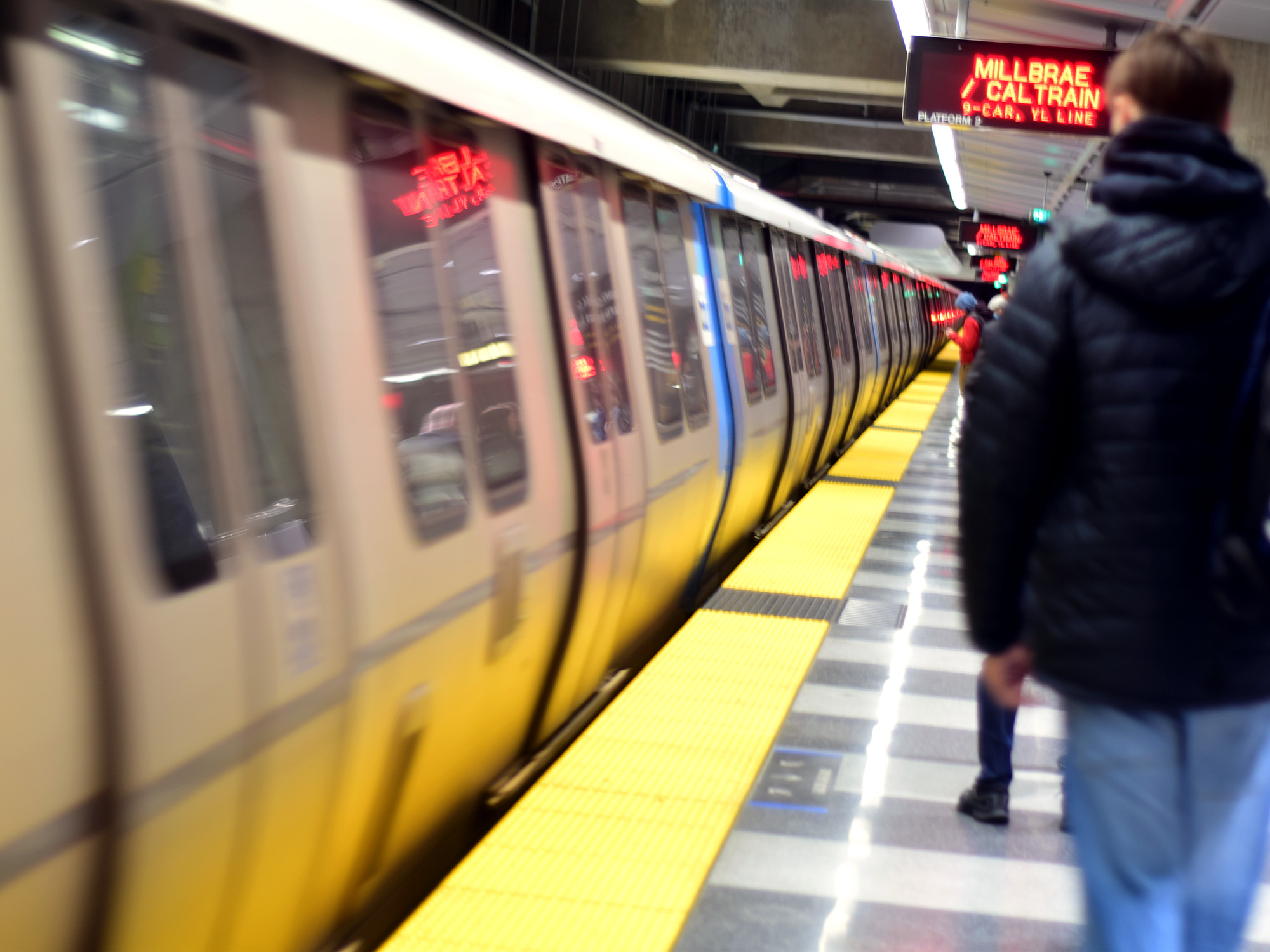
“For agencies where their budgets are over a billion dollars per year, that only goes so far,” Neil said.
However, some voters say SB 63 is unnecessary and argue transit agencies should seek alternate funding sources.
“There’s enough money in there,” Ivan Kojnok, automotive technology instructor, said. “It’s a mismanagement issue.”
Despite running a deficit, the San Francisco Standard reported that BART had 100 employees earning more than $285,000 in 2023 while the Los Angeles Metro, which serves more riders, only had 15 employees earning more than $285,000 in 2023.
BART argues it is more cost-effective than L.A. Metro based on the National Transit Database.
“The public’s willingness to support repeated taxes cannot be assumed,” Gov. Gavin Newsom wrote in his SB 63 signing message. “Some transit systems fail to adequately demonstrate stewardship, accountability and innovation.”’
SB 63’s provisions include an independent committee that will oversee Bay Area transit agencies and regularly review their financial efficiency.
“A sales tax is very small in terms of the actual amount that you’re going to be paying per year,” Neil said. “We’re getting so much for it in return. It is worth it.”