
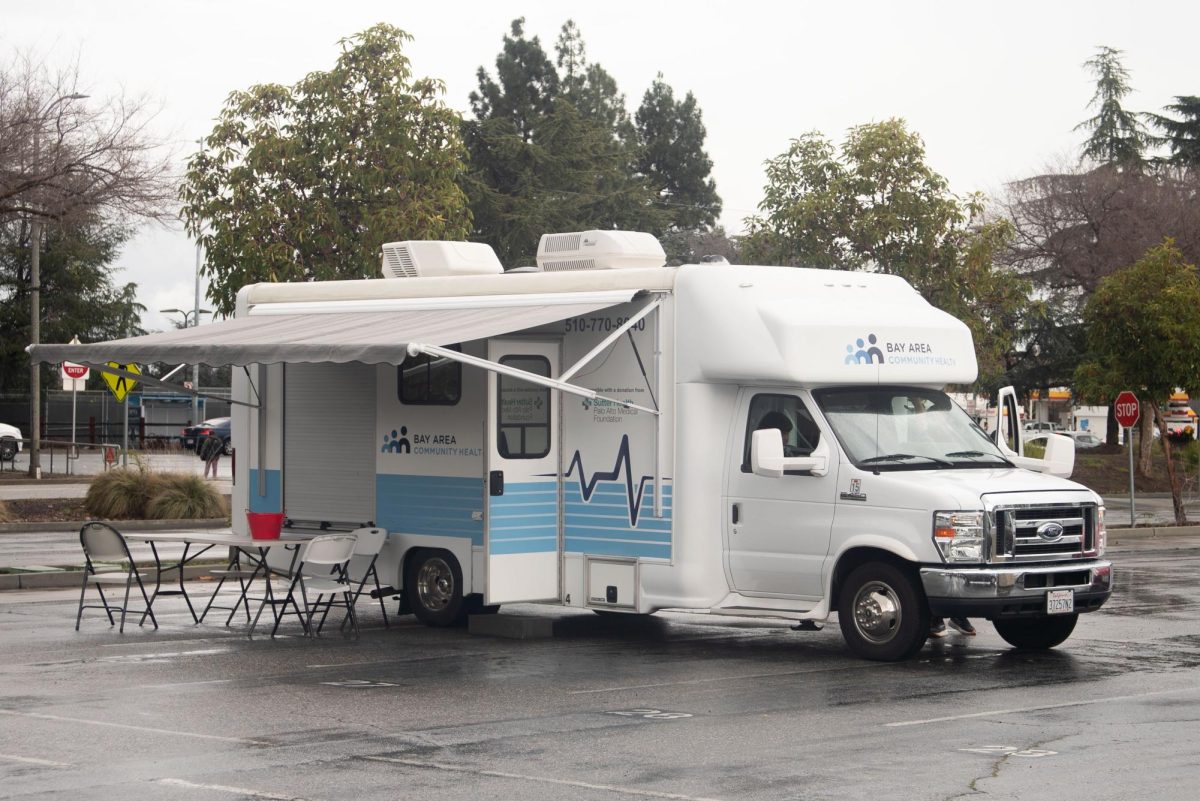

Bay Area Community Health provides free, confidential HIV testing at De Anza College every second Wednesday from 10 a.m. to 4 p.m. in Parking Lot A until February 2027.
“If you are sexually active, especially for students, you know what you’re doing, but you don’t know what your partners are doing,” clinic PrEP Navigator Sergio Davila said. “You have to take care of yourself and not put your health in somebody else’s hand.”
“For a long time, testing was not available, and people were not talking about HIV or AIDS at all. … a lot of people died,” Min Gacayan, 27, Pride Center history coordinator and math major, said. “Now it’s served on a silver plate.”
Despite having the Student Health Center, De Anza itself does not offer free HIV testing resources to students.
“One of the biggest barriers is accessibility,” Pride Center coordinator Jamie Pelusi said.
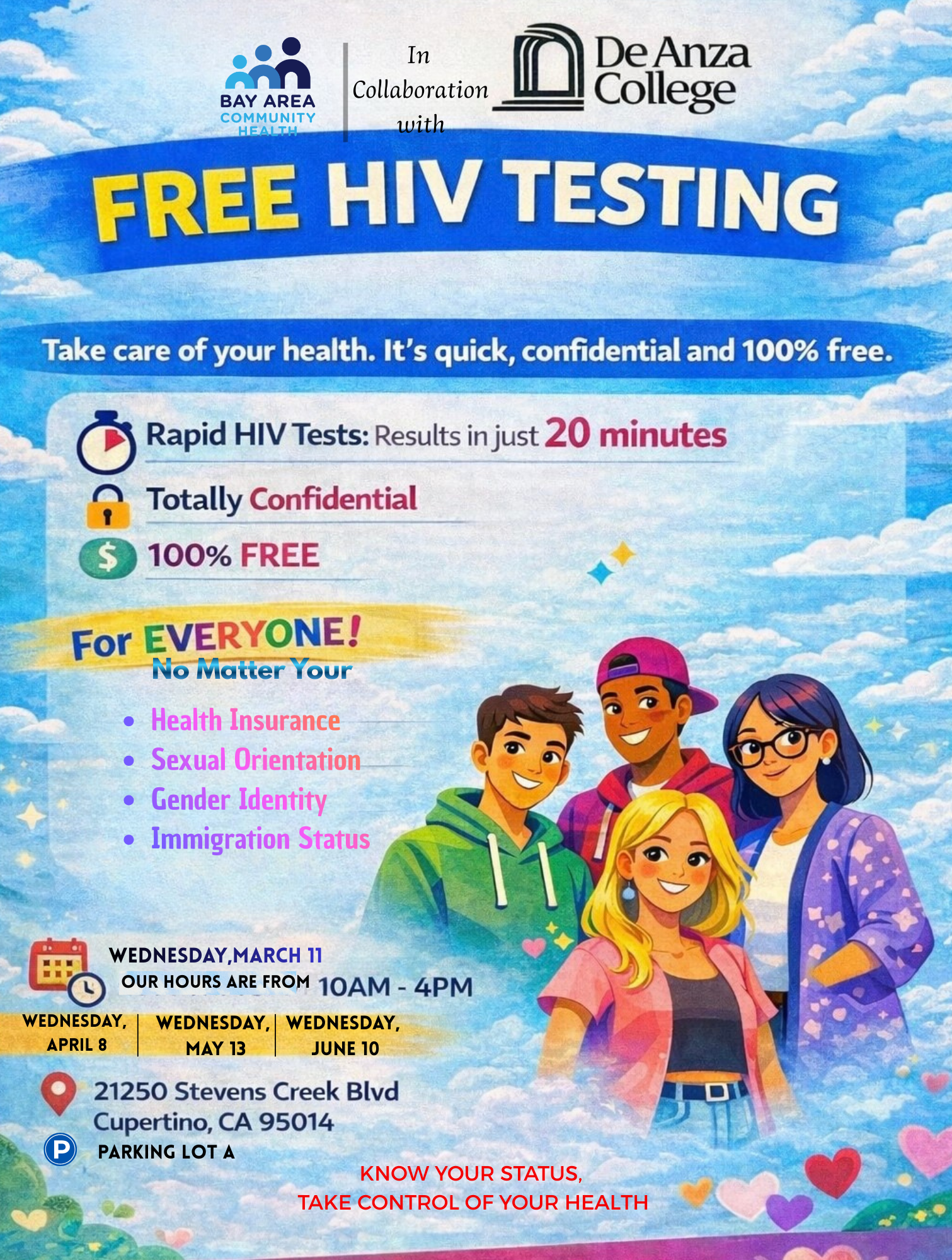
Pelusi, also the co-lead of the Bay Area Community Health-De Anza partnership, added that the free, on-campus HIV testing “removes that barrier.”
The clinic makes testing convenient and easy. For example, students can quickly get tested and return after class the same day for results.
“We just use a finger. It’s a ‘thwick,’ then we get a small drop of blood,” Davila said. “We put a bandaid on it. You wait 20 minutes, and we will give you your results.”
Davila said that HIV-positive people have options such as antiretroviral therapy to “keep the virus count dormant” while HIV-negative people can use PrEP to lower their risk of acquiring HIV.
The mobile unit aims to bridge the gap between uninsured people and HIV treatment.

“If they (uninsured people) test preliminary positive, we will send them to Santa Clara County Health Department and they will do more extensive testing to make sure they are positive,” Davila said. “Even if they don’t have insurance, if they don’t have money (or) they’re unhoused, they (the county) will help them get medicine for care.”
The clinic values its patients’ privacy, and HIV test results are not shared with insurance providers or other medical organizations.
The clinic also offers referrals for gender affirming care, condoms and take-home HIV testing kits. Like the clinic tests, patients will send the organization a drop of blood. They will then receive their results in the mail.
“It’s a whole enchilada; the clinic has everything. All the services, dental, vision for low-income people,” Davila said. “We put them on a sliding scale if they need to. Sometimes they (uninsured people) can pay as low as $20 per (clinic) visit and $20 per lab.”
The organization hopes to continue its partnership past next February.
“The idea is to be permanently here. Not just for the students of De Anza, but whoever around needs it,” Davila said. “Everyone is welcome to get tested.”