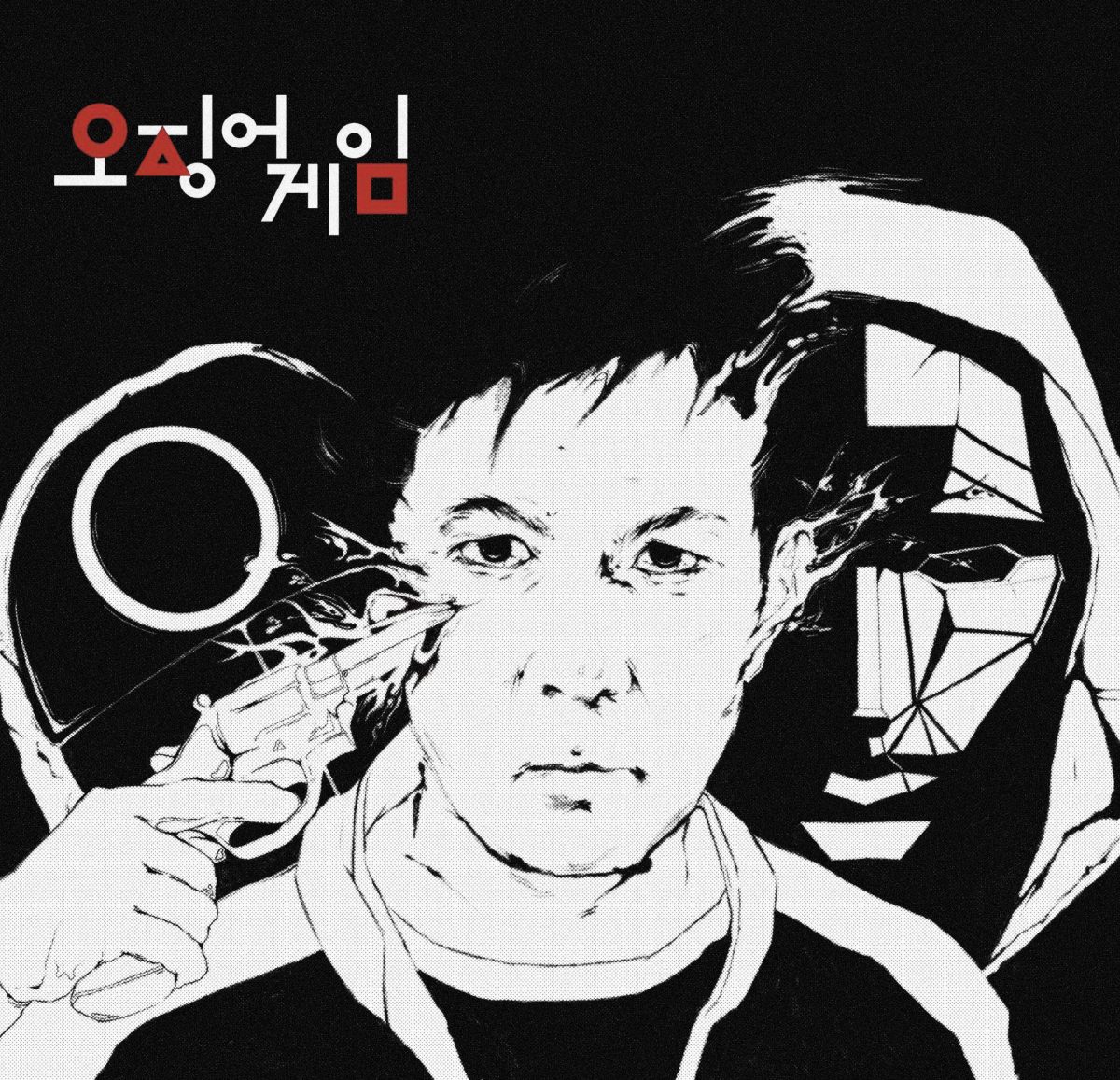
Season one of the Korean thriller “Squid Game” hooked the world when it premiered on Netflix in 2021. With more than two years since the first season, expectations were high for how writer and producer Hwang Dong-hyuk would further the story of Seong Gi-hun, played by Lee Jung-jae. From the moment the first episode picks up where season one ended, it was clear that this season would not disappoint.
It is immediately apparent that Dong-hyuk is not simply rehashing the first season, but building upon it. The first two episodes take an unexpected route, showing us how Gi-hun is not the same person he was in season one.
Gi-hun is no longer the gambling addict who entered the games hoping to win 45.6 billion South Korean won, approximately $40 million, to pay off his debts. He is now hardened and committed to ending the games once and for all. As he tracks the Salesman and, eventually, the Front Man, viewers anxiously anticipate his return to the games.
The season further explores themes of wealth inequality and capitalism. A striking scene shows the Salesman (Gong Yoo), a sociopath who recruits indebted individuals for the games, confronting a group of homeless people. He offers them a choice: bread or a lottery ticket. Most choose the ticket, hoping for a big win, but none are successful. After visiting everyone, the Salesman proceeds to stomp on the bread, blaming the homeless for their choice.
This scene highlights the wealth gap prevalent in South Korea and many other nations, including the United States. The Salesman does not have any sympathy or respect for those in less fortunate circumstances and uses his wealth, privilege and position as the Salesman of the games to humiliate those in debt and the homeless. This is reminiscent of the many wealthy influencers in the world who often seek to show off their wealth and believe that those who struggle financially are at fault for their poor situation.
Except for the first game, each of the games are entirely new, creating suspense as we follow Gi-hun and the many new supporting characters in this season. While experiencing the new games doesn’t surprise the audience as much as in season one, it is still gripping to watch Gi-hun navigate them instead of redoing the original ones.
Even with the new games, the focus this season is more on what happens between the games when the players have an opportunity to talk and vote on whether to continue the games or not.
It is here where we get to know the many new characters that are introduced. These are some of the best moments of the show, as they help to build connections with the viewer and add to the build-up to the next game, where there is a real fear of who will make it out.
The prize money is now promised to be given equally if the players vote to leave. But for those in extreme debt, many individuals are looking to win as much as they can. Because players are now being labeled with patches that show how they voted, it creates a tribalist conflict as all the players become split between those who want to end the games and those who seek to continue them.
This forced division is extremely similar to how wealthy individuals use their wealth to control the news and create us-vs-them narratives that seek to divide the people, making them forget who is actually responsible for their suffering. These new games, as well as the new structure of the game system, connect well with the many new characters introduced.
Each new character is unique and recognizable, with distinct personality traits.
There are multiple breakout characters from this season whom viewers will love or, in some cases, love to hate. There is Cho Hyun-Ju, a transgender woman and former special forces soldier played by Park Sung-hoon, who proves to be a strong step forward in transgender representation. Near the beginning, she faces discrimination from many of the other players but shows her skills as a tough and admirable woman and wins some of them over.
Then we have the rapper Choi Su-bong, who goes by the name “Thanos,” played by South Korean rapper T.O.P, who gives an incredibly entertaining performance despite being obnoxious throughout the show. Thanos will randomly spout out sentences and words in English and act out erratically toward the other players due to his ketamine addiction. Along with the many new characters are several returning cast members, which serve as a surprise.
The most significant one is the Front Man from season one, played by Lee Byung-hun, who gives a very unnerving and intense performance while also showing more of his character. However, with the number of characters throughout the season, it can be hard to follow them all at times, with some characters not feeling as developed as others.
Season two is also shorter than season one, with only seven episodes compared to nine. Each episode ends in a way that is likely to make the viewer binge-watch all seven, making it a thrilling but quick experience. With the season ending in a cliffhanger, people will be anxiously waiting for the next entry. Thankfully, season three has already been filmed and is expected to come out this July.
The season’s few drawbacks, such as a large cast of characters that can be difficult to follow at times and a few minor plot holes, are made up for with incredible performances, strong characters and an excellent story that builds on the first season.
This season will have you laughing, crying, wincing and on the edge of your seat as you wonder who will survive, both throughout the games and in anticipation of the next season.
Rating: ★★★★☆
Daniel Ramirez, 23, history major, is a guest contributor for La Voz.