A slender leafless tree rises from a single trunk, splits into multiple thin limbs, twisting upwards. Resting across the branches is a long slender canoe-shaped vessel.
“You wash up somewhere, maybe other than where you wanted to be, and you’re stuck there,” said Kristin Lindseth, as she describes one of the first art installations you see as you walk into the Euphrat, titled “Caught in Limbo”.

Lindseth’s series of bronze sculptures use uprooted boats, roots and broken tree trunks to reflect the experience of being uprooted from the familiar and cast into the unknown. Her recent art focuses on the global refugee crisis and the concept of home.
Lindseth’s personal connection and reflections of the refugee crisis echo the theme of this fall’s Euphrat’s fall exhibition featuring history told from the artist’s point of view.
“The bronze sculptures represent the kinds of homes that are being lost in the violent conflicts around the world, the small boats in which people risk their lives to cross oceans,” said Lindseth.
Diana Argabrite, Euphrat museum programs coordinator, said she was appalled when the Trump administration began erasing history from government websites.
“I wanted to do a show about history coming from a really personal point of view,” Argabrite said.
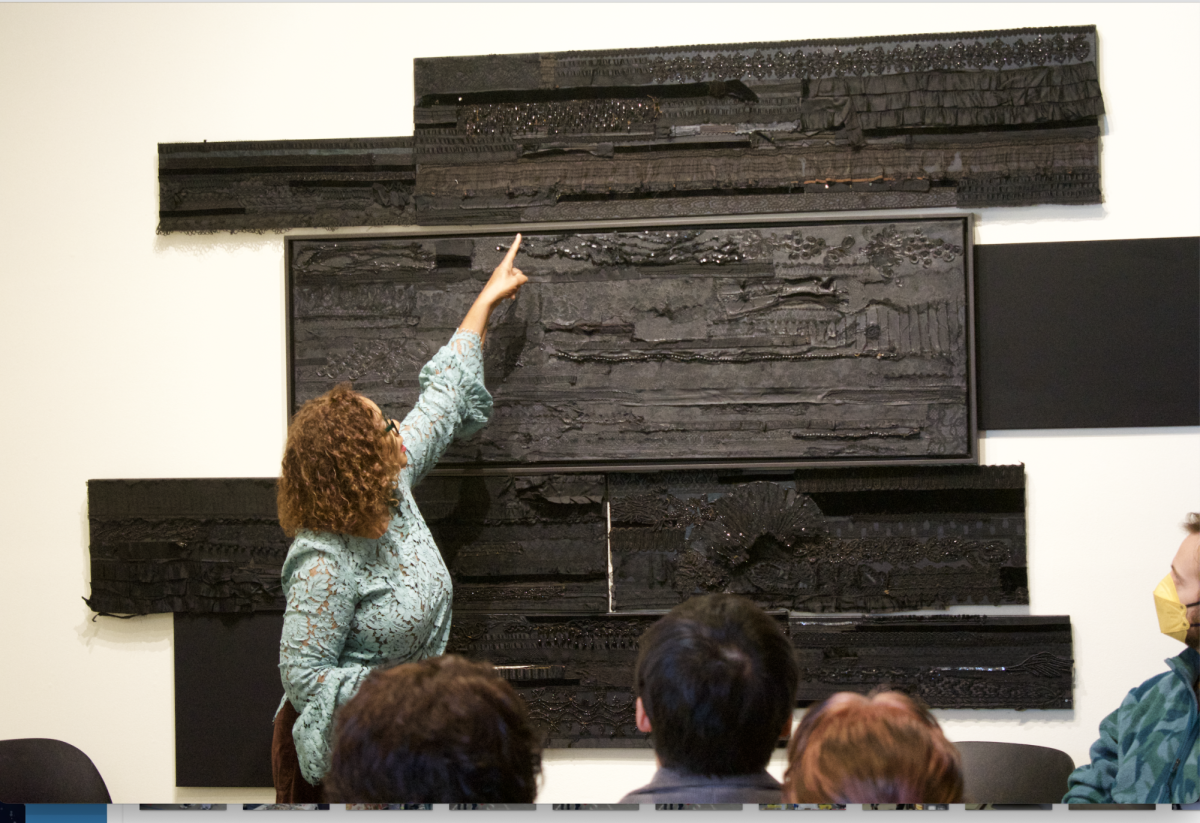
Artist and art historian Cynthia Brannvall invoked that underlying theme with her textile sculptures honoring the voices of the women who are left out of history.
Brannvall was introduced to working with textiles by the women in her family — including her grandmother, who made a living as a seamstress, and her mother and aunt, who all sewed. Although trained as an artist and art historian, Brannvall said she has always been aware of the absence of women’s voices in history.
(Cindy Rodriguez)
“Working with textiles became a way of evoking their presence,” said Brannvall.
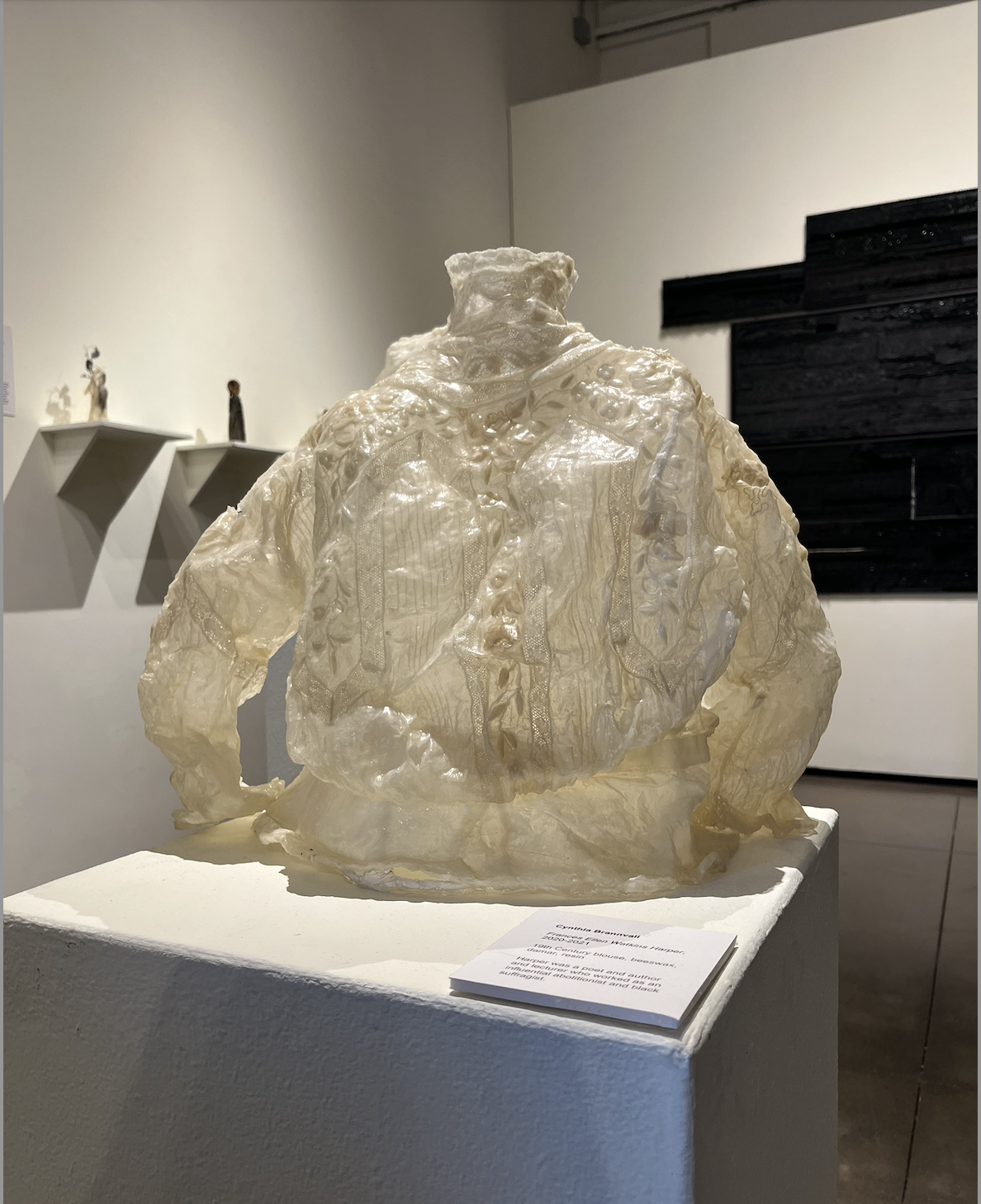
One of her current art pieces, titled “Frances Ellen Watkins Harper,” is a sculpture of a blouse with a white textured surface and floral leaf-like patterns that represents the influential abolitionist and black suffragist.
“I think of these busts as artifacts of history. They’re a way for me to shine a light and preserve those marginalized stories,” said Brannvall.
Other artists featured in the exhibition include Caleb Dowdell, Tatyana Fazlalizadeh, Colleen Quen, Marlene Larson, Oscar Lopez, Tony May, George Rivera, Flo Oy Wong and Bing Zhang.
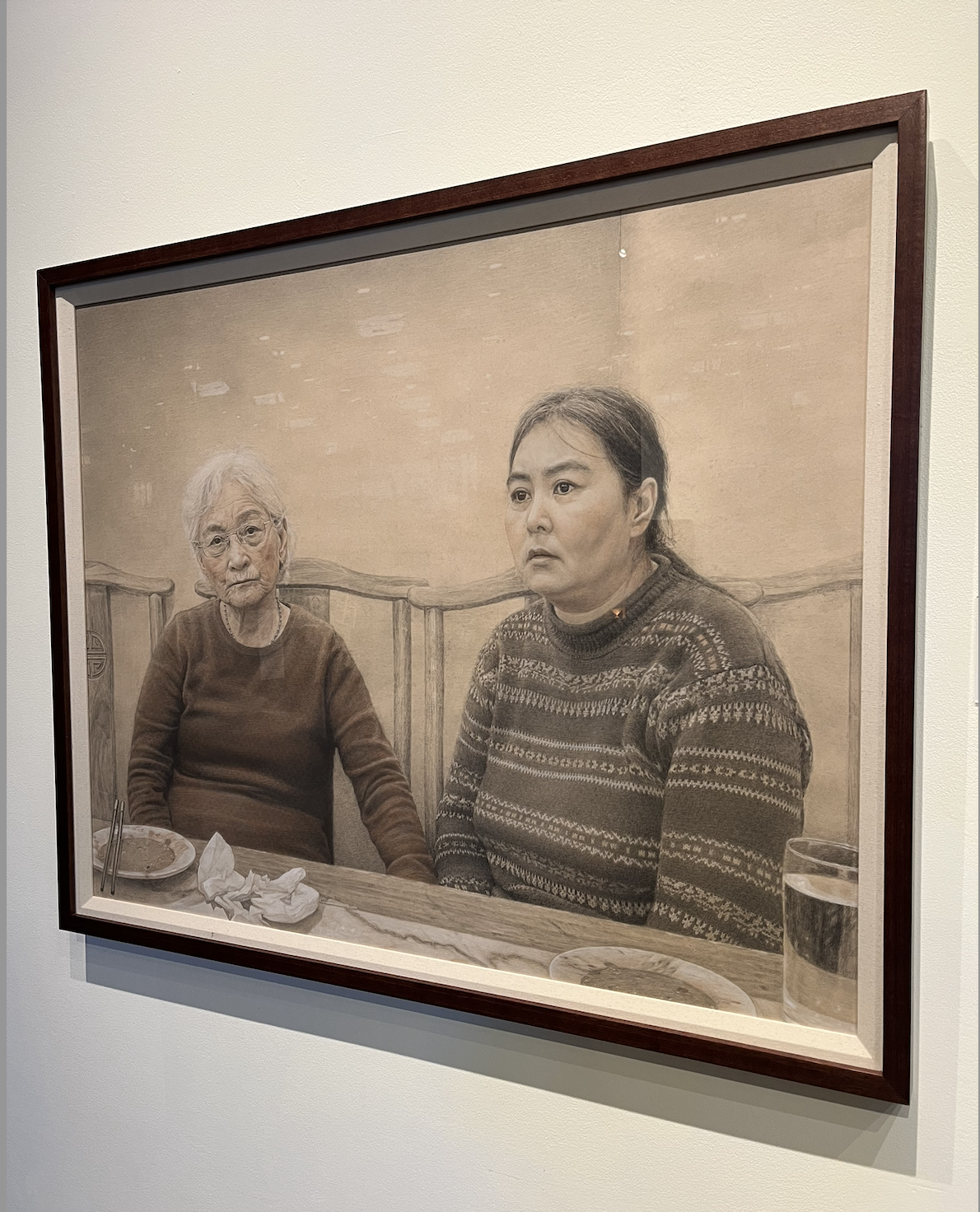
The exhibit featured artists’ personal histories, including George Rivera on the Gaza war and Bing Zhang’s portrait of a family member living with mental illness.
“There’s a portrait of Zhang’s mother and her sister staring at you,” Argabrite said. Zhang’s mother is getting old and is living in a part of China with limited social services, which reflects the experience of many people in that region.
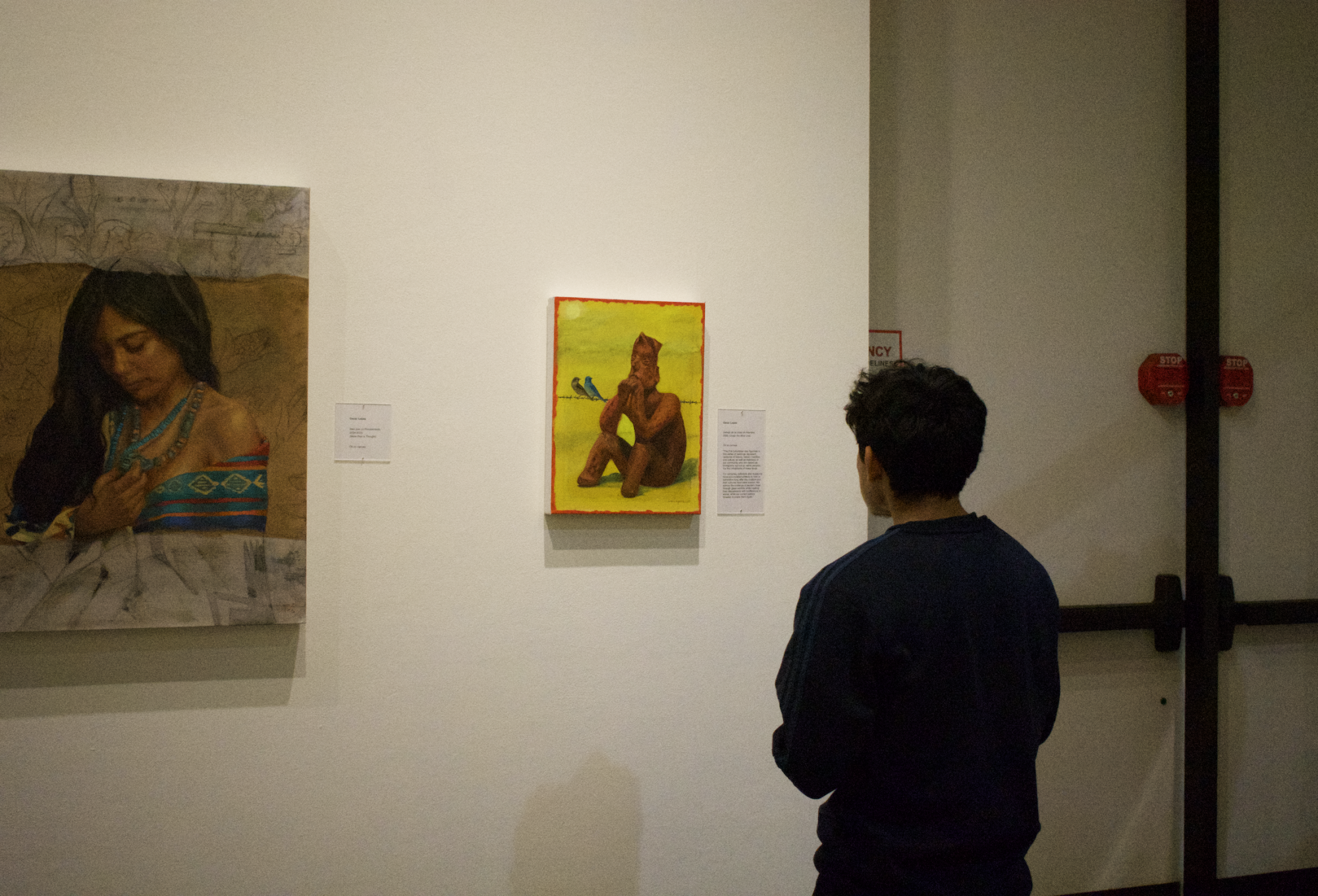
Students said the exhibition resonated with them, reflecting a moment in time when certain histories are being challenged.
“The exhibition comes at a perfect time, when we are witnessing so much erasure from the current administration,” Jesus Ortega, 22, art history major, said. “For me, the exhibition represents a collective resistance.”
The exhibition didn’t just display art, it created space for dialogue. Students exchanged interpretations, asked questions, and lingered to speak with the artists about their processes.
“I had very deep conversations, and I really enjoyed connecting with some of the artists,” Monica Brown, 20, graphic design major, said.
Although the exhibition wraps up today, Dec. 11, it hosted several events beginning Oct. 21, including a tea and tea cakes event with Branvall on Dec. 6.
The next exhibition will begin on Jan. 15.
Brown said, “This fall’s exhibition made me feel very inspired and seen.”