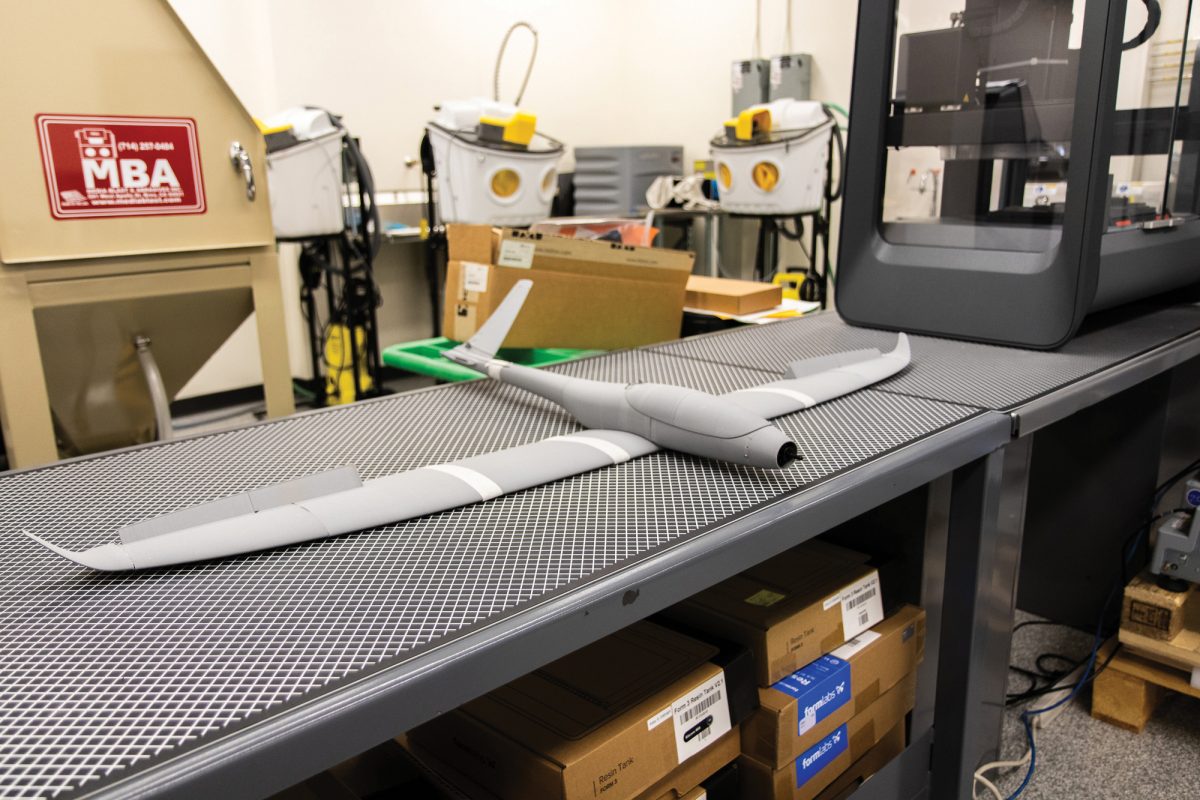
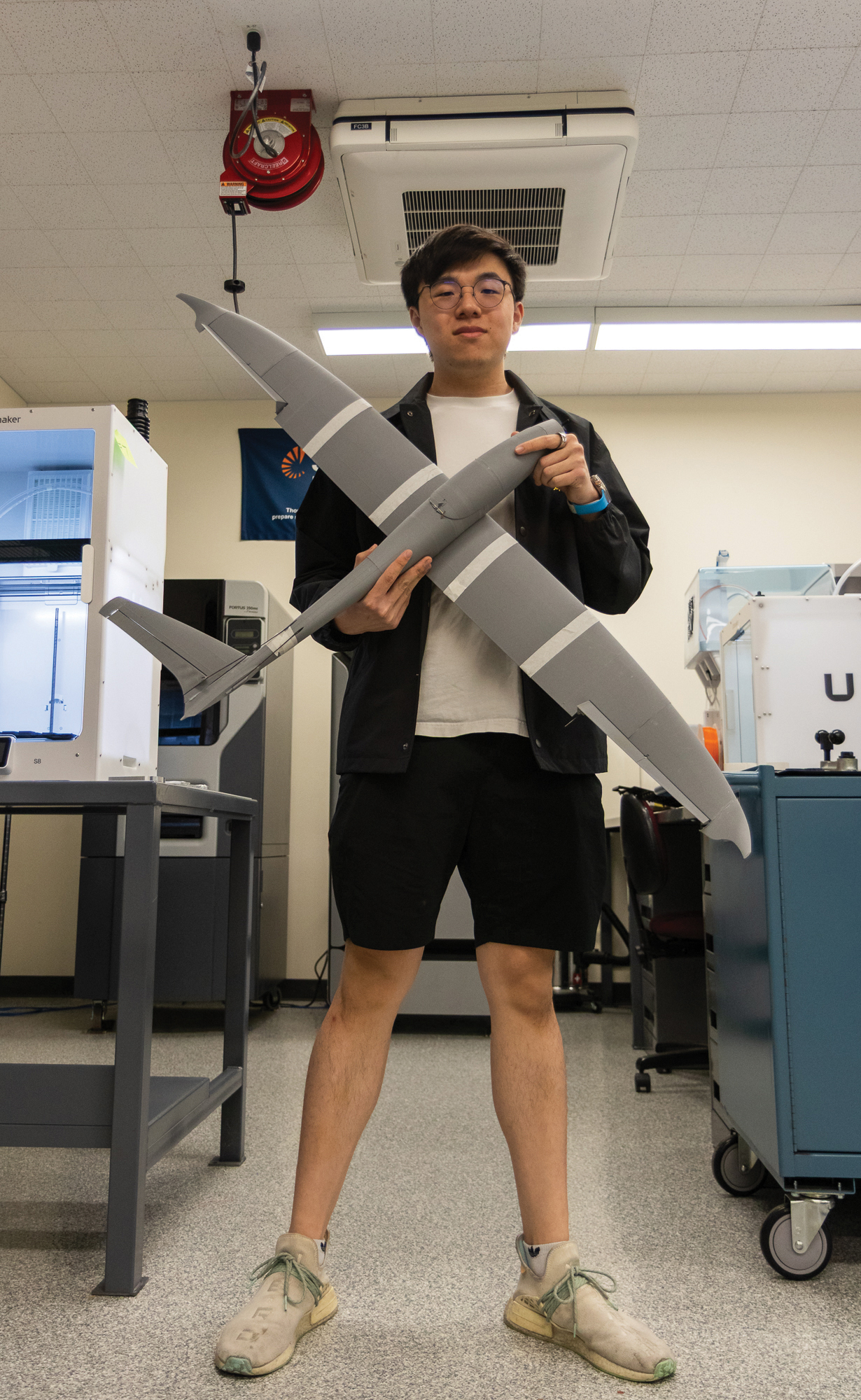
The 3D Printing Club had an air of optimism around its remote-controlled plane’s maiden flight on June 16, 2024. The plane, a remote-controlled aircraft printed at De Anza’s 3D printing lab, represented everything the students hoped for: a sleek design and a promising takeoff.
Everything ran smoothly — until it didn’t. The students, a mix of engineering majors, realized a small but crucial detail: nobody actually knew how to fly the plane.
“You’ve got a bunch of engineers that have all these mad skills,” said Max Gilleland, 3D Printing Club adviser. “But then we found out really quickly; nobody actually knows how to fly it.”
Fortunately, an RC plane enthusiast was present at the scene to help the students launch their plane — the plane flew for eight minutes on its first flight before making a sudden, unexpected descent on its second. In other words, it crash-landed in an open field. Students cheered on in a video posted by the club.
Despite the crash, the students continued undeterred; energized by the experience, they absorbed valuable lessons from their first test flight. Armed with insight and experience, it was time for them to revamp and relearn.
Arnav Purbiya, 17, a dual enrollment student, led the RC plane project alongside his club members with Gilleland’s guidance.
“We rushed into flying before fully understanding the plane’s behavior,” Purbiya said.
This year, the team took a measured approach, testing each component, researching successful design elements and conducting bench tests before assembling the aircraft for flight.
Constructing an RC plane is no easy feat — first, the team finds an open-source 3D model from sites such as Eclipson. If they want custom features, they need to modify the design on the computer-aided design software.
After the design is ready, the printing process begins. Parts of the plane, including its body, wings and stabilizers, are printed using a lightweight polylactic acid; the whole process can take up to 42 hours.
“It’s different from regular PLA, it ends up being a lot lighter,” Dylan Banera, 16, design and manufacturing technologies major, said. “As you know, airplanes have to be pretty light.”
Banera said that the club members glued all the segments of the plane together and reinforced the plane wings with carbon rods for structural support. Finally, after fully assembling the body, they moved on to finalizing electronic components.
The team gave the revamped plane a few upgrades, including new landing gear, and collaborated with another club, AerospaCS, to handle the plane’s electronic components.
The club’s Discord, with its dedicated #rc-planes tab, streamlined communication and coordination. Members used it to volunteer for tasks, consult RC plane experts and stay updated on printing progress, often through photos Gilleland takes.
“My hope is that this project doesn’t just end with one successful flight — I want it to become a gateway for more students to get involved,” Purbiya said. “This time, I’ve been practicing flying on a simulator.”
The 3D Printing Club plans to fly the plane in the upcoming weeks.
“I want them to have some failures and experiment and enjoy the experience, because going through the experience is priceless,” Gilleland said. “Just jump in and break stuff, because you’re not going to learn unless you make a lot of mistakes.”
(Editor’s note: This article was updated to correct a misspelling of Arnav Purbiya’s last name as “Puribya.”)