
This is the opinion of the writer and does not necessarily reflect the views of La Voz News.
Growing up in the 2000’s as a Gen-Zer meant you were constantly surrounded by cutting-edge technology — now as I’m going into my 20s, I can’t imagine my life without it.
If I love my technology so much, why am I not owning it?
I use my phone to document my life and AI as a tool in my education — two great resources, not crimes. Unless documenting memories and leveling up my knowledge is illegal now, spare me the guilt trip.
Hearing the same old lines from the boomer generation is getting …. well, old.
“Don’t use artificial intelligence — think for yourself instead.”
“Keep it old-fashioned.”
“If I could do it without technology, so could you.”
Well, to be blunt, sorry you had to ride the struggle bus, but I’m refusing to get on.
Right in the middle of the debate of human life and artificial intelligence, Silicon Valley Reads held an event called “Encouraging Empathy” at the Euphrat Museum of Art on Jan. 30.
The event centered around AI and humanity, exploring how technology and the human element can have a healthy coexistence. To fully flesh this concept out, the event featured authors who have written on the topic along with an art showcase following the theme of AI-humanism.
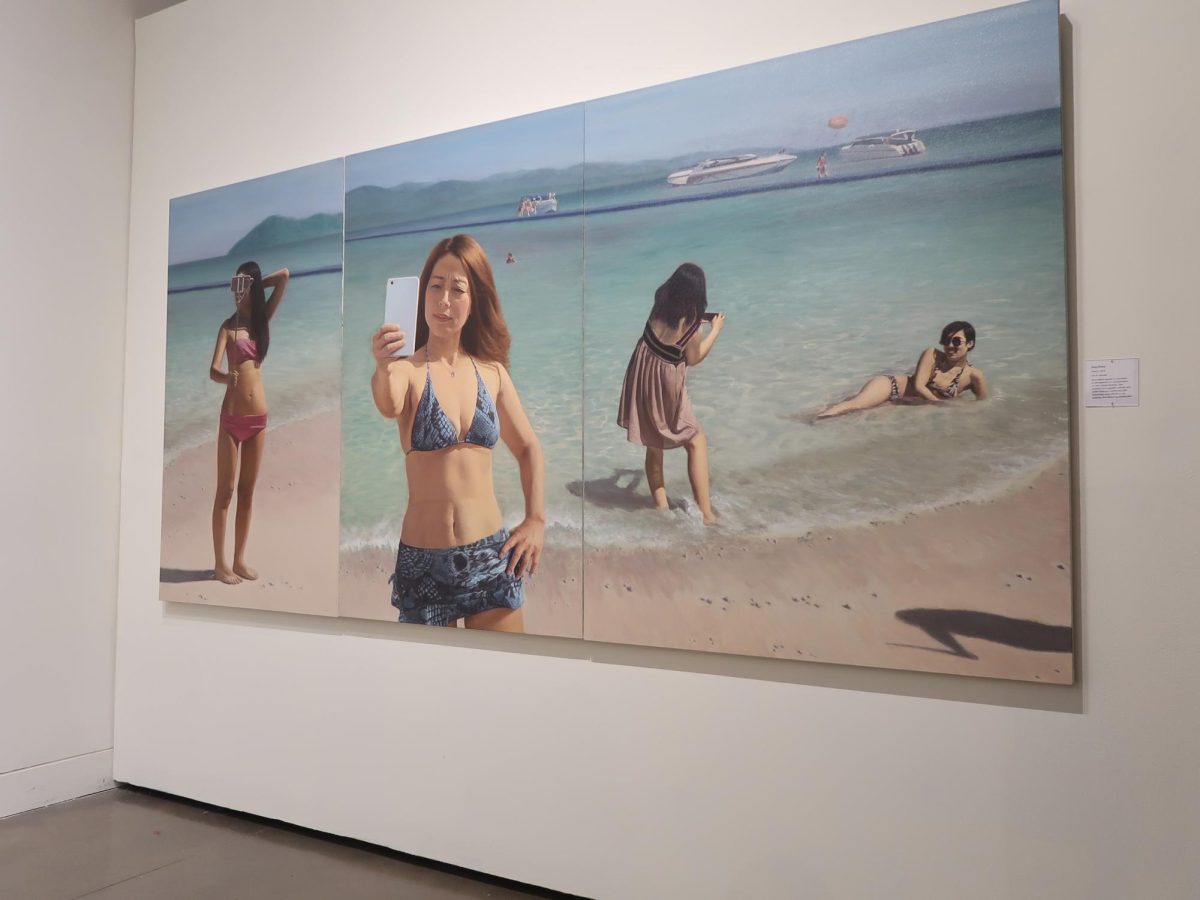
One piece of art in the showcase that came to life was “Beach, 2019” by Bing Zhang.
This piece might seem like the perfect example of how technology has “ruined” our world. But that opinion is only made at first glance; we see a beautiful beach and people on their devices and instinctively think: bad.
What if one generation’s definition of bad is another’s beauty? Artists like Zhang paint to reflect the world as it is, capturing life, not condemning it. “Beach, 2019” is a snapshot of our current reality and we shouldn’t be ashamed of it.
While the most prominent figures are the four women scattered across the canvas, if you look farther into the background, you see life unfolding.
A man swimming, a group of friends boarding a boat, and an unknown figure walking down the dock — these are simple moments we might overlook if we don’t learn to strike a balance between screen time and reality. Technology shouldn’t replace life, it should complement it. Set boundaries, carve out time to unplug, and see your device as a tool, not your entire world.
Like all things, there’s two sides to the story. Too much of one thing is never good — there’s no denying that. Too much technology, and you’ll miss the small moments. Moments like these are almost lost in the background of the painting.
So what’s the real issue here? It’s not our devices or AI — it’s us. We are what we binge, scroll, and obsess over. So when did we stop recognizing our own reflection?
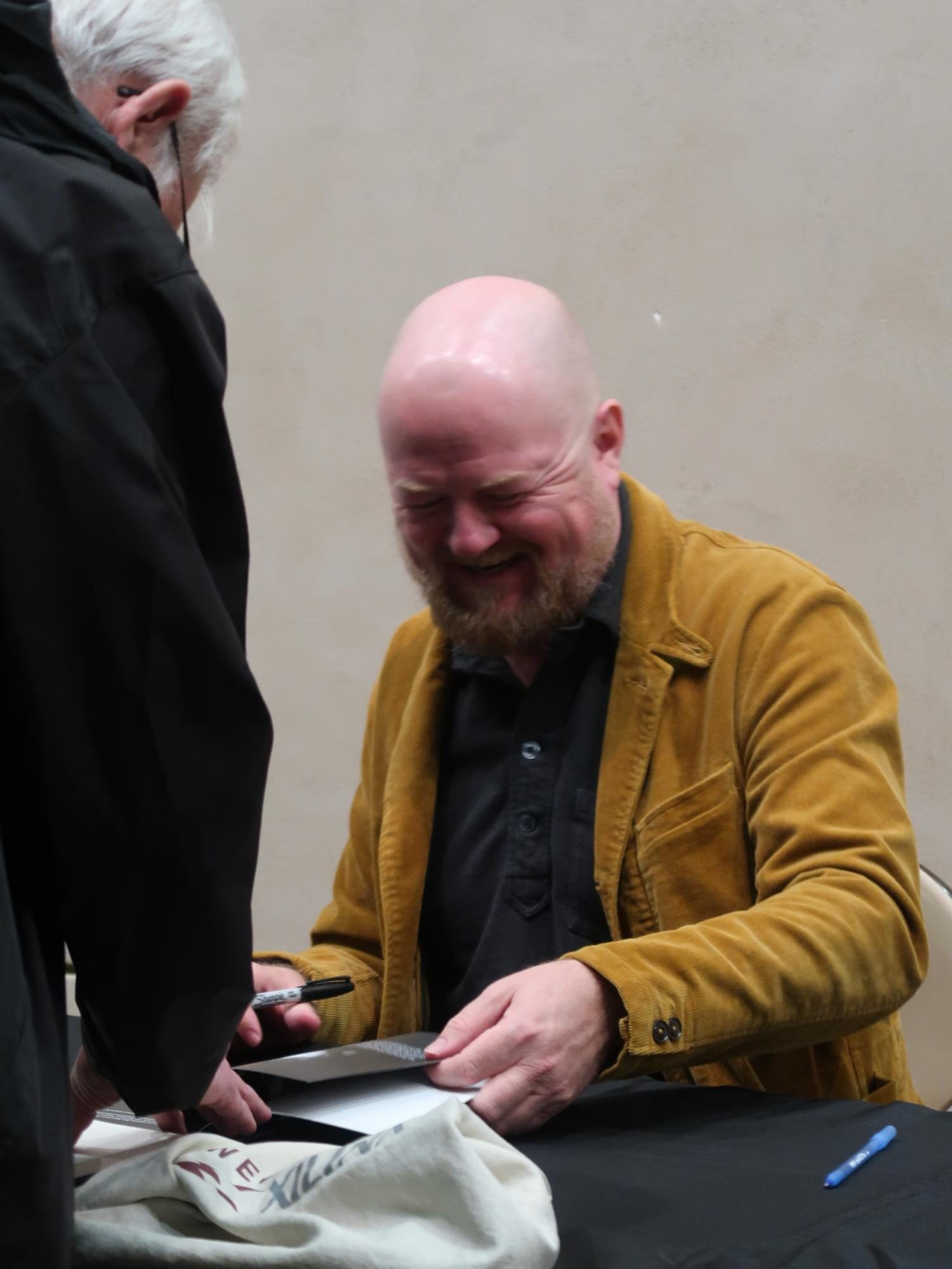
Ray Nayler, award-winning science fiction author, makes it simple.
“The AI term has thrown society into confusion more than the actual AI,” Nayler said at the Encouraging Empathy panel.
There is so much unknown about AI that we as a society have given into the science fiction aspect of it. Our minds go to Will Smith’s “I, Robot” and other sci-fi world takeovers, however these stories are really speculative fiction.
We feed into what we were given, these speculative fiction dramas and apply them to our lives right now. We dismiss AI’s insights because it’s easier to cling to old assumptions than to challenge ourselves with new perspectives.
We also tend to fall into the bad habit of placing blame on others. Some in our society have made AI and technology the bad guy, the reason for everything wrong today. But didn’t we make these things? Aren’t we the creators of our so-called “enemy?” How did that happen?
We are scared of the unknown.
We must educate ourselves and challenge misconceptions. Technology is a tool — whether it helps or harms depends on how we choose to use it. Those tired arguments I mentioned earlier belong in the past. It is time to move forward; no more shaming the youth for embracing technology.
This is who we are — it’s all we’ve ever known. And guess what? We turned out just fine. So instead of shaming what you don’t understand and daydreaming about the “good old days,” invest in higher learning. Adapt to the times, or we’ll leave you buffering in the past.
So what’s it gonna be: keep up with the times or get left behind? We’re moving forward, with or without you.