Correction, Nov. 15, 12:32 a.m.: A previous version of the article inaccurately stated DASG President Jayven Huang “cannot vote on items at the general senate” — the DASG bylaws does not have any provisions that prevent the DASG president from voting. Rather, for the most part, past DASG presidents have just not voted on matters in the senate.
That version also mistakenly stated Huang “moved to fully fund the workshop except for $800 for promotional items”: While interim Basic Needs Hub Supervisor Casie Wheat did not immediately clarify whether she was increasing her total requested amount to $3,000 during the meeting, the Nov. 10 meeting agenda outlined that the hub requested $2,200. Granting a greater amount at this meeting on this item would materially change the agenda item under the Brown Act, so Huang did still fully fund the item without needing an exception.
The article has been updated to correct these inaccuracies.
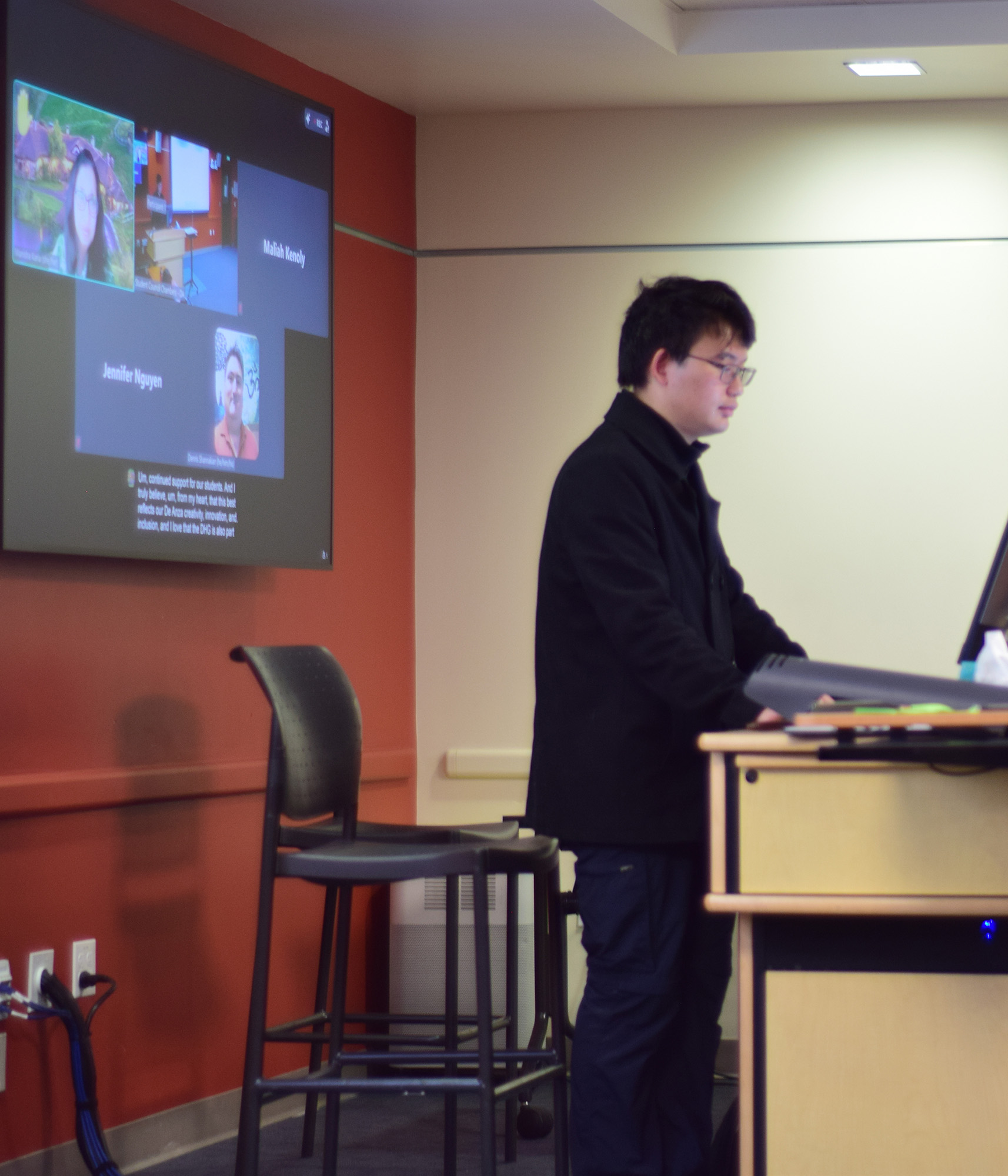
De Anza Student Government’s finance committee signed off on $7,334 for a CalFresh workshop and the college’s upcoming hackathon at its Monday, Nov. 10 meeting in the Student Council Chambers.
If the senate approves both requests, that brings DASG’s total special allocations budget down to $145,107.
The Basic Needs Hub, De Anza College’s recently relocated resource center, originally asked for $2,200 for the event in total, mainly for box lunches and promotional items to promote the Supplemental Nutrition Assistance Program, called CalFresh at the state level.
Its funding request form shows that the hub does not have an account with the student government, as DASG has not historically funded it.
The hub received $215,000 from the California Basic Needs grant and college resources combined, as well as money from the Foothill-De Anza Foundation that its requester and interim supervisor, Casie Wheat, didn’t specify on the form.
“The hub wants to bring over (students) and raise awareness to CalFresh benefits for our (the college’s) students,” Wheat said. “The application is a little tricky; it’s also very lengthy.”
At the meeting, Wheat said the hub would still run the event without these funds, but said it would impact turnout; Wheat also asked the committee to prioritize the food, asking for another $800 as she presented, saying that the now-$2,000 would go to around 100 box lunches instead of 50.
“We could do this event without DASG support. We just likely wouldn’t have any food or giveaways,” Wheat said. “We would still do the educational piece, but we’re trying to raise awareness.”
Casey said the foundation’s donors put restrictions on the funds it gets, meaning it would have to either seek funding elsewhere or divert funds from staffing or day-to-day operations.
DASG President Jayven Huang, 19, computer science major, moved to fully fund the workshop, shifting funds initially requested for promotional items to food instead and calling other senators to “think about it from the perspective of the people attending.”
“This would feed the people who need it the most,” Huang said. “These are people who want more information about CalFresh, who probably need the assistance and are probably hungry.”
The committee also gave De Anza Developers, the program that hosts the college’s semiannual hackathon — DAHacks 4.0, on Nov. 21 and Nov. 22 — a total of $5,334, with $2,926 for promotional items, $596 for custodial services and $1,812 for food.
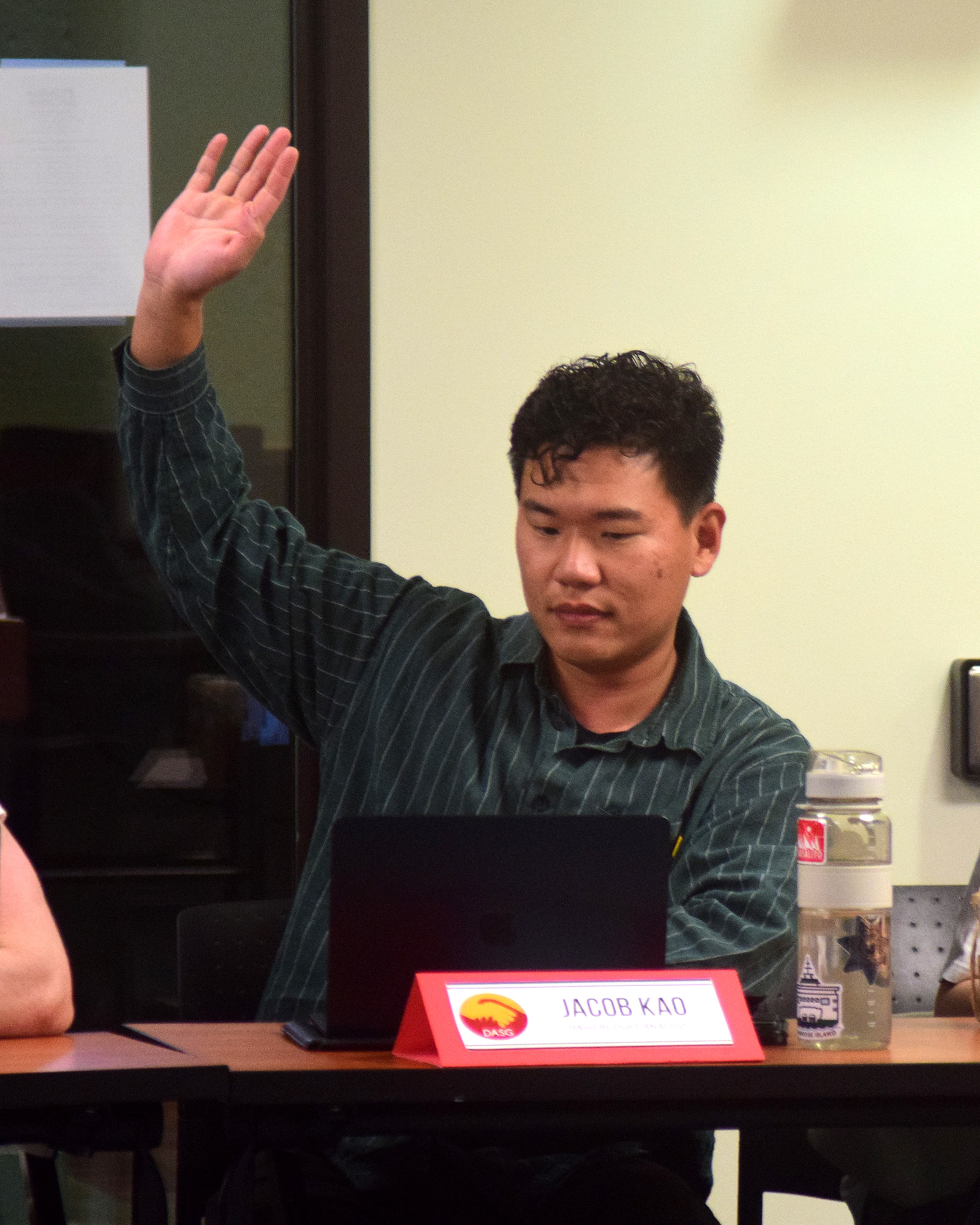
While the form listed DASG Chair of Finance Alan Ma, 19, electrical engineering and computer science major as its budgeter, Ma did not present or vote on the item.
The hackathon website lists Ma as its finance lead, but he said he does not plan to vote on it at the general senate to avoid a conflict of interest and that his inclusion as a presenter “was a mistake.”
“My (meeting) agenda is correct,” Ma said. “Wednesday’s (general senate meeting) agenda isn’t.”
None of the committee’s members that voted on the program’s funding request are involved in organizing the hackathon.
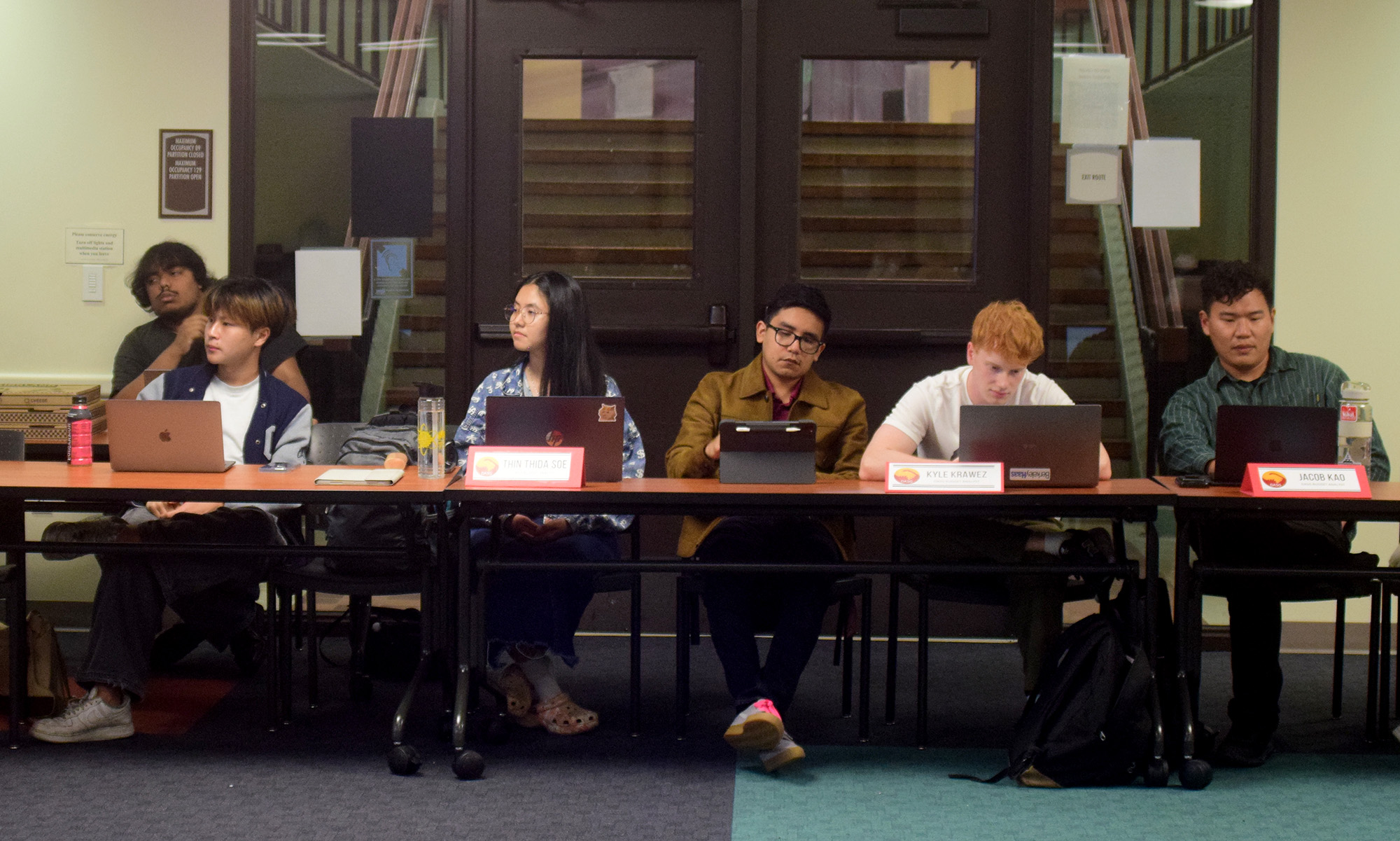
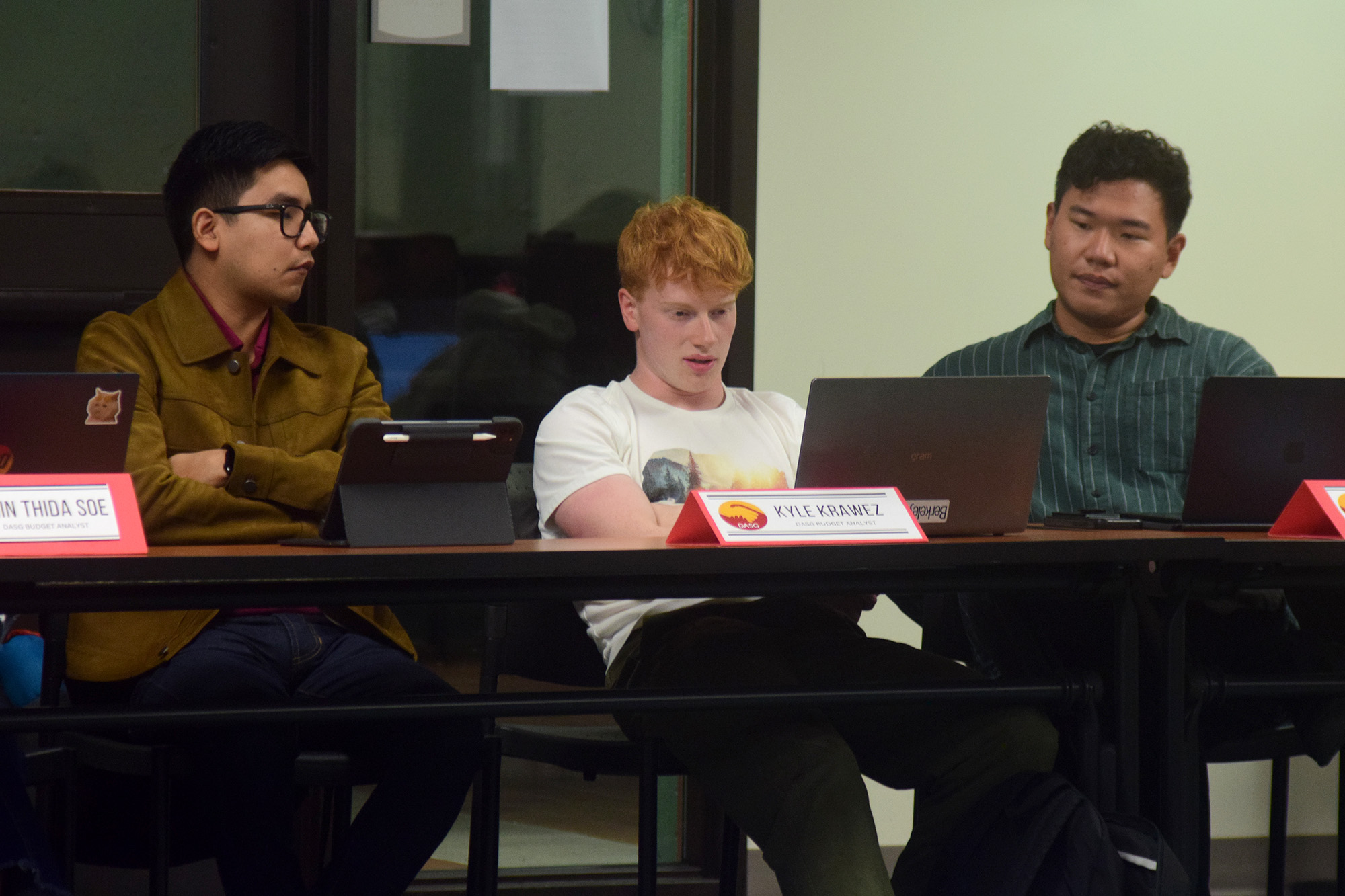
DASG Budget Analyst Kyle Krawez, 19, business administration major, asked adviser and Business, Computer Science and Applied Technologies Division Dean Manisha Karia why it didn’t ask for a regular budget last year when it hosts the hackathon semiannually; Ma said the program already put in a request for next year.
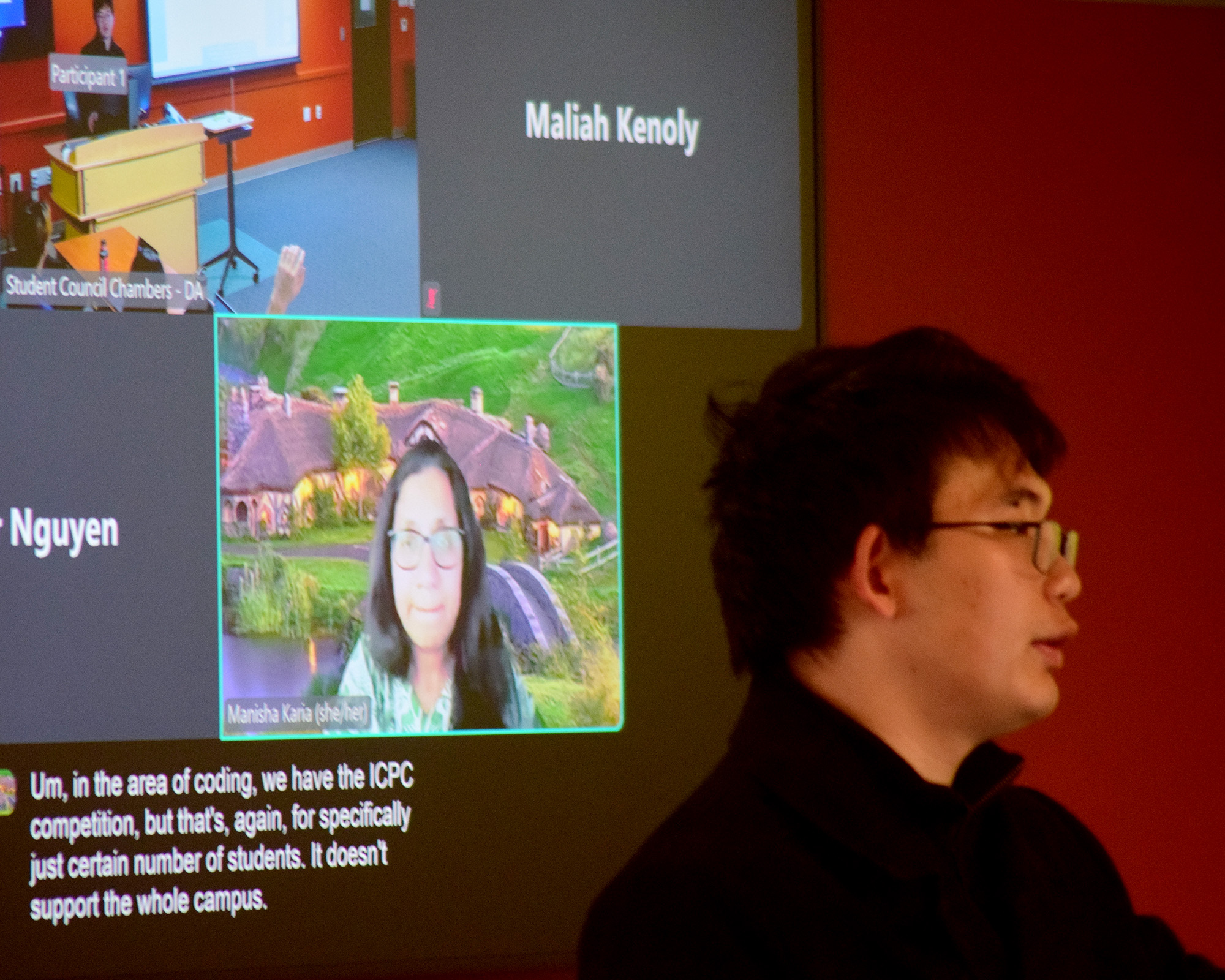
“There’s no other event like this at De Anza where students can compete in the area of coding,” Karia said.
Arya Somu, 19, applied mathematics and business major and a DAHacks 4.0 finance organizer, said the event’s sponsors supported it in indirect ways, even if the sponsors didn’t give it money upfront.
“They (ElevenLabs, a sponsor) agreed to give out 200 codes for a subscription that costs $22 a month; if you want to put a monetary value on there, that’s at least $4,400,” Somu said. “We’re also getting 500 Red Bulls … you can assume that’s at least $1,000 in value.”
The request left its form sections on other sources of funding and co-sponsorships as “not applicable.”
“It (leaving the sections empty) was an accident we made while doing the form,” DASG Events Coordinator and DAHacks director Audrey Tai, 19, business administration major, wrote over Discord.
Karia said the hackathon’s sponsors don’t fund the program or the hackathon’s operations, and that a two-day flagship hackathon costs more to put on than a one-day spring hackathon.
“All the gifts we get go straight to the students,” Karia said. “Every single participant gets them.”
Both requests will go to the general senate at its Wednesday, Nov. 12 meeting.