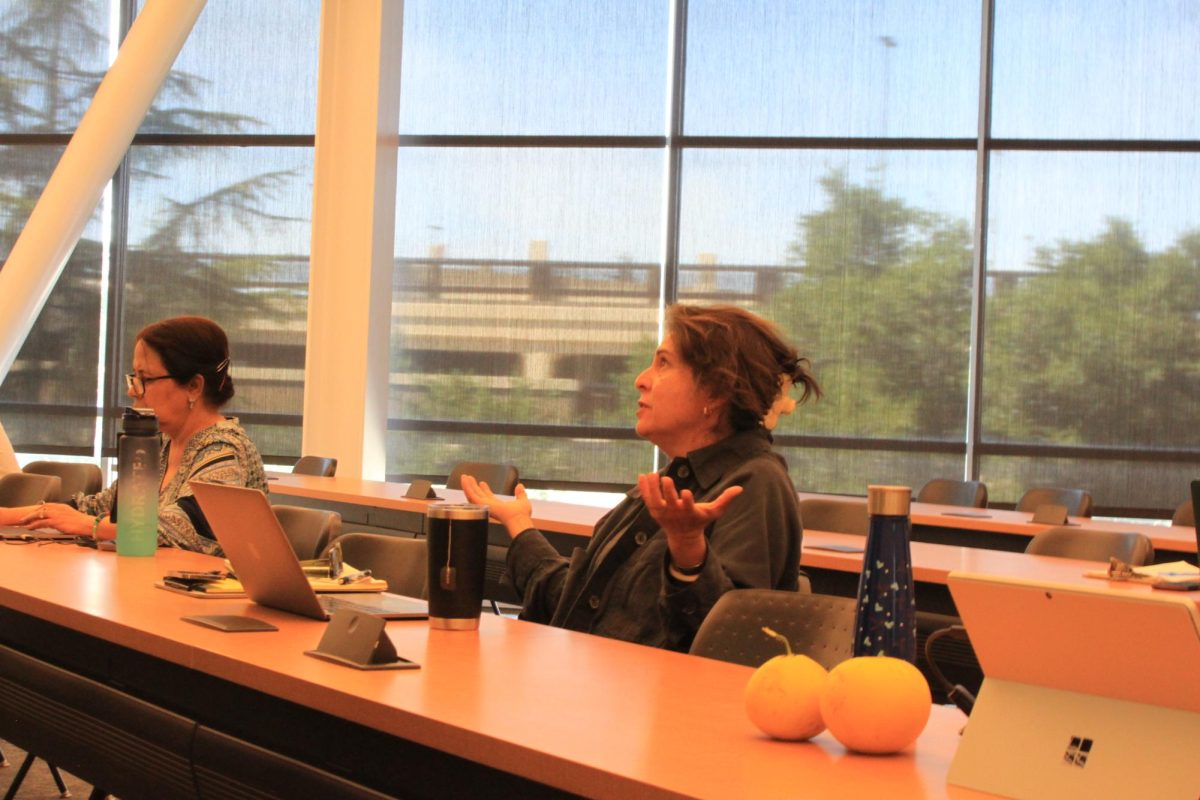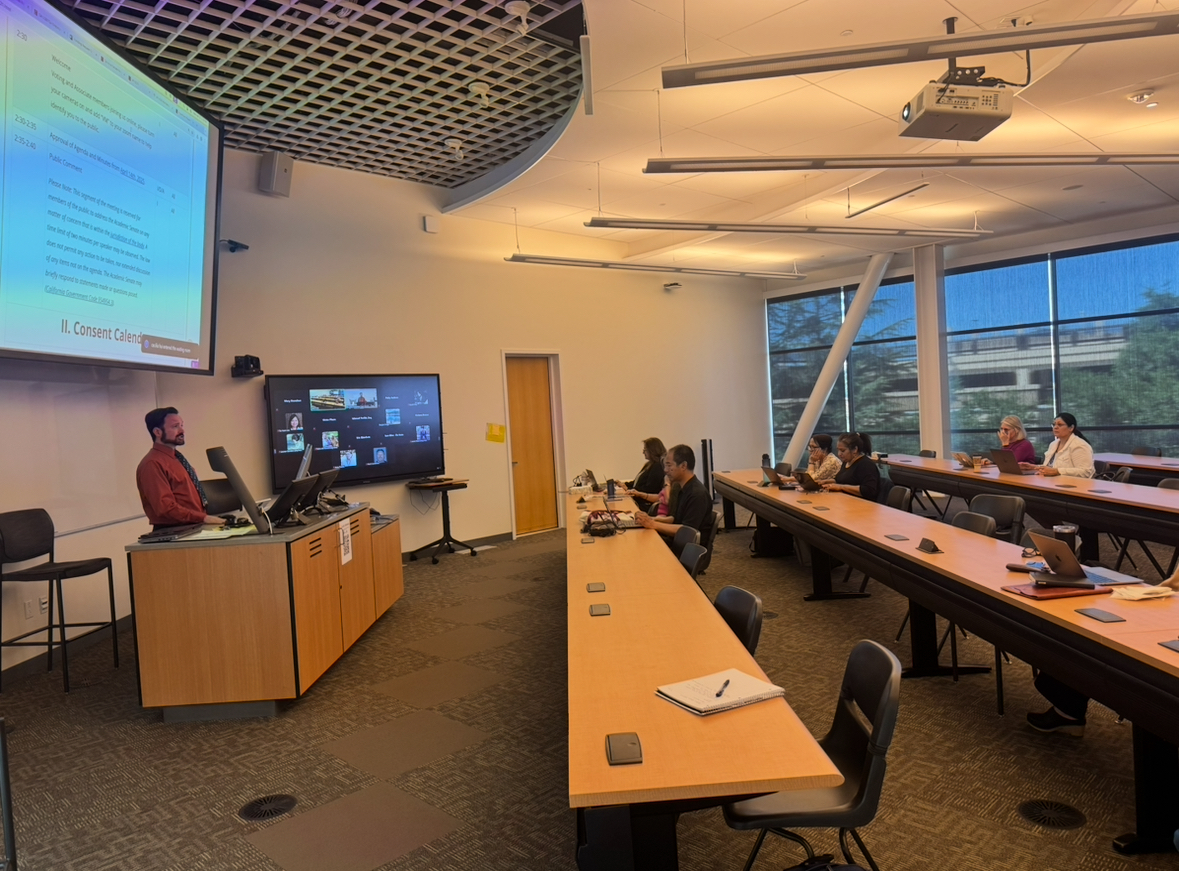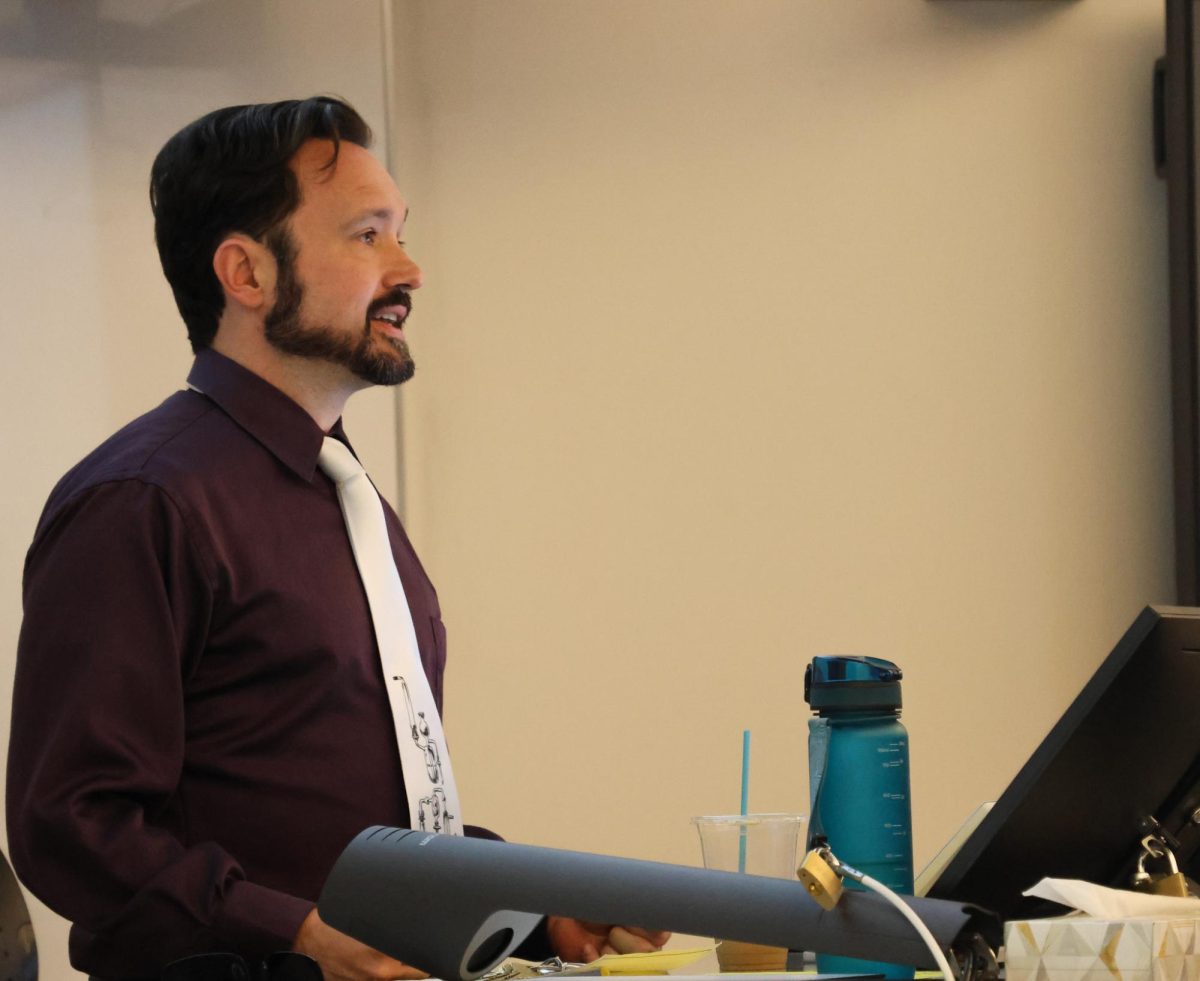
De Anza College’s Committee On Online Learning sought the academic senate’s input on software to surveil online classes and exams at its April 20 meeting in the Media and Learning Center.
Committee co-chair and faculty coordinator of online education James Capurso said that while some institutions use proctoring software to prevent cheating, risks include encroaching on student privacy and introducing racial bias.
“One of the most frequent criticisms of proctoring software is the bias of the auto detection of students of darker skin colors,” Capurso said.
Capurso also said proctoring software is not equitable for disabled students.
The committee did not propose a software company at this meeting. Instructors currently use Canvas to administer exams and track student activity.
Academic Senate acting president Shagun Kaur said the senate needed to talk about this software because it didn’t reaffirm its 2022 resolution on the Concerns Around the Adoption of Online Proctoring Software, which tasked the committee with finding an online learning proctoring software.
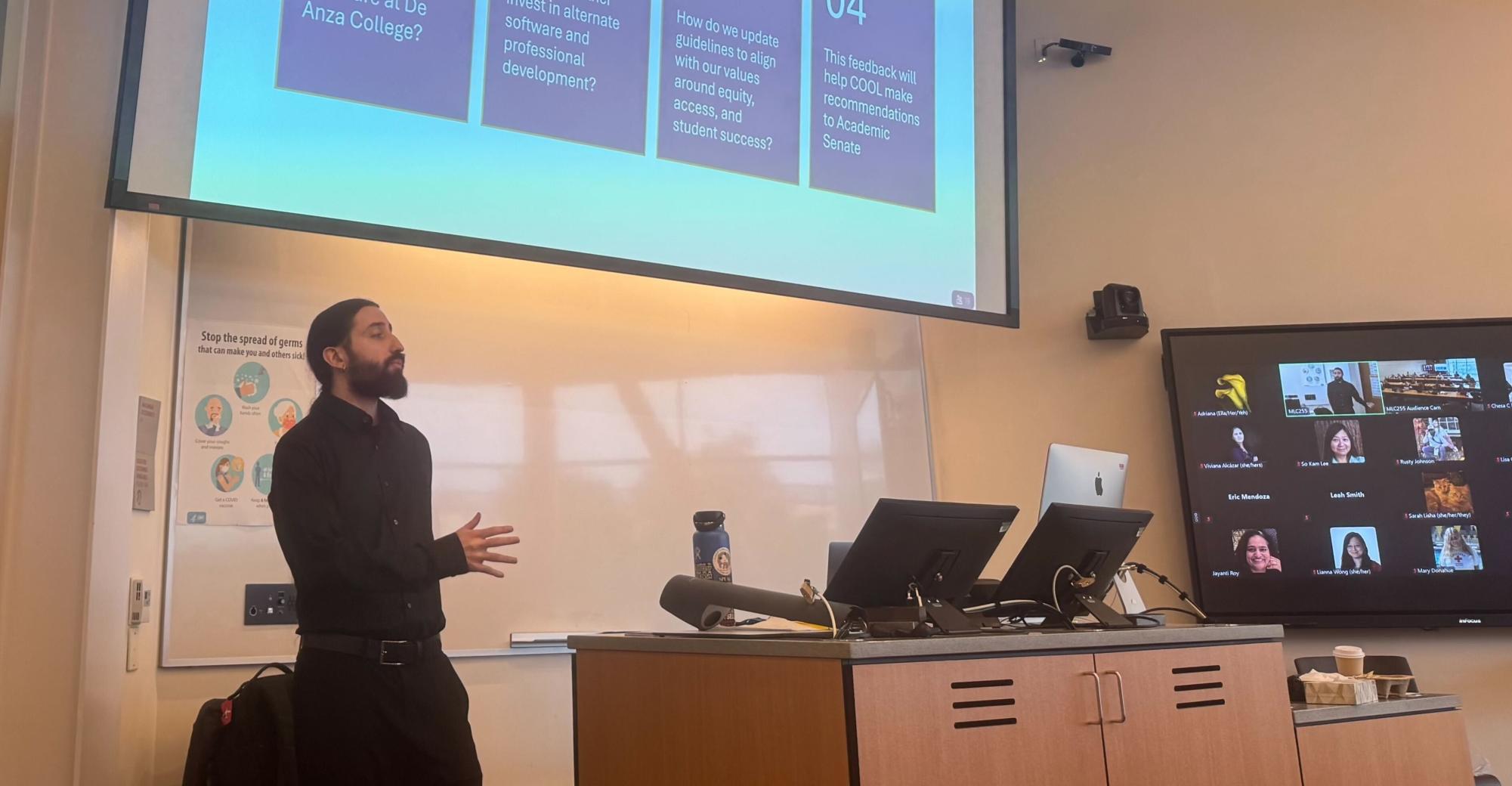
Former Academic Senate President Cheryl Jaeger Balm wrote in a 2021 report that teachers wanted software that addresses accessibility and equity, but did not find anything that met their guidelines.
“We have not seen a product that is acceptable based on the guidelines that we had in the past,” Dean of Online Learning and Learning Resources and committee co-chair Gabriela Nocito said.
Nocito said the committee prioritizes “equity and access.” Students with college-distributed devices would need Educational Technology Services to install software, which Nocito considered a barrier.
“We (the college) give out almost 300 devices that are library-owned that students cannot load any software into,” Nocito said.
In May 2021, the Foothill College Academic Senate resolved that it “does not support investing community resources, including but not limited to monetary funds, into online proctoring tools.”
As a result, Foothill discontinued its former service Proctorio.
“Whether we want to invest in this, to come up with alternative strategies, to reaffirm the solution yet again, there are multiple pathways forward,” Kaur said.
After surveying faculty and presenting to both De Anza Student Government and the classified senate, the committee will return to the academic senate in May with updates and a recommended action.