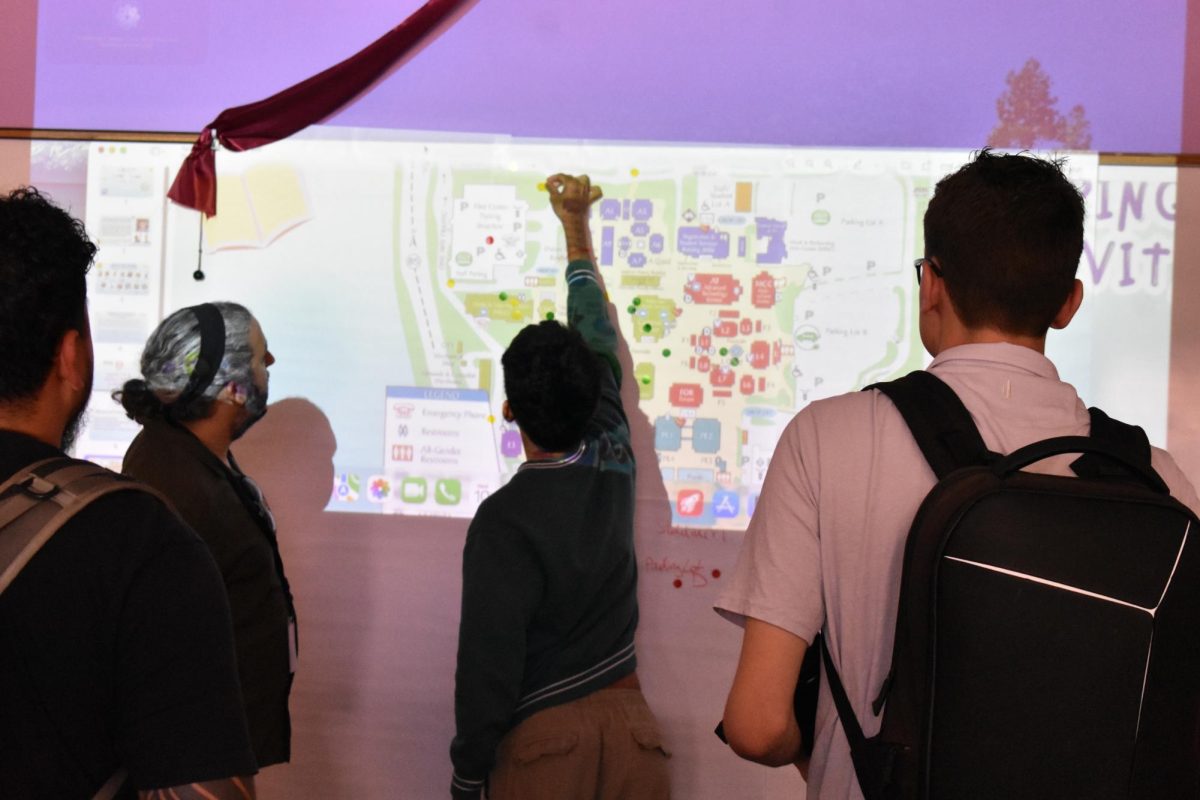

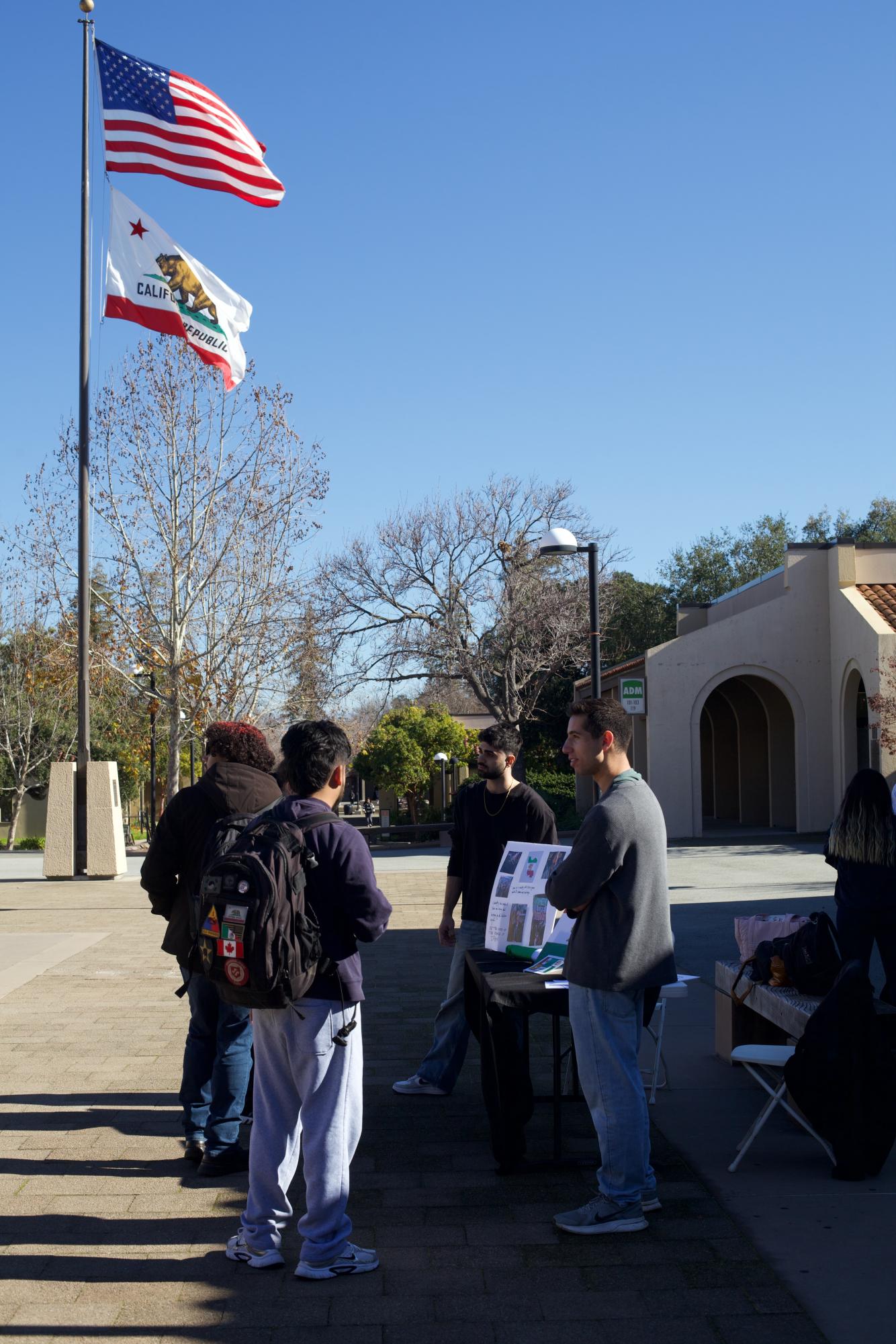
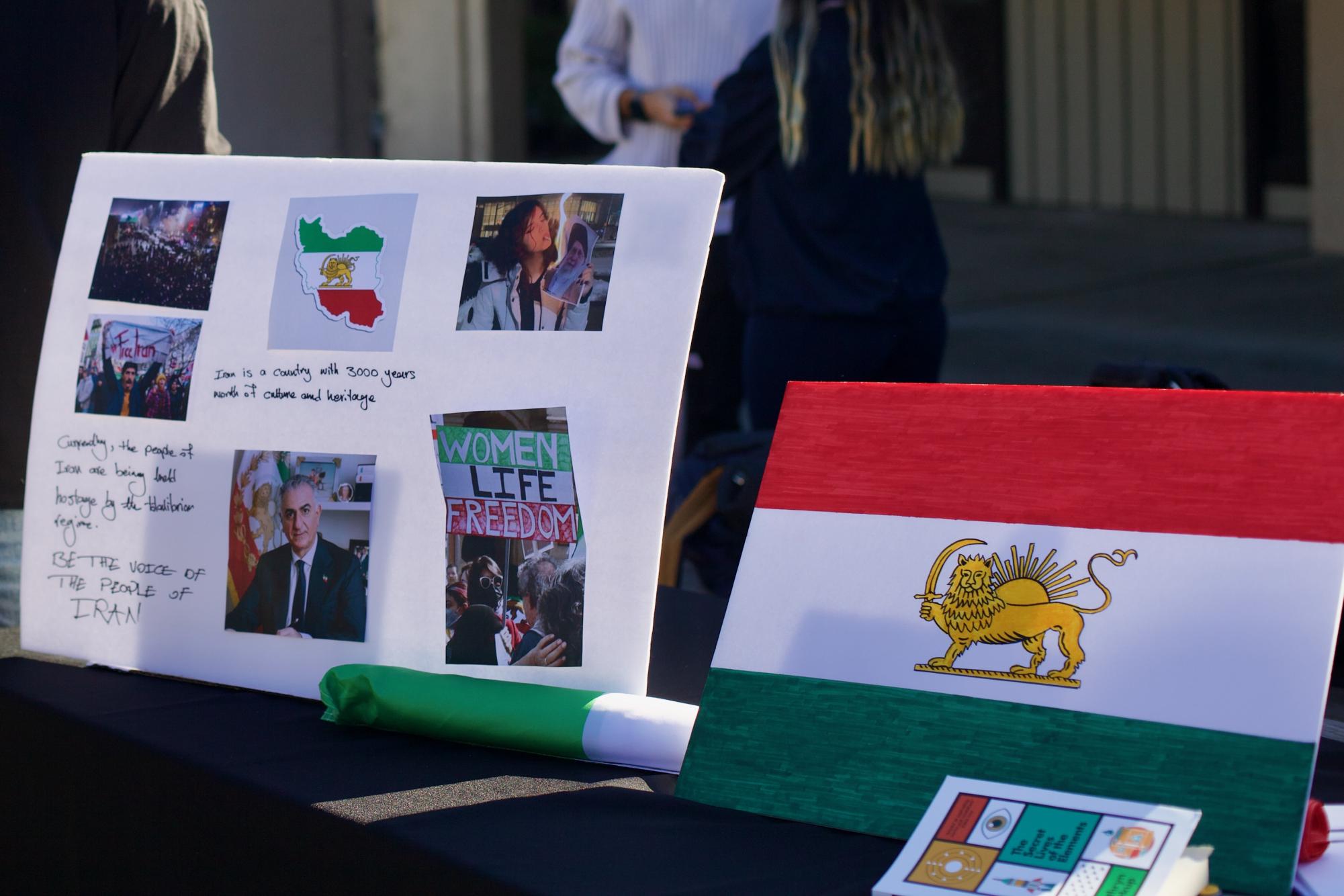
Students from the Iranian Student Association tabled on Wednesday morning in the main quad to spread awareness about the protests. They also discussed the different ways their families back home reached out to them.
Since Thursday, Jan. 8, Iran’s government has cut off internet and phone services. Students with family in Iran report being unable to contact them.
Some staff and students said the blackout has left them deeply concerned for relatives in Iran.
“As of Jan. 14, I still haven’t heard from my family,” an anonymous classified staffer said. “I don’t know if they are safe or not.”
Iranian students say they and their families have found creative ways to work around the communication blackout.
“My father was able to record a video on a family member’s phone. This family member was then able to travel to Germany and send (the video),” a student (A) who also requested anonymity said.
Iranians in remote regions are also using Starlink to send messages, but not without complications — although the United States has smuggled at least 50,000 units, the Associated Press reported that Iran banned Starlink and that users “fear they could be accused of helping the U.S. or Israel by using Starlink and charged with espionage, which can carry the death penalty.”
“Before the messages can reach the United States, the messages must be forwarded from another country closer to Iran, such as Denmark,” another anonymous student (B) said.
In spite of these communication challenges, the Iranian community on campus has recognized Reza Pahlavi as the leader of the protests.
“Pahlavi has been using social media to organize protests across Iran,” student (A) said.
Pahlavi is the son of the last Shah of Iran who the Islamic Republic overthrew in 1979, making him a controversial figure in Iranian politics. He was slated to rule Iran, but the new government did not allow him to return after the revolution.
Other members of the De Anza community say they are not excited about the return of the Shah, remembering the old regime’s wrongdoings.
VIDA Director Cynthia Kaufman said she felt Pahlavi is not a leader, but an opportunist.
“He (Pahlavi) is hoping to use the protests to come into power,” Kaufman said. “If the shah were to come back, it cannot be a monarchy.”
The previous shah, Mohammad Reza Pahlavi, removed the nation’s prime minister, Mohammad Mosaddeq, in 1953 under a CIA-backed coup, following Mosaddeq’s move to nationalize the country’s oil.
In a now-declassified report, the CIA wrote that “American action created a reservoir of resentment among the Iranian people that helped create the conditions for Ayatollah Khomeini’s Islamic Revolution.”
President Donald Trump said he supports the protests and “greatly respects that they cancelled the killing of over 800 protesters.”
Earlier in January, Trump took to Truth Social, calling on Iranians to “take over your institutions” and saying “help is on its way;” The Guardian reported that he “pulled back on threats to strike Iran” days later.
Some students call for support from foreign countries. “I would rather be a puppet for the U.S. if it meant water, food, education and university,” anonymous student (B) said.
De Anza’s Iranian community at large holds both democracy and an end to the violence at the forefront of their minds.
“Intervention from another country is the only choice, to stop the killing,” the classified staffer said. “I want Iranian people to be free.”