U.S. president Donald Trump was sworn in for his second term in office on Jan. 20. Following the inauguration ceremony, Trump signed a flurry of executive orders, many aimed at removing protections around the undocumented and LGBTQ+ communities.
The list of orders, compiled by the Associated Press, includes proposals such as deploying the military to the southern border, suspending the U.S. Refugee Admission program, eliminating DEI initiatives in federal agencies within 60 days, restricting the federal government to recognizing only two genders and removing protections for transgender and LGBTQ+ rights in Department of Education guidelines.
Students have expressed concern that these executive orders may pose a threat to their safety, legal status and access to resources and services. Many students reacted with frustration and concern over the rapid-fire changes set to take effect in the coming weeks.
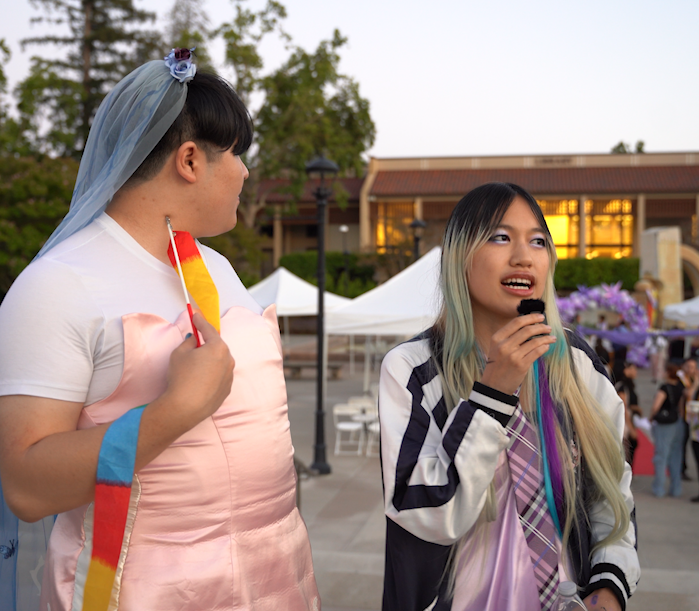
Miranda Carlberg, 28, animation major, is frustrated with the incoming administration and its targeting of transgender and nonbinary identities.
“It’s already tough to be trans, even under a liberal administration,” Carlberg said. “The last four years are better than they’ve ever been. Easier access to (hormone replacement therapy), how nonbinary identities are being recognized and in just one sentence, now all of that is suddenly being backtracked.”
Despite a significant dropoff of federal resources, and growing criminalization of gender-affirming care across the U.S., Carlberg still sees hope in the community.
“I’m grateful we have a community here, it’s hard to keep an optimistic view as a trans woman of color,” Carlberg said. “I’m not going to stop loving the people that I love just because people say it’s wrong, I’m not going to suddenly stop using the pronouns of nonbinary people in my life.”
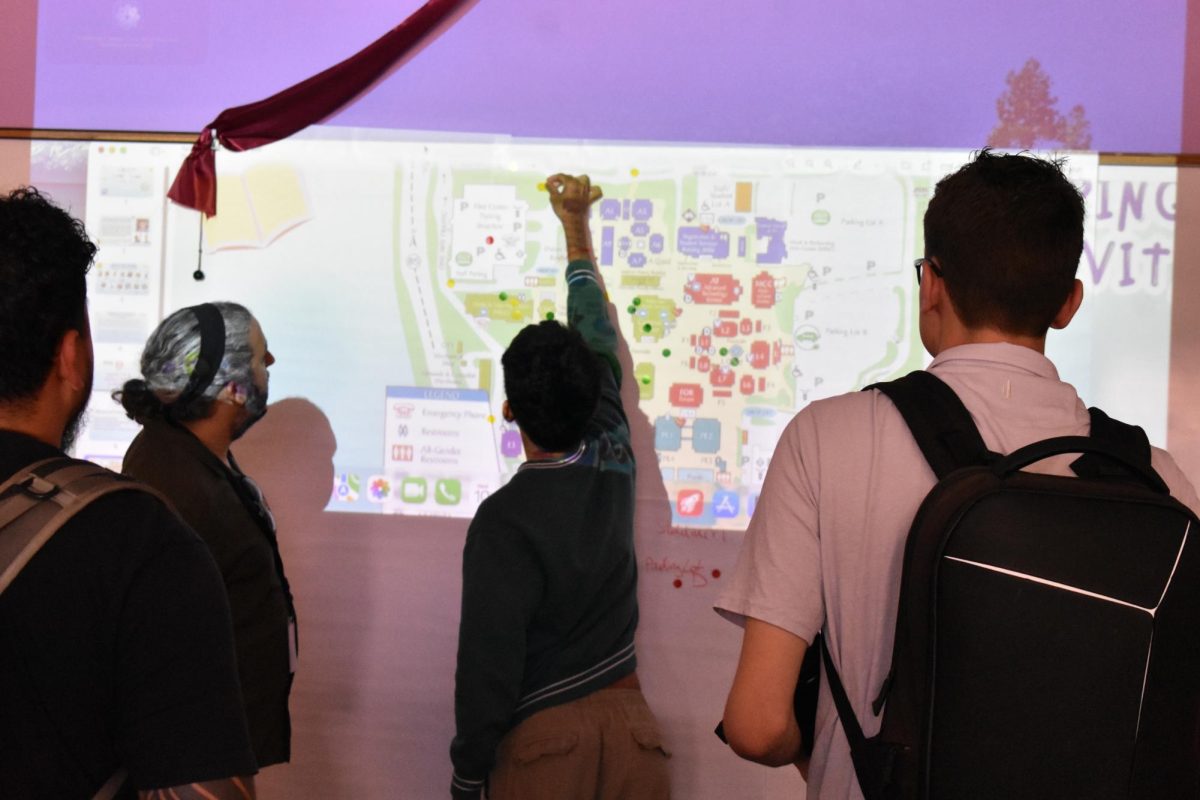
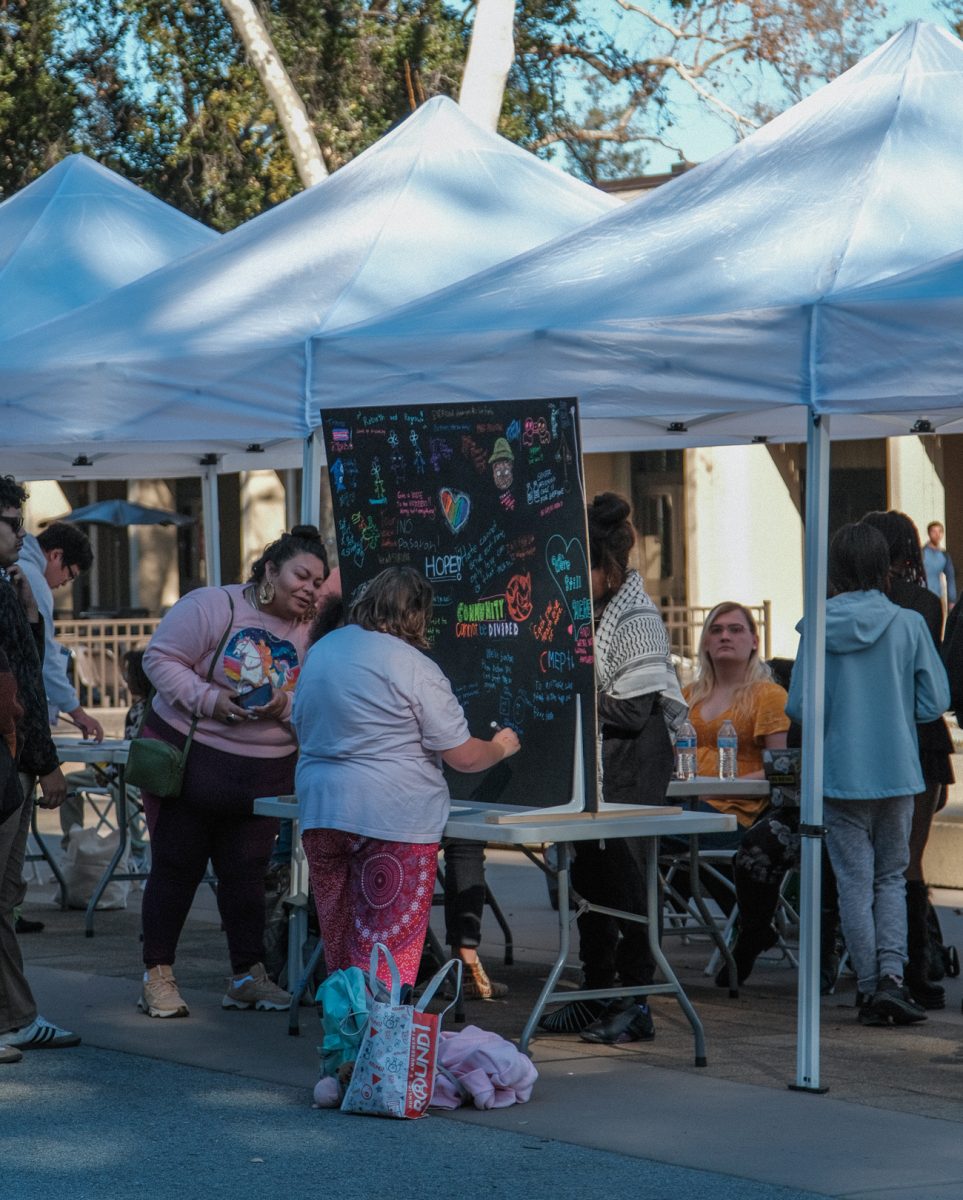
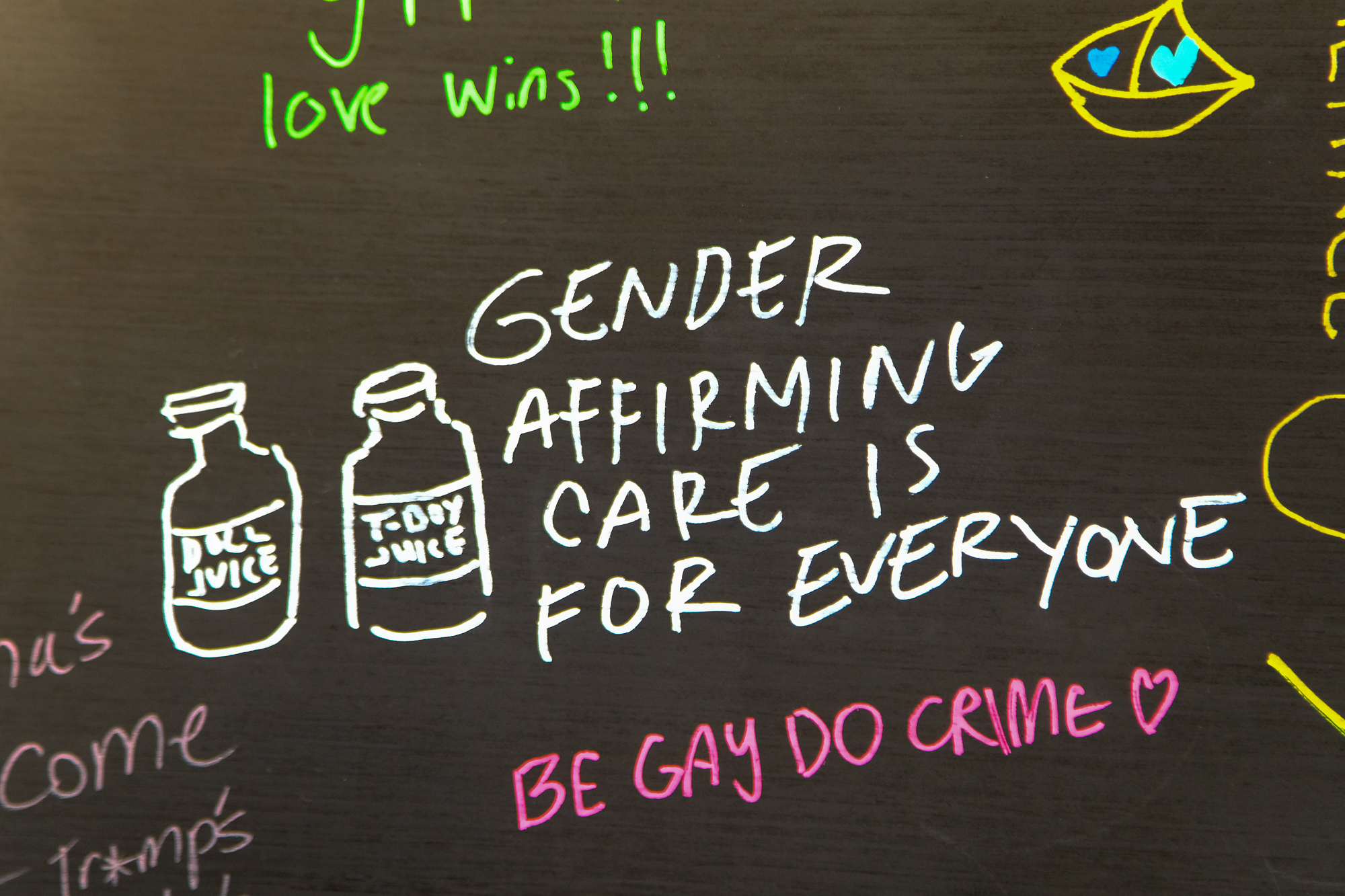
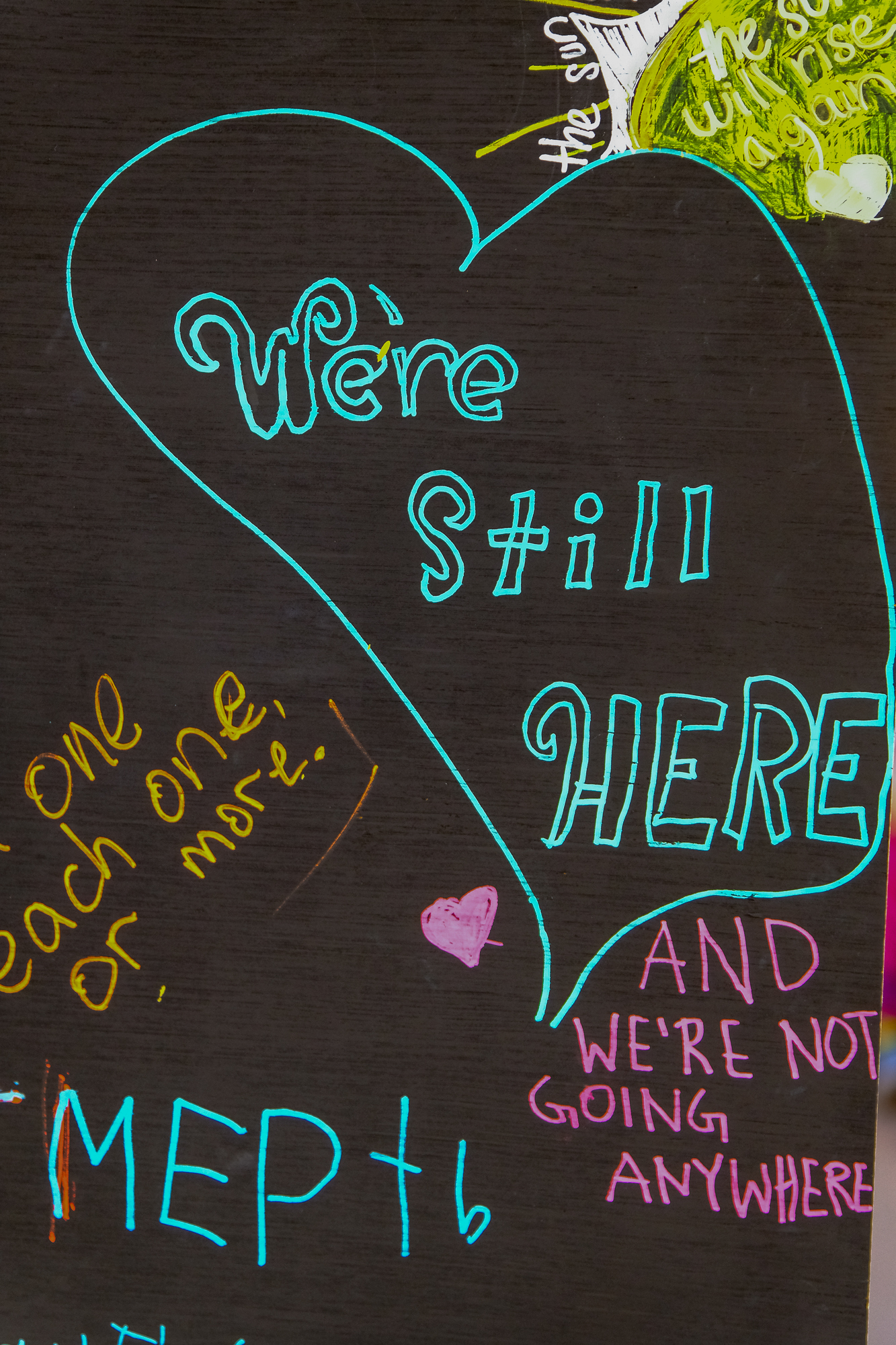
After the inauguration, the Pride Center set up a graffiti board in the main quad, where students wrote messages of solidarity with transgender and undocumented communities, and of defiance against the Trump administration.
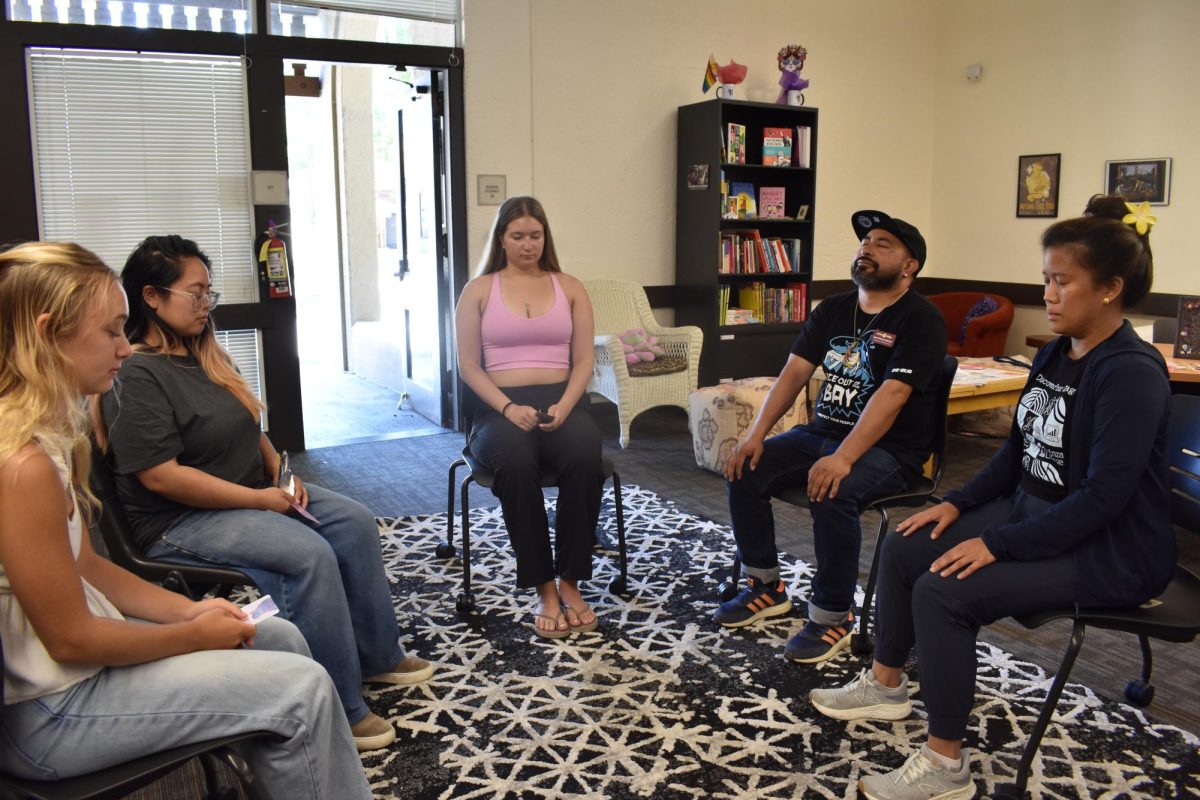
Organized by members of De Anza’s Pride Center and Pride Center coordinator Jamie Pelusi, the graffiti board was intended as an emotional outlet to help students who are struggling with fears and frustration over Trump’s second term as president.
“It’s distressing and disturbing to hear the rhetoric these people are using to describe our undocumented community, our trans community, the communities that make up the heartbeat of our culture,” Pelusi said.
Despite frustration and fear over the direction of the Trump administration, Pelusi sees strength in the community.
“I feel that (the) community has so much strength and creativity and resilience that’s just gonna come out even stronger right now,” Pelusi said. “When you’re in situations of more adversity people come together more, and I think that’s already happening.”
Pelusi added that they see LGBTQ+ communities in Republican-led states, such as Florida and Ohio, as leaders for helping queer communities survive the next four years under Trump.
“A big part of my job is building relationships and networks with the community,” Pelusi said. “Whether it be mental health, gender affirming care, healthcare, legal resources … we have this beautiful web of community support.”
In addition to the Pride Center, De Anza’s Higher Education for AB 540 Students program, which provides educational resources for undocumented students, is bracing for the fallout from a second Trump presidency.
The impact of the inauguration has not only been felt by the community, but also by HEFAS program coordinator Shailia Ramos-Garcia.
“The reaction has been very emotional, I personally felt a lot of anxiety, a lot of sadness, a lot of anger,” Ramos-Garcia said. “I think we have PTSD as a community.”
Ramos-Garcia continues to prioritize efforts to ensure undocumented students at De Anza have access to crucial resources and support.
“We’re going to be doing a ‘know your rights’ series in collaboration with the office of equity, connecting students with legal support,” Ramos-Garcia said. “We also did a collaboration with the office of communications here at De Anza, creating a poster; it’s called ICE on campus. Our goal is to get it in every classroom so every person on campus knows the process if they see ICE on campus.”